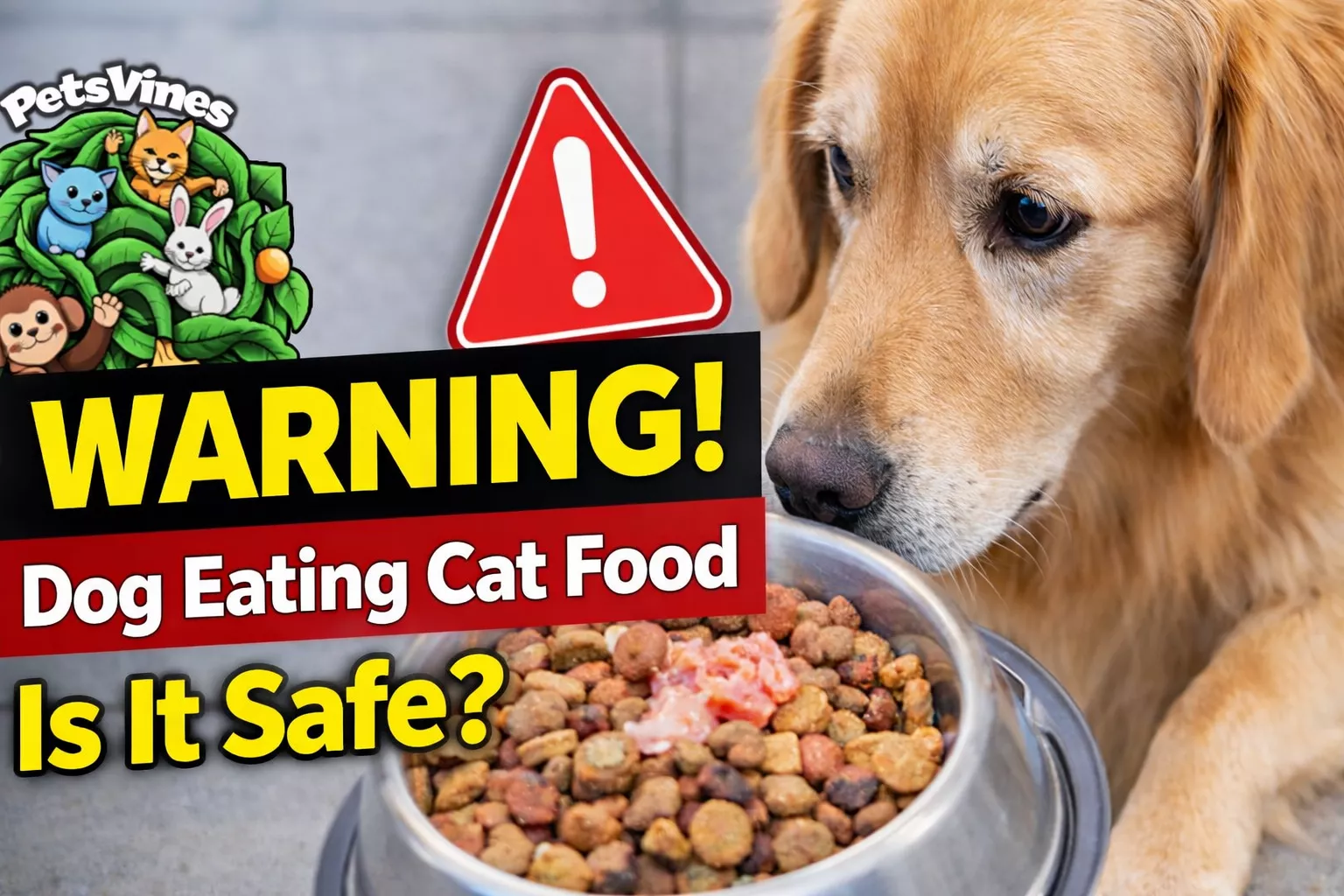
Can dogs eat cat food? Dogs can eat cat food occasionally without immediate harm, but it should not be a regular part of their diet. Cat food is higher in protein, fat, and calories than dog food, which can lead to digestive upset, obesity, or pancreatitis if dogs eat it frequently. If your dog repeatedly eats cat food, it’s best to prevent access and feed a balanced dog diet.
If you own both cats and dogs, you’ve probably caught your dog sneaking over to the cat’s bowl. Dog eating cat food is one of the most common feeding issues in multi-pet households.
Dogs are naturally curious (and often opportunistic) eaters. Cat food smells richer and more appealing because it contains higher protein and fat levels, which can make it irresistible to dogs.
But is this behavior harmless, or could it harm your dog’s health?
In this expert guide, you’ll learn:
- Whether dogs can safely eat cat food
- Why dogs are so attracted to it
- Health risks of regular cat food consumption
- What to do if your dog keeps eating it
- Vet-approved ways to prevent the problem
By the end, you’ll know exactly how to protect your dog’s health while keeping feeding time stress-free.
Why Dogs Are Attracted to Cat Food
Dogs are attracted to cat food because it contains higher levels of protein, fat, and animal-based ingredients, which create a stronger smell and taste compared to dog food.
1. Cat Food Has More Protein and Fat
Cats are obligate carnivores, meaning their diet requires high levels of animal protein.
According to the Association of American Feed Control Officials (AAFCO):
- Adult cat food requires at least 26% protein
- Adult dog food requires about 18% protein
Because of this, cat food tends to be richer and tastier.
2. Stronger Smell and Flavor
Dogs rely heavily on scent. Cat food often contains:
- Fish-based ingredients
- Meat by-products
- Strong aroma compounds
These make it smell far more appealing than regular dog food.
3. Dogs Are Opportunistic Eaters
Dogs evolved from scavenging ancestors. This means they naturally try to eat anything available, especially high-calorie foods.
So if cat food is accessible, many dogs will happily steal it.
Can Dogs Eat Cat Food Safely?
Dogs can eat small amounts of cat food occasionally, but it should not replace dog food or become a regular habit.
A few bites of cat food usually won’t harm a healthy dog. However, frequent consumption can cause health problems over time.
When It’s Usually Safe
Your dog eating cat food once in a while is typically harmless if:
- Your dog is healthy
- The amount is small
- It happens rarely
Most dogs may only experience mild symptoms like:
- Slight stomach upset
- Temporary diarrhea
- Gas
When It Becomes a Problem
Regularly eating cat food can lead to:
- Weight gain
- Digestive problems
- Pancreatitis
- Nutritional imbalance
This is why veterinarians recommend feeding species-specific diets.
Health Risks of Dogs Eating Cat Food
Regular consumption of cat food can lead to obesity, digestive upset, pancreatitis, and long-term nutritional imbalance in dogs. Although an occasional bite is usually harmless, making cat food a regular part of a dog’s diet can slowly create health problems that may not be obvious at first. Cat food is formulated to meet the nutritional needs of cats, which are very different from those of dogs. Because of this difference, dogs that frequently eat cat food may consume too much fat, protein, and calories, which their bodies are not designed to process regularly.
Over time, this imbalance can place extra stress on a dog’s digestive system and internal organs. Dogs that repeatedly eat cat food may begin to show symptoms such as stomach upset, unusual weight gain, or reduced energy levels. In some cases, the effects can become more serious if the habit continues for weeks or months.
Here are the most important risks.
1. Digestive Upset
Cat food’s high fat content can upset a dog’s stomach. Because dogs typically eat food that contains a more balanced mix of protein, fat, and carbohydrates, the richer formula found in cat food can overwhelm their digestive system.
Common symptoms include:
- Vomiting
- Diarrhea
- Gas
- Abdominal discomfort
Dogs with sensitive stomachs are especially vulnerable.
In many cases, digestive upset happens shortly after the dog eats the cat food. Some dogs may start vomiting within a few hours, while others may develop loose stools later in the day. The digestive system simply struggles to process the heavier fat content and concentrated nutrients.
If the dog repeatedly sneaks cat food, these stomach issues may start happening more often. Chronic digestive upset can irritate the intestinal lining and disrupt the healthy bacteria that help dogs digest food properly. Over time, this may lead to ongoing stomach sensitivity or poor digestion.
Most mild cases resolve on their own within a day, but persistent symptoms should not be ignored. If vomiting or diarrhea lasts longer than 24 hours, or if the dog appears lethargic or dehydrated, veterinary attention may be necessary.
2. Obesity and Weight Gain
Cat food is significantly more calorie-dense than dog food. This means even a small amount can contain more calories than a dog normally consumes in a similar portion of their regular diet.
Over time, frequent snacking can cause:
- Rapid weight gain
- Reduced mobility
- Increased risk of chronic diseases
According to the Association for Pet Obesity Prevention, about 59% of dogs in the U.S. are overweight or obese.
Extra calories from cat food can worsen this problem.
Because cat food is designed for animals with higher protein and fat requirements, it packs a lot of energy into a smaller serving. Dogs that repeatedly steal cat food can easily consume far more calories than they burn each day. When this happens regularly, the excess calories are stored as body fat.
Weight gain in dogs can happen surprisingly fast. A dog that gains just a few extra pounds may begin to experience reduced stamina, slower movement, and additional strain on joints and bones. Over time, obesity can increase the risk of serious health issues such as arthritis, heart disease, and diabetes.
For dogs that already have a sedentary lifestyle or limited exercise, the extra calories from cat food can accelerate weight gain even further. This is why veterinarians often warn pet owners to keep cat food out of a dog’s reach.
3. Pancreatitis (Serious Risk)
One of the biggest dangers is pancreatitis, a painful inflammation of the pancreas.
High-fat diets are a major trigger.
Symptoms include:
- Severe vomiting
- Lethargy
- Abdominal pain
- Loss of appetite
Pancreatitis can require emergency veterinary care.
The pancreas plays an important role in producing digestive enzymes that help break down fats and nutrients in food. When dogs consume foods that are too high in fat, the pancreas may become overworked. This can trigger inflammation, leading to pancreatitis.
Cat food often contains much higher fat levels than dog food, which makes it more likely to cause problems if dogs eat it regularly. Even a single high-fat meal can sometimes trigger pancreatitis in dogs that are sensitive or already prone to digestive disorders.
Dogs suffering from pancreatitis often appear very uncomfortable. They may refuse to eat, become unusually tired, or adopt a hunched posture because of abdominal pain. In severe cases, hospitalization may be required to stabilize the dog and manage the inflammation.
Certain dogs are more at risk, including small breeds, overweight dogs, and older pets. For these dogs, preventing access to cat food is especially important.
4. Nutritional Imbalance
Dogs and cats have different nutritional needs.
Cat food contains:
- Higher protein
- Higher fat
- Different vitamin ratios
- Added taurine for cats
While taurine is safe for dogs, the overall nutrient balance is not designed for canine health.
Long-term feeding could lead to deficiencies or excess nutrients.
Cats are obligate carnivores, which means their bodies rely heavily on nutrients derived from animal-based proteins. Dog food, however, is formulated to provide a balanced mix of protein, carbohydrates, fats, vitamins, and minerals suited for canine metabolism.
When dogs regularly eat cat food instead of their own diet, they may receive too much of certain nutrients while missing others that are essential for their health. Over time, this imbalance can affect energy levels, digestion, and overall physical condition.
Dogs thrive on food specifically formulated for their species, life stage, and activity level. Feeding them cat food frequently disrupts that balance and may gradually impact their long-term health.
What Happens If My Dog Eats Cat Food?
If your dog eats a small amount of cat food, monitor them for digestive symptoms. Most dogs recover without problems.
Watch for These Symptoms
After eating cat food, check for:
- Vomiting
- Diarrhea
- Lethargy
- Stomach pain
- Loss of appetite
These usually appear within 6–24 hours.
When to Call a Vet
Contact your veterinarian if:
- Vomiting lasts more than 24 hours
- Severe diarrhea develops
- Your dog appears weak or lethargic
- Your dog has a history of pancreatitis
Puppies, senior dogs, and dogs with health issues may be more sensitive.
How to Stop Your Dog from Eating Cat Food
The best way to stop a dog from eating cat food is to feed pets separately and keep cat food in locations your dog cannot access.
Here are practical strategies.
1. Feed Pets in Separate Rooms
The easiest solution is to separate feeding areas.
For example:
- Feed your dog in the kitchen
- Feed your cat in another room
Close the door until both pets finish eating.
2. Use Elevated Feeding Stations
Cats can jump to higher places.
Try feeding your cat on:
- A countertop
- A shelf
- A tall cat tree
Most dogs cannot reach these spots.
3. Install a Microchip Pet Feeder
Automatic feeders can open only for the specific pet’s microchip.
This prevents dogs from accessing the food completely.
4. Train Your Dog
Basic commands can help prevent food theft.
Useful commands include:
- Leave it
- Stay
- Go to bed
Consistent training helps reinforce boundaries.
5. Pick Up Leftover Cat Food
Cats sometimes graze throughout the day.
However, leaving food out makes it easy for dogs to snack.
Instead:
- Offer measured meals
- Remove the bowl after feeding time
Is Cat Food Ever Good for Dogs?
Cat food may occasionally be used short-term in emergencies, but it is not recommended as a regular diet for dogs.
In rare situations, vets may suggest it temporarily, such as:
- Encouraging a sick dog to eat
- Short-term calorie boost
However, this should only happen under veterinary guidance.
For daily nutrition, dogs need balanced dog food.
Cat Food vs Dog Food: Key Nutritional Differences
| Nutrient | Cat Food | Dog Food |
|---|---|---|
| Protein | Higher | Moderate |
| Fat | Higher | Moderate |
| Calories | Dense | Balanced |
| Taurine | Required | Not required |
| Carbohydrates | Lower | Higher |
These differences explain why cat food is too rich for regular dog consumption.
FAQ’s
Leaving Cat Food Out All Day?
Free-feeding encourages dogs to steal food.
Feeding Cat Food as Treats?
This may reinforce bad habits.
Ignoring Weight Gain?
Extra calories can quickly add up.
Can dog eating cat food cause diarrhea?
Yes. The higher fat and protein levels can upset a dog’s stomach, leading to diarrhea or vomiting.
Can puppies eat cat food?
Puppies should not eat cat food regularly because it does not provide the correct nutritional balance for their growth.
Why does my dog prefer cat food?
Dogs prefer cat food because it smells stronger and contains higher fat and protein levels.
What should I do if my dog keeps stealing cat food?
Feed pets separately, elevate the cat’s bowl, or use microchip feeders to prevent access.
Expert Tip for Multi-Pet Homes
If you live with both cats and dogs, creating structured feeding routines can dramatically reduce food stealing.
Feed pets:
- At the same time each day
- In separate locations
- With measured portions
This keeps both pets healthier and prevents unwanted weight gain.
For more expert dog care guides, explore the dog care section on PetsVines.