
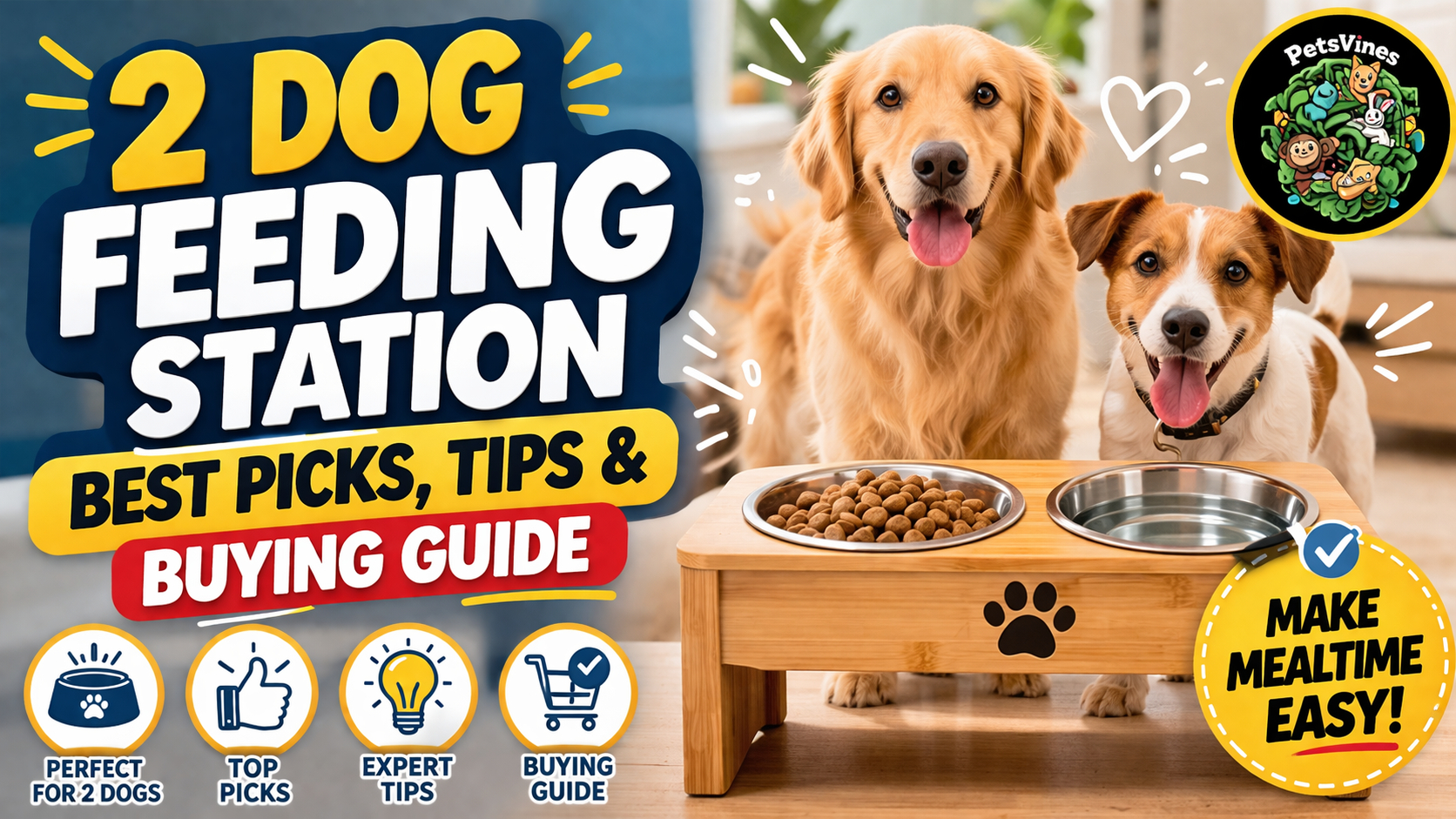
A 2 dog feeding station is a dual-bowl setup — often elevated — designed to feed two dogs simultaneously in one organized space. It reduces food-related aggression, keeps mealtimes structured, and helps pet owners control each dog’s portions separately. Whether you choose a raised wooden stand, a stainless steel double diner, or a simple side-by-side mat setup, the right station makes a measurable difference in your dogs’ health and household harmony.
You love both your dogs equally — but at mealtime, things can get a little… competitive. Whether it’s one dog scarfing down food while eyeing the other’s bowl, or a full-blown resource guarding episode that leaves everyone stressed, feeding two dogs at once is one of the most common challenges in multi-dog households.
The good news? A well-chosen 2 dog feeding station can change everything.
It’s not just a product convenience — it’s a behavioral and health tool. The right double feeding setup creates structure, reduces conflict, protects each dog’s nutritional needs, and keeps your kitchen floor significantly cleaner. It can even reduce the risk of serious conditions like bloat in large breeds when designed at the correct height.
In this guide, you’ll learn exactly what to look for in a 2 dog feeding station, why separate feeding matters more than most owners realize, how to choose the right height and material, and which setup works best depending on your dogs’ sizes and temperaments.
For more expert dog care guidance, visit the PetsVines dog care hub — a trusted resource for pet owners at every stage of their journey.
Why a 2 Dog Feeding Station Actually Matters
It’s About More Than Just Convenience
Many pet owners assume that two dogs eating side-by-side from separate bowls on the floor is perfectly fine. And sometimes it is — but often, it’s quietly creating problems you might not even notice until they escalate.
According to the Merck Veterinary Manual, possessive aggression (also called resource guarding) most often centers on things dogs find valuable — especially meals. Feeding dogs in separate bowls, with the help of a multiple dog feeding station or designated areas, is the easiest way to avoid territorial disputes that can result from food guarding.
A dedicated 2 dog feeding station does several things at once:
- Creates a consistent, predictable mealtime routine
- Defines clear physical boundaries between each dog’s food
- Allows you to monitor each dog’s portion intake separately
- Reduces competition stress, especially in multi-breed or size-mismatched households
- Keeps the feeding area organized and easier to clean
The American Kennel Club (AKC) advises that creating designated feeding areas for each dog is one of the most effective ways to prevent competition and reduce the likelihood of food aggression in multi-dog households.
The Food Aggression Reality
Food-related aggression is more common than many owners expect. According to the Merck Veterinary Manual, food aggression is common and can occur when dogs feel the need to compete for food. It doesn’t always look dramatic — sometimes it’s subtle: one dog eating faster than usual, a slight body stiffening, or persistent bowl-hovering after finishing.
A structured 2 dog feeding station removes the ambiguity. Each dog has a clearly defined space, reducing the psychological pressure that drives competitive eating.
Types of 2 Dog Feeding Stations
Not all double feeding stations are created equal. Here’s what’s available, and what each setup is best suited for:
1. Raised / Elevated Double Dog Feeding Stations
The most popular option for medium to large breeds. These feature a stand that holds two bowls side-by-side at an elevated height, typically ranging from 3″ to 24″ off the ground depending on the dog’s size.
Veterinarians recommend raised dog bowls for dogs with specific medical issues such as megaesophagus or arthritis, as eating in a more upright position helps the dog swallow more easily and takes strain off the neck and back.
Quality elevated double feeding stations are available at heights suitable for dogs ranging from small breeds all the way up to XXL dogs, with features like rubber tips and bowl rings to prevent noise and mess during mealtimes.
Best for: Medium to large breeds, senior dogs, dogs with joint or neck issues, and any household prioritizing a tidy, furniture-grade aesthetic.
Important caveat: Elevated bowls may not be a good choice for large dogs who are more at risk for bloat, as bloat has been linked to eating from elevated dog bowls. Always consult your vet before using a raised feeder for large or giant breeds.
2. Flat Mat / Side-by-Side Bowl Stations
A simple, budget-friendly setup: two bowls placed on a non-slip mat or dual-bowl tray at floor level. This works well for small breeds, puppies, and households where the primary goal is just keeping bowls in place and off the bare floor.
Best for: Small breeds, puppies, and budget-conscious pet owners who want easy washability.
3. Cabinet-Style Dog Feeding Stations
These are freestanding furniture pieces — typically wood — with two bowls built into the top surface and storage space underneath for food, leashes, or accessories. They blend seamlessly into home décor and work exceptionally well in open-plan living spaces where aesthetics matter.
Best for: Home-conscious owners who want the feeding station to look like an intentional piece of furniture, not a pet product.
4. Adjustable Height Double Stations
Some feeding stations offer adjustable bowl heights — for example, settings at 3″, 7″, and 11″ — allowing one station to grow with your dog or serve two dogs of different sizes simultaneously.
Adjustable height feeding stations can meet the needs of different dogs simultaneously while also effectively protecting their cervical spine and digestive system, allowing them to eat in a more comfortable and healthy position.
Best for: Households with dogs of different sizes or breeds, or puppy owners planning ahead.
How to Choose the Right 2 Dog Feeding Station
Step 1: Know Your Dogs’ Correct Bowl Height
Getting the bowl height right is critical for comfort and long-term joint health. The general rule: the bowl should sit approximately 6 inches below your dog’s shoulder height when standing.
Here’s a quick reference guide:
| Dog Size | Shoulder Height | Recommended Bowl Height |
|---|---|---|
| Small (under 20 lbs) | Under 12″ | 3″–5″ |
| Medium (20–50 lbs) | 12″–18″ | 6″–9″ |
| Large (50–90 lbs) | 18″–24″ | 10″–14″ |
| XL / Giant (90+ lbs) | 24″+ | 15″–18″ |
To find the correct height, simply measure from the floor to the top of your pet’s shoulders, then use that measurement to select the appropriate bowl height for their feeding station.
Step 2: Choose the Right Bowl Material
Stainless steel is the gold standard. It’s non-porous, dishwasher-safe, resistant to bacterial buildup, and durable. Human-grade 304 stainless steel bowls certified by the NSF are free from lead, radiation, mercury, cadmium and other toxins — making them the safest choice for daily use.
Ceramic is stylish and heavy (less sliding), but can chip over time, creating crevices where bacteria accumulate.
Plastic is affordable but is the least hygienic option long-term. Plastic scratches easily, and bacteria thrive in those micro-abrasions. Even when dog bowls look like they’ve been licked clean, harmful bacteria can grow in food and water dishes — which is why daily washing or at minimum every couple of days is recommended.
Step 3: Consider Your Dogs’ Behavioral Dynamic
- Easygoing dogs of similar size: Almost any double station works well.
- One fast eater, one slow eater: Look for a station where bowls are spaced apart enough to create a visual and physical barrier. Consider adding a slow feeder insert to one bowl.
- Any history of resource guarding: Space the bowls further apart, or use two completely separate single stations placed in different areas of the room. If separating dogs in the same room doesn’t work, or if one dog displays signs of food aggression, physically separating them in different rooms is recommended.
- Dogs of very different sizes: An adjustable or two-tiered station lets each dog eat at their optimal height.
Step 4: Assess Materials and Build Quality
A good 2 dog feeding station should be stable enough that an enthusiastic 60-pound Lab can’t tip it mid-meal. High-quality feeding stations are crafted from materials including stainless steel, wrought iron, and solid wood, providing unmatched durability and stability — with rubber feet to prevent noise, sliding, and mess.
Step 5: Think About Cleaning and Maintenance
The best-designed station in the world becomes a hygiene problem if it’s hard to clean. Look for:
- Removable, dishwasher-safe bowls
- A stand that can be wiped down easily
- A mat with a raised lip to contain spills
- No hard-to-reach crevices where food can collect
The best feeding systems are fully dishwasher-safe — stand, mat, and bowls — making cleanup simple even for busy pet owners.
Setting Up Your 2 Dog Feeding Station: A Step-by-Step Approach
1. Choose the Right Location
Pick a spot that is:
- Quiet and low-traffic during mealtimes
- Away from the main walking path in your home
- Big enough for both dogs to eat without crowding each other
- Easy to clean (tile or hardwood floors are ideal)
Creating consistent, designated feeding spaces where each dog’s bowl is placed at mealtimes is one of the most effective ways to foster good mealtime manners and prevent resource guarding in multi-pet households.
2. Establish a Mealtime Routine
Dogs thrive on predictability. Establishing a consistent feeding routine helps regulate their eating habits and prevents conflicts over food — set meal times allow you to supervise mealtimes and ensure each dog gets the right amount without competition.
Feed at the same times every day. Ask both dogs to sit before placing the bowls down. This simple structure reduces the excitement-driven rushing that often sparks tension.
3. Monitor Each Dog’s Intake
One of the biggest advantages of a 2 dog feeding station over a shared bowl is that you can see exactly what each dog is eating. Overfeeding can lead to obesity and other health issues in dogs, so monitoring portion sizes carefully is crucial in multi-pet households where dogs may otherwise share food.
Use measuring cups, not guesswork. Keep a simple log if one of your dogs is on a prescription diet or weight management plan.
4. Stay Present During Mealtimes
At least in the early stages — or any time you introduce a new dog to the household — supervise meals. You’re watching for:
- One dog finishing quickly and approaching the other’s bowl
- Any stiffening, growling, or blocking behavior
- A dog walking away from their bowl mid-meal (which could signal anxiety or illness)
Regularly observing body language, eating speeds, and overall comfort at mealtimes allows you to adjust feeding locations, schedules, or portion sizes to restore balance if tension arises.
5. Separate If Needed — No Shame in It
Some dogs simply do better eating in completely separate spaces. This is not a failure — it’s smart management.
Dogs who have unknown histories together, or who have a history of resource guarding, should be prevented from physically accessing each other during mealtimes. Other dogs are fine eating in the same room, but each should still have a specific area where their bowl is placed.
2 Dog Feeding Station for Dogs of Different Sizes
This is one of the most common scenarios: a household with a large and a small dog. The challenge is that both dogs need different bowl heights, different portion sizes, and ideally different food formulations.
Here’s how to handle it:
- Use an adjustable-height station with each bowl set at the appropriate level for its dog, or use two separate single stations placed side-by-side.
- Feed different foods without confusion by labeling or color-coding bowls.
- Monitor the larger dog, who may finish first and attempt to access the smaller dog’s bowl. A physical divider between bowls — or simply more distance — helps enormously.
- Consider a slow feeder insert for the larger or faster-eating dog to create natural pace parity between the two.
FAQ’s
What is the best 2 dog feeding station for large breeds?
For large breeds, look for an elevated station with adjustable height (typically 12″–18″ off the ground), made from heavy-gauge stainless steel or wrought iron for stability. Ensure the bowls have a minimum 6-cup capacity and are dishwasher-safe.
Should I use a raised feeding station for both dogs?
Raised dog bowls are particularly beneficial for dogs with megaesophagus, arthritis, or neck and back problems, as eating in a more upright position helps them swallow more easily and reduces strain. For dogs without these conditions, floor-level or slightly elevated bowls are often perfectly adequate.
How far apart should the bowls be in a 2 dog feeding station?
At minimum, bowls should be far enough apart that each dog’s head is clearly in their own bowl without touching. For dogs with any food guarding history, 2–3 feet of separation is advisable. For particularly food-motivated dogs, feeding in entirely separate spaces is the safest approach.
Can I use a 2 dog feeding station if my dogs eat different food?
Yes — and it’s actually one of the best use cases. Clearly designated bowls within a dual station make it easy to serve different foods, different portions, or prescription diets without confusion.
How often should I wash the bowls?
Washing dog bowls daily, or at least every couple of days, is ideal. Harmful bacteria can grow in food and water dishes even when they appear clean. If you feed raw food, bowls must be washed twice a day.
Quick Checklist
Before buying a 2 dog feeding station, run through this checklist:
- Correct bowl height for each dog’s size
- Food-safe, non-porous bowl material (stainless steel preferred)
- Non-slip base or rubber feet
- Removable, dishwasher-safe bowls
- Adequate bowl capacity for each dog’s meal size
- Stable enough to resist tipping by an active dog
- Easy to wipe clean between the bowl and stand
- Spill-catching mat or raised lip design (bonus)
Invest in Mealtime Peace
A 2 dog feeding station is one of the smartest, most practical investments you can make as a multi-dog household owner. It brings structure to what can otherwise be a daily source of stress — for your dogs and for you.
Whether you opt for a sleek stainless steel elevated double diner, a beautifully crafted wooden cabinet-style station, or a simple raised mat setup, the key is consistency. Same spot, same time, separate bowls, your presence and attention during mealtimes. That routine — more than any product — is what creates genuinely peaceful, healthy mealtime habits for both your dogs.
Start with the right setup, stay observant, and adjust as your dogs’ needs evolve. Mealtime should be one of the best parts of your dogs’ day — for both of them, every time.
Also Visit: Best Food for Dog With Diarrhea: What to Feed Safely