| Origin | United States (California, 1960s) |
| Size | Large |
| Weight | Males 15-20 lbs, Females 10-15 lbs |
| Lifespan | 12-17 years |
| Coat | Semi-long, silky, low-matting |
| Temperament | Calm, affectionate, docile, people-oriented |
| Price (breeder) | $1,200 to $2,500 |
| Grooming | Moderate – 2x weekly brushing |
| Good with children | Excellent |
| Good with other pets | Yes |
| Activity level | Low to moderate |
If there is a cat breed that most closely resembles a living stuffed animal, it is the Ragdoll. Floppy, affectionate, large, and serene, these cats have a way of diffusing the energy of any room they enter simply by existing in it. They are not the most active or the most independent of cats. What they are, consistently, is deeply attached to their people.
If you are also considering the Maine Coon, read our Maine Coon breed guide for a direct comparison between these two popular large breeds.
Ragdoll History and Origin
The Ragdoll breed originated in Riverside, California in the 1960s and is credited to breeder Ann Baker. The founding cat was a white long-haired female named Josephine, whose offspring showed an unusually docile temperament and a tendency to go limp when handled. The breed gained recognition from TICA and later the CFA and is now recognized by all major cat registries.
Ragdoll Personality: The Docile Dog-Cat
The Ragdoll is often called a puppy cat because of its tendency to follow its owner around the house, greet people at the door, and seek physical closeness. Unlike many cats that prefer affection on their own terms, Ragdolls actively seek out laps, cuddles, and proximity to people.
- Going limp when held: The breed signature trait. Most Ragdolls relax completely when picked up, making them unusually easy to handle and exceptionally good with children and elderly owners.
- Low aggression: Ragdolls are among the least aggressive domestic cat breeds. They rarely scratch or bite even when stressed.
- Low prey drive: Compared to active hunting breeds like Bengals, Ragdolls have a relatively low prey drive. They enjoy play but are not particularly intense hunters.
- Quiet: Ragdolls communicate with soft gentle meows rather than persistent yowling.
- Indoor-only requirement: The Ragdoll’s trusting docile temperament means they have poor instincts for self-protection outdoors. They should be kept as indoor-only cats or given supervised outdoor access through a secure catio or harness.
Ragdoll Appearance and Coat
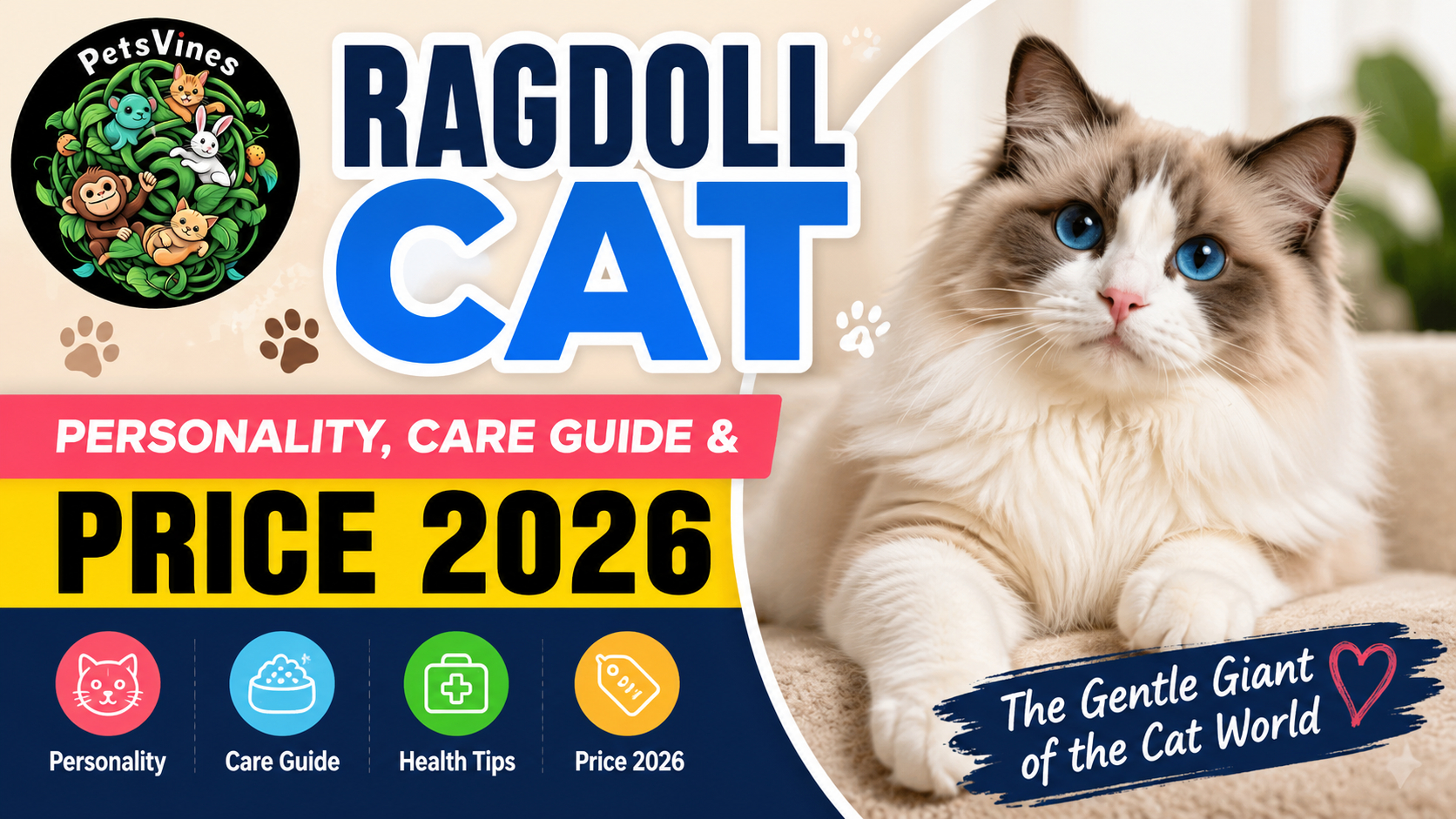
Ragdolls are a colorpoint breed with vivid blue eyes, one of their most consistent and recognizable features. The coat is semi-long, soft, and silky with minimal undercoat, which means it is significantly less prone to matting than breeds like the Persian despite its length. Ragdolls come in four pattern variations: colorpoint, mitted, bicolor, and lynx point. Point colors include seal, blue, chocolate, lilac, red, and cream.
Like Maine Coons, Ragdolls are slow to mature. They do not reach their full adult size or deepest point color until approximately 3 to 4 years of age.
Ragdoll Care Requirements
Grooming
The Ragdoll’s silky low-undercoat coat is one of its most practical advantages over other long-haired breeds. The absence of a dense undercoat means the fur is much less prone to matting, and most Ragdolls can be maintained with brushing 2 times per week using a stainless steel comb or soft slicker brush. Pay particular attention to the collar area and stomach where friction from lying down can cause tangles.
Diet and Feeding
Ragdolls are large cats with corresponding caloric needs and are also a breed prone to weight gain if allowed to free-feed. A high-protein wet and dry food combination is recommended, with portions calibrated to body weight. For feeding amounts by weight, see our complete cat feeding guide.
Exercise and Play
Ragdolls are not high-energy cats. Two 10 to 15 minute play sessions per day are typically sufficient. Because of their low activity level, weight management through controlled feeding is more important for Ragdolls than vigorous exercise.
Ragdoll Health Issues
The Ragdoll is considered a generally healthy breed with a lifespan of 12 to 17 years. According to Dr. Iram Sharma, DVM, writing for PetMD, the Ragdoll is a healthy cat in general. However, there are two main health conditions to be aware of:
Hypertrophic cardiomyopathy (HCM): A DNA test is available for the most common Ragdoll-specific HCM mutation, allowing responsible breeders to significantly reduce its prevalence. Annual cardiac screening via echocardiogram is recommended from age 2 onwards regardless of DNA test results.
Polycystic kidney disease (PKD): Liquid-filled cysts in the kidneys that progressively cause renal failure. DNA testing can identify cats carrying the PKD gene, and responsible breeders screen both parents before breeding.
Ragdoll Price: What to Expect in 2026
| Source | Price Range 2026 | Notes |
|---|---|---|
| Reputable breeder (pet quality) | $1,200 to $2,000 | Includes health tests, vaccinations, spay/neuter contract |
| Reputable breeder (show quality) | $2,000 to $2,500+ | Full pedigree, champion bloodlines |
| Rescue or Ragdoll-specific shelter | $100 to $400 | Usually adults, patience required |
Is a Ragdoll Right for You?
The Ragdoll is a nearly ideal cat for families with young children, elderly owners looking for a calm and gentle companion, first-time cat owners who want an affectionate breed, and multi-pet households. They need to be kept indoors and need company. They do not do well as the only pet in a household where owners are away all day.
FAQs
What is a Ragdoll cat’s personality like?
Ragdolls are calm, deeply affectionate, and people-oriented cats often described as puppy-like. They follow their owners from room to room, greet people at the door, and actively seek out laps and physical closeness rather than offering affection only on their own terms. They are among the least aggressive domestic cat breeds, have a low prey drive, communicate with soft gentle meows, and are unusually easy to handle due to their tendency to go completely limp when picked up.
Why do Ragdolls go limp when picked up?
The exact genetic mechanism behind the Ragdoll’s characteristic limpness when held is not fully understood, but it is thought to be a combination of inherent temperament traits that were selectively reinforced through the founding breeding program developed by Ann Baker in the 1960s. Not every Ragdoll goes completely limp, but most are noticeably more relaxed when handled than the average cat, making them exceptionally easy to hold and ideal for children and elderly owners.
How big do Ragdoll cats get?
Ragdolls are a large breed. Males typically weigh 15 to 20 pounds at full maturity and females 10 to 15 pounds. Like Maine Coons, Ragdolls are slow to mature and do not reach their full adult size or deepest point color until approximately 3 to 4 years of age. Plan litter boxes, carriers, and cat furniture for their eventual adult size from the time you bring a kitten home.
Are Ragdolls good with children and other pets?
Yes, Ragdolls are considered one of the best cat breeds for families with young children. Their low aggression, docile temperament, and tendency to go limp when handled mean they tolerate the noise, enthusiasm, and unpredictability of children exceptionally well. They also adapt well to multi-pet households and generally coexist comfortably with other cats and pet-friendly dogs.
Are Ragdolls good for first-time cat owners?
Yes, Ragdolls are an excellent choice for first-time cat owners. Their affectionate and forgiving temperament, low aggression, quiet communication style, and moderate care requirements make them one of the most manageable breeds for owners still learning cat behavior. The main considerations are their need for companionship, indoor-only lifestyle requirement, and tendency toward weight gain without portion-controlled feeding.
Do Ragdolls need to be kept indoors?
Yes, Ragdolls should be kept as indoor-only cats. Their trusting and docile temperament means they have poor self-protection instincts outdoors and are vulnerable to threats they would not recognize as dangers. If outdoor access is desired, a secure catio or supervised harness walks are the only safe options for this breed.
How much grooming does a Ragdoll need?
Ragdolls require brushing approximately twice per week using a stainless steel comb or soft slicker brush. Their semi-long silky coat has minimal undercoat, which makes it significantly less prone to matting than other long-haired breeds such as Persians. Pay particular attention to the collar area and stomach where friction from lying down can occasionally cause tangles. Regular twice-weekly brushing keeps shedding manageable and prevents mat formation.
What health problems are Ragdolls prone to?
The two primary health concerns in Ragdolls are hypertrophic cardiomyopathy (HCM), a heart muscle thickening condition with a breed-specific DNA test available, and polycystic kidney disease (PKD), which causes progressive kidney failure from fluid-filled cysts. Responsible breeders DNA test both parents for both conditions before breeding. Annual cardiac screening via echocardiogram is recommended from age 2 onwards for all Ragdolls regardless of DNA test results.
How much does a Ragdoll cat cost in 2026?
From a reputable breeder, a pet-quality Ragdoll costs between $1,200 and $2,000, including health tests, vaccinations, and a spay or neuter contract. Show-quality Ragdolls with champion bloodlines range from $2,000 to $2,500 or more. Ragdoll-specific rescues and shelters offer cats for $100 to $400, though adults are more common than kittens. Always request DNA test documentation for HCM and PKD before purchasing from any breeder.
Can Ragdolls be left alone during the day?
Ragdolls are more social than most cat breeds and can develop separation anxiety when left alone for extended periods. If you work full-time hours, consider adopting two Ragdolls or pairing a Ragdoll with another sociable cat for company. This breed does not thrive as the only pet in a household where owners are frequently away for long periods.
Are Ragdolls hypoallergenic?
No cat breed is truly hypoallergenic, and Ragdolls are no exception. They produce the Fel d 1 protein that triggers cat allergies in sensitive individuals. However, some allergy sufferers find Ragdolls slightly more tolerable than heavily shedding breeds because their low-shedding silky coat produces less airborne allergen. Anyone with cat allergies should spend time with a Ragdoll before committing to adoption.
For more cat breed guides and health information, explore the PetsVines Cat Care hub.
Also Visit: 7 Common Dog Training Mistakes and How to Fix