
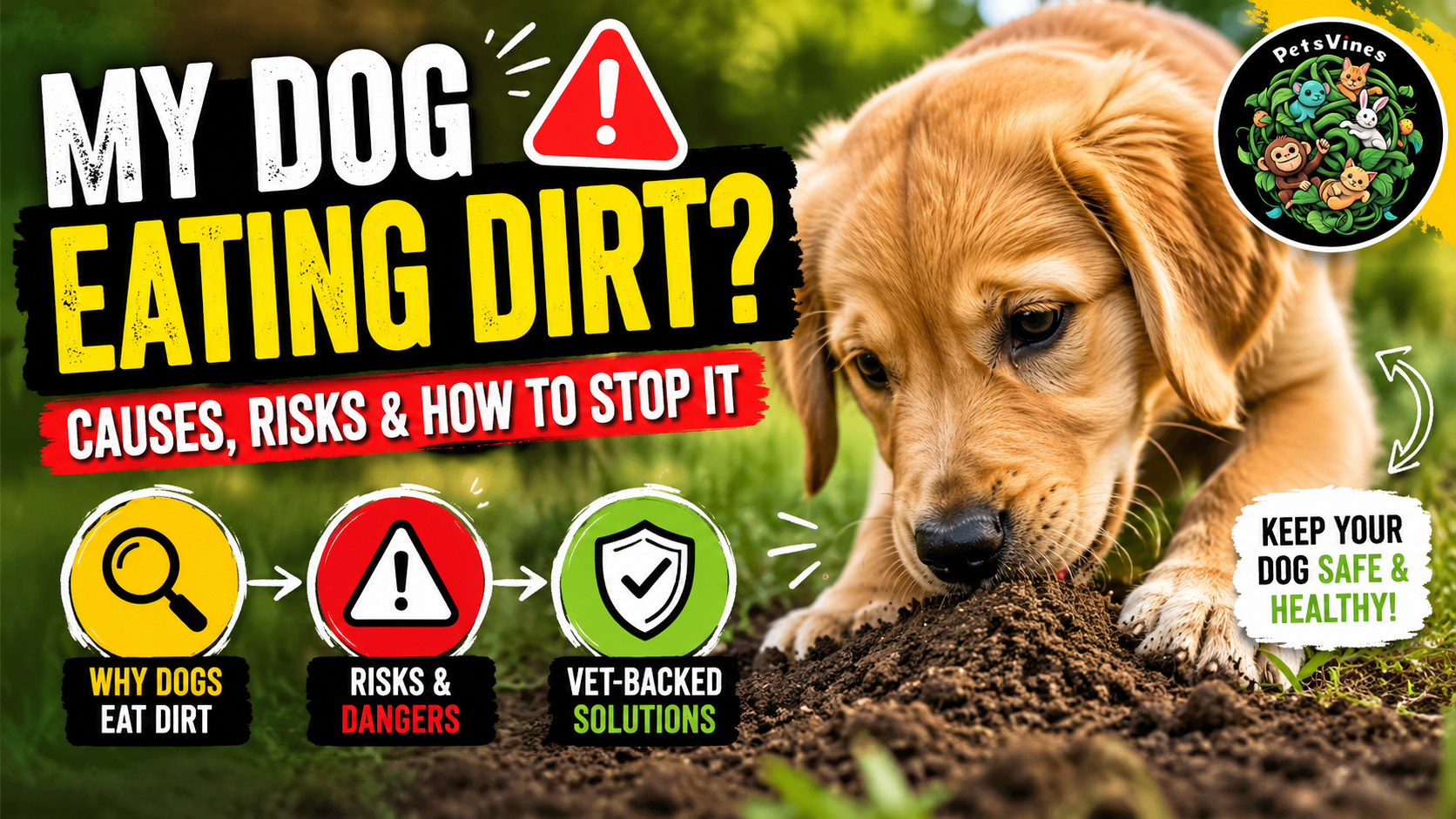
My Dog Eating Dirt: You look out into the backyard, and there’s your dog — nose down, jaw working, happily munching on a mouthful of soil like it’s a gourmet meal. It’s a strange sight. And if you’re a dog owner, you’ve probably asked yourself at least once: why is my dog eating dirt?
Here’s the thing — you’re not alone. Dirt eating is one of the most commonly reported “weird dog behaviors” that pet owners bring up with their vets. And while it can look alarming, it’s not always a red flag. Sometimes it’s instinct. Sometimes it’s boredom. But sometimes, it’s your dog’s way of telling you something important about their health.
In this guide, we’ll break down every possible reason your dog is eating dirt — from simple behavioral quirks to serious medical conditions — along with practical steps you can take to stop it safely. No fluff, no panic. Just clear, expert-backed information you can actually use.
Dogs eat dirt for several reasons: nutritional deficiencies (especially iron, zinc, or calcium), boredom, anxiety, upset stomach, or a medical condition called pica (geophagia). While occasional dirt sniffing or a small taste is usually harmless, frequent or compulsive dirt eating warrants a vet visit to rule out underlying health issues.
What Is Geophagia in Dogs?
Before diving into the “why,” it helps to know the proper term. When a dog deliberately and repeatedly eats dirt, mud, or soil, it’s called geophagia — a specific form of pica.
Pica is an eating disorder where dogs consume objects that are not food-related. Geophagia is the version that specifically involves eating dirt or mud.
It’s important to distinguish between a dog that occasionally sniffs and mouths the soil (totally normal exploratory behavior) versus one that is actively, regularly consuming large quantities of dirt. The latter is what warrants attention.
Why Is My Dog Eating Dirt? 7 Real Reasons
1. Nutritional Deficiencies — The Most Common Culprit
If your dog is eating dirt regularly, the first place to look is their diet. Dogs instinctively seek out missing nutrients, and soil contains trace minerals that their body may be craving.
Dietary deficiencies can cause dogs of any age to eat dirt to obtain minerals like sodium, iron, and calcium from the soil. Dogs that are underfed may also eat dirt and other objects due to hunger and nutritional deficiencies.
Soil — particularly red clay — is naturally high in iron, potassium, kaolinite, dolomite, and silica. Iron helps alleviate anemia; kaolinite soothes stomach upsets; dolomite is rich in calcium carbonate, which helps with bone health and calcium levels.
This means your dog eating dirt might literally be self-medicating. Their body is detecting a gap in their nutrition, and soil is the closest available source.
What to check:
- Is your dog on a high-quality, complete dog food?
- Are you feeding a homemade diet without veterinary guidance?
- Has your dog recently changed food brands?
Some homemade dog foods can have trace vitamin or mineral deficiencies that hinder a dog’s overall digestive system. If you go the homemade route, consult a vet or veterinary nutritionist to ensure the right balance of ingredients.
2. Pica — A Medical Condition, Not Just a Bad Habit
Pica is a recognized eating disorder in dogs where they compulsively consume non-food items. Dirt is one of the most common targets.
The key difference between normal dog chewing behaviors and pica is that the dog seeks out the non-food item repeatedly. Health problems in the digestive tract — such as inflammatory bowel syndrome, intestinal worms, or malnutrition — are among the more common medical causes of pica.
Research has found that many dogs who regularly eat non-food items may have an underlying chronic enteropathy — a long-term digestive issue that affects nutrient absorption and gut health.
In other words, if your dog’s gut isn’t absorbing nutrients properly, they could be nutritionally deficient even on a well-balanced diet. The dirt eating is a symptom, not the root cause.
3. Boredom and Under-Stimulation
A bored dog is a destructive dog. Dirt eating can be a self-soothing behavior in dogs that aren’t getting enough physical exercise or mental stimulation.
Dogs that get bored due to a lack of exercise or enriching activities might eat dirt to occupy their time.
This is especially common in high-energy breeds — working dogs, herding breeds, or terriers — that need significantly more daily activity than the average walk around the block. If your dog is digging and eating the dirt, boredom is very likely a contributing factor.
Signs boredom might be the cause:
- The behavior happens mainly when your dog is left alone
- Your dog also chews furniture, shoes, or other objects
- The dog becomes more settled after longer exercise sessions
4. Anxiety and Stress
Just as stressed humans might bite their nails, anxious dogs can resort to compulsive behaviors like eating dirt.
Dogs that develop separation anxiety from their owners or are experiencing some other form of stress might eat dirt as a symptom of their mental health condition.
Common anxiety triggers include changes in the household (new baby, new pet, moving home), loud environments, or prolonged periods alone. If the dirt eating started around the same time as a major life change, stress is a strong suspect.
5. Upset Stomach or Gastrointestinal Issues
Dogs sometimes eat grass or dirt when their stomach is off. It’s thought to be an instinctive attempt to induce vomiting or soothe gut discomfort.
It is widely believed that dogs sometimes eat grass when their stomach feels off or to induce vomiting. Grass and dirt eating can both be driven by gastrointestinal discomfort.
Kaolinite — found naturally in soil — soothes stomach upsets and stops diarrhea. Historically, it was used in medications like Kaopectate and Maalox.
So when your dog eats dirt after an upset stomach, they may not be acting randomly. There’s real biological logic behind it — they’re reaching for nature’s antacid.
6. Anemia
An anemic dog may instinctively eat dirt in an attempt to restore iron levels in the body.
Anemia — a condition marked by low blood cell count or hemoglobin levels — can be caused by a nutritional imbalance. An anemic dog may instinctively turn to eating dirt in an attempt to restore any deficiencies causing this condition. The only way to reliably diagnose anemia is through blood work.
If your dog is also showing signs like pale gums, lethargy, reduced appetite, or rapid breathing — alongside eating dirt — anemia should be on your radar. Don’t wait on this one; get blood work done.
7. They Smell Something Interesting in the Soil
Sometimes the answer is delightfully simple. Dogs have incredibly sensitive noses, and soil can smell like buried food, animal waste, decomposing matter, or other things that are irresistible to a dog.
Healthy dogs may eat some dirt or suddenly start eating grass if they smell something tasty in it. A little bit of dirt eating is nothing to worry about.
If your dog only eats dirt in specific spots (like near a compost pile, a spot where food was dropped, or an area where another animal has been), this is almost certainly the reason — and generally not a health concern.
Is It Dangerous for Dogs to Eat Dirt?
The answer depends on how much and what’s in the soil.
There are several health risks associated with pica and geophagia: impacted intestines (which usually requires surgery), consumption of pesticides, fertilizers, and other toxins, and overconsumption of specific minerals leading to toxicity.
Here’s a clear breakdown of the risks:
| Risk | Details |
|---|---|
| Intestinal blockage | Large amounts of dirt can compact in the gut |
| Toxin ingestion | Pesticides, herbicides, and fertilizers in soil |
| Parasites | Soil can harbor roundworm eggs and other parasites |
| Dental damage | Grit wears down tooth enamel over time |
| Mineral toxicity | Too much of certain minerals can cause organ stress |
The occasional mouthful from a clean garden patch? Probably fine. But regular, compulsive consumption? That’s a vet conversation waiting to happen.
For more expert guidance on dog health and behavior, explore the comprehensive dog care resources at PetsVines Dog Hub.
When Should You Call the Vet?
Not every instance of dirt eating is an emergency. But here are the signs that mean you should call your vet sooner rather than later:
- Your dog eats large amounts of dirt daily or compulsively
- There’s vomiting, diarrhea, or lethargy alongside the dirt eating
- Your dog’s gums look pale or white (possible anemia)
- The behavior started suddenly with no obvious behavioral cause
- Your dog has lost weight or has a reduced appetite
- You suspect the soil may have been treated with pesticides or fertilizers
Your vet may need to run diagnostic tests including blood work, urinalysis, fecal analysis, and imaging such as x-rays or ultrasounds. In certain cases, they may recommend tissue samples or a food trial test.
How to Stop Your Dog From Eating Dirt
Once you’ve identified why your dog is eating dirt, stopping it becomes much more targeted. Here’s a practical action plan:
Step 1: Review Their Diet
Switch to a complete, AAFCO-approved dog food that meets all nutritional requirements for your dog’s life stage. If you’re using a homemade diet, consult a veterinary nutritionist.
Step 2: Add a Supplement (With Vet Guidance)
Sometimes a minor alteration like including a daily probiotic supplement or chew in addition to your dog’s regular food can work wonders for a vitamin deficiency or digestive problem.
Step 3: Increase Exercise and Mental Stimulation
- Add a second daily walk
- Introduce puzzle feeders or sniff mats
- Try new training activities or dog sports
- Schedule regular playdates with other dogs
Step 4: Manage Access and Redirect
- Supervise outdoor time and redirect with a firm “leave it” command
- Use a muzzle temporarily during supervised outdoor sessions if the behavior is compulsive
- Block off specific areas of the yard where dirt eating occurs
Step 5: Address Anxiety
If stress is the trigger, consider:
- A consistent routine to reduce unpredictability
- Calming aids (pheromone diffusers, anxiety wraps)
- Behavioral training with a certified dog trainer
- In serious cases, consult your vet about anxiety medication
Step 6: Rule Out Medical Causes
You should keep track of what your dog tries to eat, how much, and how often. This is helpful information for your veterinarian as part of an examination history.
Keep a simple log — dates, times, how much dirt was consumed, and any other behavioral changes — and bring it to your vet appointment.
Dog Eating Dirt vs. Dog Eating Dirt and Grass: What’s the Difference?
Some dogs eat both dirt and grass. While grass eating is extremely common and generally considered normal dog behavior, the combination of grass and dirt eating can point more strongly toward stomach upset or a nutritional gap.
Dogs are omnivores, and many seem to legitimately enjoy eating grass. It’s widely believed that dogs sometimes eat grass when their stomach feels off or to induce vomiting, but eating grass alone does not mean your dog is definitely sick.
If your dog is eating both, watch for vomiting after the behavior — it may indicate GI discomfort rather than a nutrient deficiency.
Puppies Eating Dirt: Is It Normal?
It’s normal for puppies to try eating many different items as a part of exploring and learning. They should grow out of this behavior as they age. Studies show that younger dogs and neutered dogs have higher odds of pica.
Puppies explore the world with their mouths — that’s just puppy life. But if the behavior persists past 6 months or becomes excessive, treat it the same way you would with an adult dog: check the diet, increase enrichment, and consult your vet if needed.
FAQ’s
Q: Why does my dog eat dirt suddenly?
A sudden onset of dirt eating often points to a change in diet, a new stressor, an upset stomach, or the beginning of a health issue. If it’s new behavior, monitor closely and consult your vet if it continues beyond a few days.
Q: Is dirt dangerous for dogs?
Occasionally licking or mouthing clean soil is generally harmless. Regular consumption can lead to intestinal blockages, parasite exposure, and toxin ingestion — especially if the soil has been treated with chemicals.
Q: Can I stop my dog from eating dirt without a vet?
You can try dietary improvements and increased enrichment first. But if the behavior is compulsive or accompanied by other symptoms, always consult a veterinarian.
Q: What deficiency causes dogs to eat dirt?
Iron, zinc, calcium, and magnesium deficiencies are the most commonly linked to dirt eating in dogs.
Also Visit: Dog Eating Horse Poop: Risks, Reasons & How to Stop It