
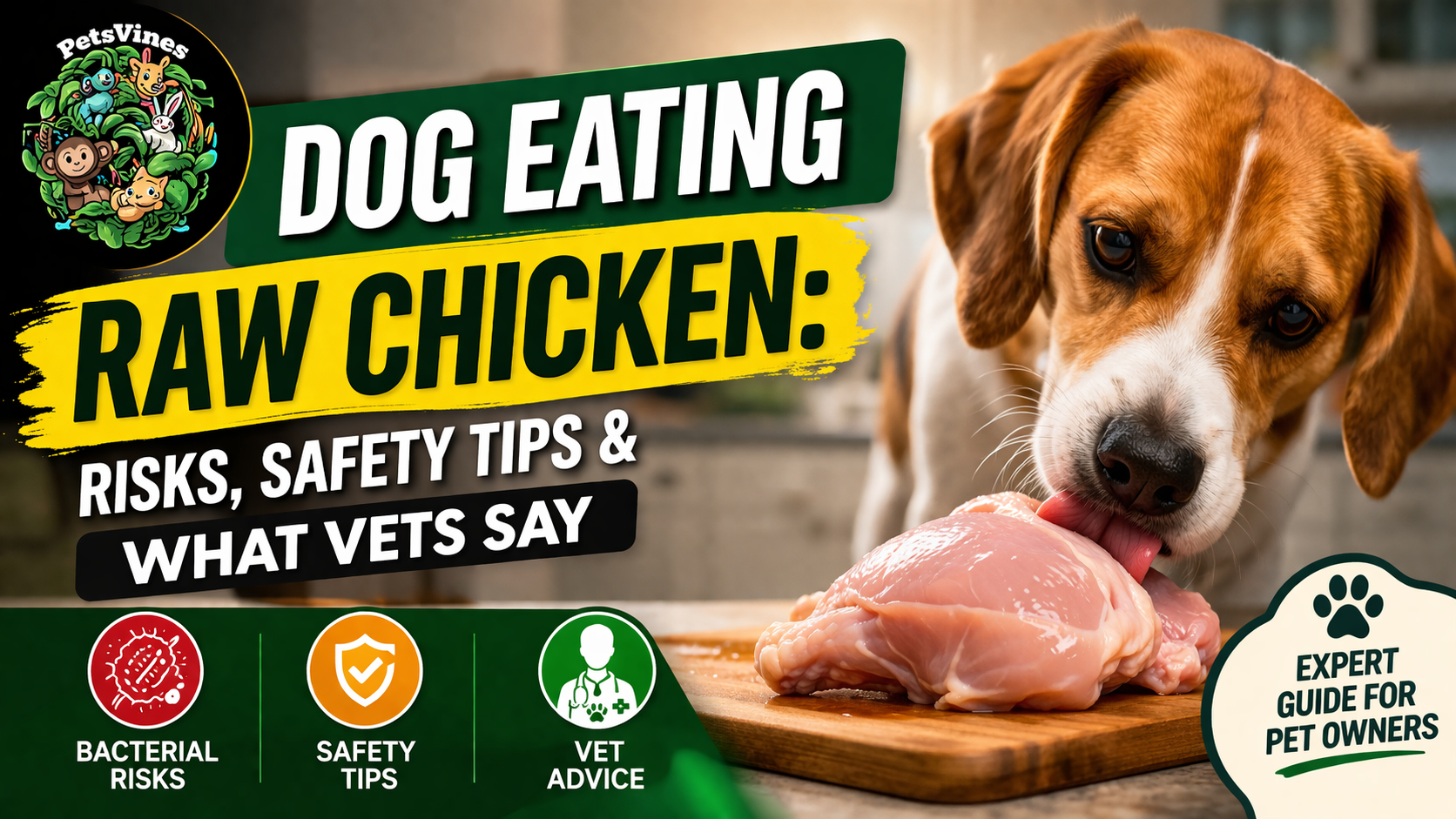
Dog Eating Raw Chicken: Dogs can eat raw chicken without always getting sick, but that doesn’t mean it’s safe. Raw chicken carries bacteria like Salmonella and Campylobacter that can harm both dogs and humans in the household. While some dogs tolerate it, the risks — especially for puppies, senior dogs, and immunocompromised pets — significantly outweigh the benefits. Safer, nutritionally complete alternatives exist and are recommended by veterinarians.
You turn your back for two seconds, and suddenly your dog has snatched a raw chicken breast off the counter. Sound familiar? Or maybe you’ve been hearing about raw food diets and wondering whether feeding your dog raw chicken is actually a smart, natural choice — or a recipe for a very bad week.
The truth, as with most things in pet nutrition, sits somewhere in the middle — but leans heavily toward caution.
Raw chicken is one of the most debated topics among pet owners worldwide. Proponents of raw feeding swear by it. Veterinarians and food safety agencies, on the other hand, consistently raise red flags. So what’s the real story?
In this guide, we break down everything you need to know about dogs eating raw chicken — the risks, the science, the rare scenarios where it might be considered, and the safer alternatives that give your dog all the nutritional benefits without the danger. Whether your dog just grabbed a raw drumstick or you’re actively researching raw diets, you’re in the right place.
For more comprehensive dog care advice, explore the full dog care resource hub at PetsVines — packed with expert-backed guidance for every stage of your dog’s life.
Can Dogs Eat Raw Chicken?
Technically yes, but it’s not recommended.
Dogs have stronger stomach acid than humans and a shorter digestive tract, which means they can sometimes process bacteria in raw meat that would make a human very sick. This biological resilience has led many raw feeding advocates to conclude that raw chicken is perfectly fine — even ideal — for dogs.
But “sometimes tolerating something” is very different from “it being safe.”
Raw chicken may carry harmful bacteria including Salmonella, Campylobacter, Clostridium perfringens, Listeria, and Staphylococcus. Any one of these can cause serious illness in dogs, and more importantly, in the humans who live with them.
The science is clear: the risks are real, measurable, and affect not just your dog — but your whole household.
The Real Risks of Dogs Eating Raw Chicken
1. Bacterial Contamination: The Biggest Threat
When people ask “is raw chicken safe for dogs,” bacterial contamination is always the first concern — and for good reason.
A study published in a peer-reviewed journal found that Salmonella was isolated from 80% of BARF (Bones and Raw Food) diet samples, and from 30% of the stool samples from dogs fed that diet. That’s not a small number.
According to researchers at the University of Georgia, up to 20% of chicks may test positive for Salmonella. While dogs are more carnivorous than humans and can resist some bacterial threats, the risk never fully disappears.
The bacteria of most concern include:
- Salmonella – the most common culprit, capable of causing severe gastrointestinal illness
- Campylobacter – often overlooked but increasingly linked to dog gut issues
- Listeria – dangerous especially for pregnant dogs or those on immunosuppressants
- E. coli – capable of causing urinary tract infections and systemic illness in compromised dogs
2. The “Healthy Dog” Myth
One of the most widespread misconceptions is that a healthy adult dog can simply shake off these bacteria without issue. While it’s true that many dogs don’t show obvious symptoms after eating raw chicken, that’s actually part of the problem.
A large epidemiological study published in 2017 found that raw meat consumption was a significant risk factor for Salmonella shedding in dogs — and close to half of the infected dogs appeared completely healthy.
A dog can be carrying and actively shedding dangerous bacteria while looking perfectly fine — wagging tail, bright eyes, eating normally. That bacteria then ends up in your home through their saliva, stool, and even paw prints on your floors.
3. The Human Health Risk
This is the part that doesn’t get talked about enough: raw-fed dogs are a public health risk to their owners.
Even if a dog contracts Salmonella and doesn’t fall ill, the dog can still easily spread the disease to humans through stool or saliva.
According to the CDC, Salmonella causes approximately 1.2 million illnesses, 23,000 hospitalizations, and 450 deaths in humans in the United States every year. Children, elderly individuals, pregnant women, and anyone with a compromised immune system are especially vulnerable to infections passed through pets.
If your household includes any of these individuals, the stakes of raw feeding are significantly higher.
4. The Bone Danger
Raw chicken bones carry their own separate set of risks that are often underestimated.
While raw bones are generally easier to digest than cooked bones, a small dog can still suffer mechanical trauma to the digestive tract from eating raw chicken bones — including the possibility of a complete bowel obstruction. Cooked chicken bones splinter dangerously and should never be given to dogs, but raw bones still pose choking and internal injury risks depending on the size of the dog and the bone.
5. Pancreatitis from Fat Content
Large amounts of fat from raw chicken can trigger pancreatitis in dogs — a painful and potentially life-threatening inflammation of the pancreas. This is particularly true for dogs who are not accustomed to a high-fat diet, smaller breeds, and those who consume a large quantity at once (such as getting into an unattended package of chicken thighs).
Which Dogs Are Most Vulnerable?
Not all dogs face the same level of risk. Some are far more likely to become seriously ill from raw chicken than others.
High-risk dogs include:
- Puppies – their immune systems are still developing and cannot fight bacteria as effectively
- Senior dogs – reduced immune function makes them more susceptible
- Dogs with chronic illness – especially kidney disease, liver disease, or cancer
- Dogs on immunosuppressant medications – such as Atopica or Apoquel
- Dogs who have never eaten raw food – sudden exposure increases digestive shock risk
Dogs with weakened immune systems — including puppies, older dogs, dogs with cancer, and those taking immune-suppressing medications — are particularly vulnerable to bacterial contamination in raw chicken.
If your dog falls into any of these categories and has eaten raw chicken, contact your veterinarian promptly rather than waiting for symptoms to appear.
My Dog Just Ate Raw Chicken — What Should I Do?
Accidents happen. Your dog is fast, your attention was elsewhere for a moment, and now a raw chicken breast is gone. Here’s what to do:
Step 1: Stay calm. One piece of raw chicken is unlikely to cause a crisis in a healthy adult dog.
Step 2: Assess the amount. A quick lick or nibble is very different from consuming an entire raw chicken. The larger the quantity relative to your dog’s size, the more concern is warranted.
Step 3: Watch for symptoms. Over the next 24–72 hours, monitor your dog for:
- Vomiting
- Diarrhea (especially bloody diarrhea)
- Lethargy or unusual tiredness
- Loss of appetite
- Fever (ears hot to the touch, reluctance to move)
- Signs of abdominal pain (hunching, whimpering)
Step 4: Call your vet if concerned. Most dogs who eat raw chicken recover without complications, but if vomiting or diarrhea develops — or if a large quantity was consumed — a vet visit is definitely in order.
Step 5: Disinfect the area. Clean any surfaces the raw chicken touched with hot water and an antibacterial cleaner. Wash your hands thoroughly. This protects you and your family from bacterial contamination.
The Raw Diet Debate: BARF, Ancestral Diets, and the Science
Many dog owners who intentionally feed raw chicken cite the BARF diet (Bones and Raw Food) or the concept that dogs are “ancestral carnivores” who evolved on raw meat.
One of the most common misconceptions is that because dogs evolved from wolves, they should naturally thrive on raw meat diets. However, this is an oversimplified view that doesn’t account for how dogs’ bodies have changed over thousands of years of domestication. Modern, domesticated dogs are far from wild carnivores — their bodies have adapted to live among humans, including significant changes in how they process and digest food.
Proponents of BARF diets point to benefits like improved coat condition, higher energy, and better digestion. However, these claims are largely supported by anecdotal testimonials rather than peer-reviewed research, and at least one small-scale study found significant nutritional imbalances in several “natural” raw diets.
The bottom line: the appeal of raw feeding is understandable, but the scientific consensus, backed by organizations like the FDA Center for Veterinary Medicine and the American Veterinary Medical Association (AVMA), does not support raw chicken as a safe dietary staple for dogs.
Safer Alternatives to Raw Chicken for Dogs
You don’t have to choose between feeding your dog chicken and keeping them safe. There are excellent options that offer all of the nutritional value of chicken without the bacterial risk.
Cooked Chicken (Plain, Boneless)
Plain boiled or baked chicken is one of the best foods you can offer your dog. Cooking chicken kills harmful bacteria like Salmonella and E. coli, making it a significantly safer option, while also providing a more bioavailable protein source — meaning the protein is easier for your dog’s body to absorb and use.
What to avoid: Seasoning, garlic, onion, oils, or butter. Keep it plain.
High-Quality Commercial Dog Food with Chicken
Well-formulated commercial dog foods that list real chicken as a primary ingredient give your dog the protein, amino acids, and micronutrients they need — without contamination risk. Look for brands that use slow-cooked or gently processed chicken rather than heavily rendered meat meals.
Freeze-Dried or HPP-Processed Raw Food (With Caution)
For owners committed to a raw-style diet, High-Pressure Processing (HPP) is a non-thermal technique that reduces pathogen levels without cooking. Some commercially available raw dog foods use this method. These options carry lower (though not zero) bacterial risk compared to unprocessed raw chicken from a grocery store.
Note: Even with HPP products, veterinarians recommend keeping high-risk household members — including young children, the elderly, immunocompromised individuals, and pregnant women — away from the product and the dog, as the dog may still shed organisms that can harm those family members.
Veterinarian-Recommended Raw Diet Plans
If raw feeding matters to you, consult with a board-certified veterinary nutritionist before starting. A professional can help you source appropriately tested ingredients, balance the diet correctly, and reduce both contamination and nutritional deficiency risks.
Nutritional Value of Chicken for Dogs
Despite the risks of the raw format, chicken itself is genuinely nutritious for dogs. Here’s what it provides:
| Nutrient | Benefit for Dogs |
|---|---|
| High-quality protein | Muscle maintenance and repair |
| Omega-6 fatty acids | Healthy coat and skin |
| Glucosamine (from bones/cartilage) | Joint support |
| B vitamins (B3, B6) | Energy metabolism, nerve function |
| Phosphorus & Calcium | Bone health (especially in whole carcass) |
| Zinc & Selenium | Immune system support |
The key takeaway: chicken is excellent for dogs — it’s specifically the raw, unprocessed form that creates problems. You can get every one of these benefits from properly cooked chicken or high-quality chicken-based dog food.
FAQ’s
Can dogs eat raw chicken bones?
Raw bones are less likely to splinter than cooked bones, but they still pose risks. If your dog swallows chicken bone pieces or whole chicken bones, call your veterinarian. Small dogs are especially at risk of bowel obstruction, internal cuts, and choking.
Can puppies eat raw chicken?
No. Puppies have immature immune systems and are at significantly higher risk of serious bacterial infection. Do not feed raw chicken to puppies.
Will one piece of raw chicken hurt my dog?
In most small-volume ingestion situations, veterinarians recommend carefully monitoring your dog over the week following ingestion for signs of vomiting or diarrhea. A single small piece is unlikely to cause major harm in a healthy adult dog, but monitoring is essential.
Is raw chicken good for dogs with allergies?
Chicken is a common allergen in dogs. If your dog has a known chicken allergy, avoid raw chicken in any form. Novel protein diets (such as duck, venison, or rabbit) are typically recommended for allergic dogs.
Can dogs eat raw chicken skin?
Raw chicken skin is very high in fat and a common trigger for pancreatitis. It should be avoided regardless of whether it’s raw or cooked.
Should You Feed Your Dog Raw Chicken?
The evidence is consistent: raw chicken carries real, documented risks for dogs and the humans who live with them. While a healthy adult dog may tolerate it without visible illness, that doesn’t make it safe — especially when safer alternatives exist that offer identical nutritional benefits.
If your dog accidentally ate raw chicken, monitor them closely and contact your vet if symptoms develop. If you’re considering raw feeding as an ongoing practice, please consult a veterinary nutritionist before starting, and never begin without proper food safety protocols in place.
Your dog deserves the best nutrition — and that nutrition doesn’t have to come with unnecessary risk.
Also Visit: Can Dogs Eat Egg Shells? Benefits, Risks & Safe Feeding Tips