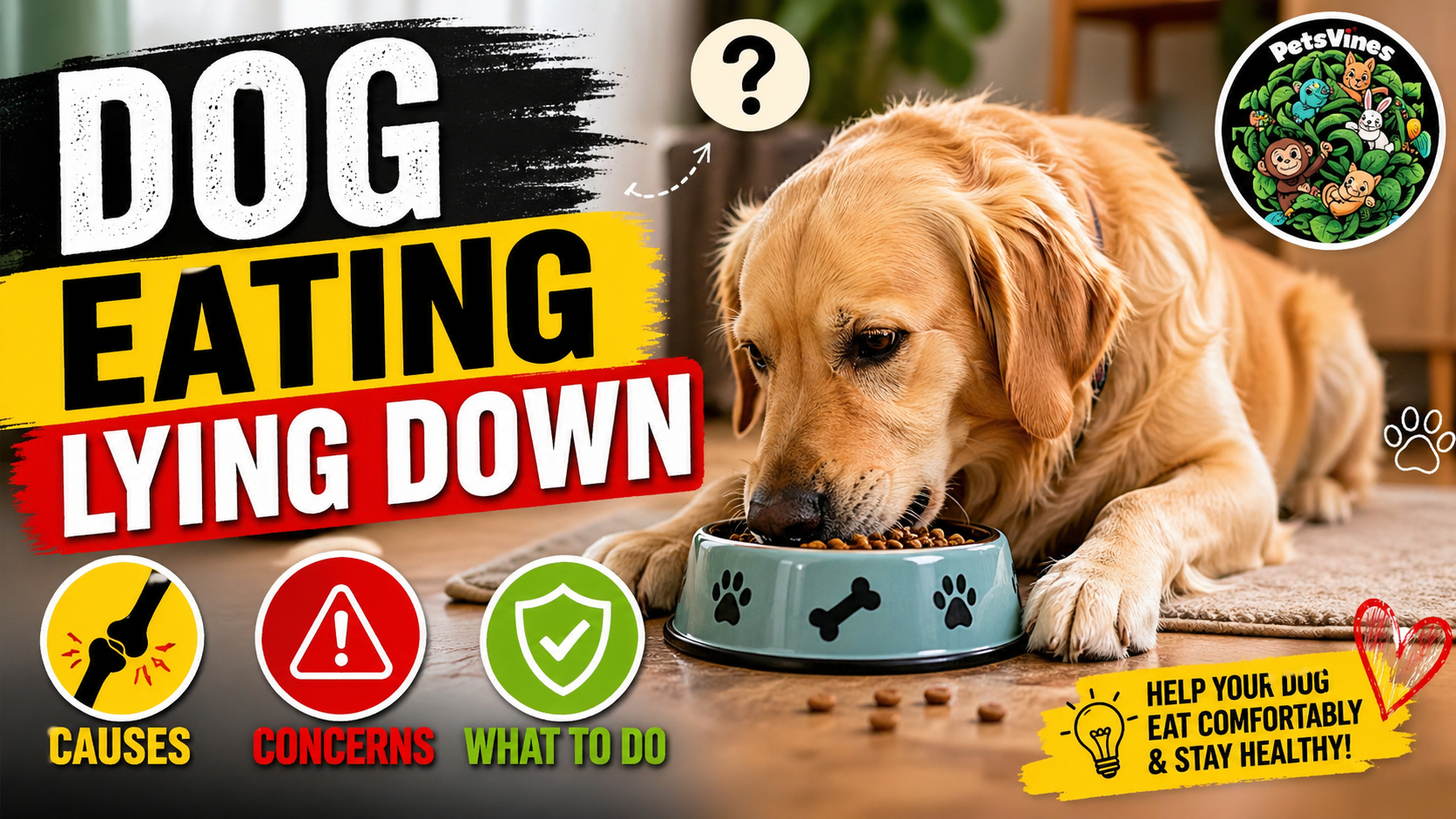
Dogs eating lying down for several reasons: it may simply be a personal preference, especially in large or senior dogs, or it could signal joint pain, hip dysplasia, dental discomfort, or neck/back issues. If this behavior started suddenly and is accompanied by changes in appetite, limping, or lethargy, consult your veterinarian promptly.
You set down your dog’s bowl, walk away, and come back to find them flat on the floor, nose buried in their kibble like they’re too tired to even stand for dinner. Sound familiar?
For most pet owners, seeing a dog eat lying down raises an immediate question: Is something wrong with my dog, or is this just a quirky habit?
The honest answer is — it depends. Dog eating lying down can be completely normal behavior, or it can be your dog’s subtle way of telling you something hurts. Knowing the difference could genuinely make a difference in your dog’s health and comfort.
In this guide, you’ll learn the most common reasons dogs eat in a lying position, which signs should prompt a vet visit, and practical steps you can take to help your dog eat more comfortably. Whether your dog has always eaten this way or just started doing it recently, this article has the answers you need.
What Does It Mean When a Dog Eats Lying Down?
A dog eating lying down can mean many things. It might simply be a comfortable preference — similar to how humans sometimes eat on the couch. But if the behavior is new, it could mean your dog is experiencing pain, discomfort, or a health issue that makes standing difficult. Always consider whether other symptoms are present.
Dogs are creatures of habit. A sudden change in how they eat — including shifting from standing to lying down — is often a signal worth paying attention to. On the other hand, some dogs have eaten lying down their entire lives with zero health implications.
The key distinction? Was this always their habit, or did it start suddenly?
7 Common Reasons Dogs Eat Lying Down
1. It’s Simply Their Preferred Style
Some dogs are just quirky eaters. If your dog has always sprawled out during meals and is otherwise energetic, healthy, and maintaining a normal weight, this is likely just their personality. Dogs, like people, develop individual habits — and lying down to eat is one some dogs simply prefer.
This is especially common in puppies and young dogs who are still figuring out how their bodies work. There’s no medical concern here unless other symptoms appear.
2. Joint Pain or Arthritis
One of the most common medical reasons a dog eats lying down is joint pain. Standing for extended periods — even just long enough to finish a bowl of food — can be genuinely painful for dogs suffering from arthritis or other joint conditions.
According to the Arthritis Foundation, arthritis affects an estimated 20% of all adult dogs and up to 80% of dogs over the age of 8. For these dogs, lying down during meals reduces the pressure on aching joints, making eating more tolerable.
Watch for these accompanying signs:
- Limping or stiffness, especially after rest
- Reluctance to climb stairs or jump
- Visible swelling around joints
- Decreased activity or playfulness
3. Hip Dysplasia
Hip dysplasia is a developmental condition where the hip joint doesn’t fit together properly, causing pain, inflammation, and eventual arthritis. It’s particularly common in large breeds like German Shepherds, Labrador Retrievers, and Golden Retrievers.
A dog with hip dysplasia may find standing at their food bowl increasingly uncomfortable. Lying down shifts weight away from the hips, providing temporary relief. The American Kennel Club (AKC) notes that hip dysplasia affects nearly 20% of large breed dogs, making it a significant concern for big-dog owners.
If you have a large or giant breed dog that has recently started eating lying down, hip dysplasia should be on your radar.
4. Neck or Back Pain
If your dog has to bend their neck significantly downward to reach their bowl, it can put strain on their cervical spine (neck) and upper back. Dogs experiencing neck or back pain — from a slipped disc, muscle strain, or cervical spondylomyelopathy (Wobbler syndrome) — may lie down to avoid that painful bending motion.
Signs that neck or back pain may be the issue:
- Reluctance to lower their head
- Crying or whimpering when moving their neck
- Holding their head in an unusual position
- Weakness or stumbling in the front legs (in severe cases)
This is a situation that warrants a vet visit sooner rather than later.
5. Dental Pain or Oral Discomfort
This one surprises many pet owners, but tooth pain, gum disease, or oral injuries can absolutely change how a dog eats. A dog dealing with dental pain may shift positions, chew more slowly, or lie down during meals in an attempt to find a more comfortable angle for chewing.
The American Veterinary Dental College (AVDC) estimates that over 80% of dogs show signs of periodontal disease by age 3. Dental disease is one of the most underdiagnosed yet common health issues in dogs.
If your dog is suddenly eating lying down, check for:
- Bad breath beyond the usual
- Drooling more than normal
- Pawing at their mouth
- Dropping food while eating
- Chewing on one side only
6. Large or Tall Breed Challenges
Large and giant breed dogs — think Great Danes, Irish Wolfhounds, and Saint Bernards — have a long way to stretch their necks down to a floor-level bowl. For these dogs, eating lying down is often a practical solution to an ergonomic problem, not a sign of illness.
If you have a large breed dog and this has always been their eating style, an elevated food bowl could be the simple fix that makes their mealtime much more comfortable. Raised bowls bring food up to a natural height, reducing neck and joint strain significantly.
(Explore more tips and gear recommendations for large breeds at PetsVines Dog Care Hub.)
7. Age-Related Fatigue in Senior Dogs
Senior dogs — generally those over 7–8 years old — experience natural physical changes that make sustained standing more tiring and uncomfortable. Muscle mass decreases, joints stiffen, and energy levels drop. An older dog eating lying down may simply be conserving energy or working around the discomfort of aging.
If your senior dog has recently started eating this way, it’s worth a vet check-up to rule out conditions like arthritis, hypothyroidism, or other age-related health changes. Senior dogs benefit greatly from regular wellness exams — at minimum twice a year according to the American Animal Hospital Association (AAHA).
When Should You Actually Worry?
You should be concerned when the lying-down eating behavior is new, sudden, or combined with other symptoms like reduced appetite, limping, whimpering, weight loss, or visible discomfort. These signs suggest an underlying medical issue that needs veterinary evaluation.
Here’s a simple way to think about it:
Likely fine if:
- Your dog has always eaten this way
- They are otherwise playful, energetic, and eating normally
- No other behavioral changes are present
- They’re a large breed with a low food bowl
See your vet if:
- The behavior started suddenly within days or weeks
- Your dog eats less than usual or avoids the bowl
- You notice limping, stiffness, or difficulty moving
- Your dog whimpers or shows signs of pain around mealtime
- They’re losing weight unexpectedly
- They’re a senior dog and the change is new
The Role of Bowl Height: More Important Than You Think
One practical factor that’s often overlooked is food bowl height. Dogs that have to crane their necks way down to reach a floor-level bowl are putting unnecessary strain on their spine, neck muscles, and front joints.
Research published in the Journal of the American Veterinary Medical Association suggests that elevated feeders can reduce strain in dogs with orthopedic issues. However, there’s nuance here — for very deep-chested breeds prone to bloat (like Great Danes or Weimaraners), elevated bowls have historically been a debated topic. Always discuss the best setup with your vet based on your dog’s breed and health history.
General bowl height guidelines:
- Small breeds: Bowl on the floor is usually fine
- Medium breeds: 4–8 inches off the ground
- Large breeds: 8–12 inches off the ground
- Giant breeds: 12+ inches off the ground
Practical Solutions to Help Your Dog Eat More Comfortably
If your dog is eating lying down due to joint pain, breed size, or age-related issues, here are steps you can take right now:
1. Switch to an elevated bowl Raising the bowl to chest height can reduce neck and joint strain for medium, large, and senior dogs.
2. Use an orthopedic mat near the food station A supportive, anti-slip mat gives your dog a comfortable place to stand (or lie down) during meals.
3. Try puzzle feeders or slow feeders These encourage engagement and slow down eating, which is beneficial for digestion and for dogs that seem disinterested in standing through a full meal.
4. Split meals into smaller portions Two or three smaller meals per day instead of one large meal reduces the time your dog has to stand — and is generally better for digestion.
5. Schedule a vet check-up If the behavior is new or you notice any of the warning signs listed above, this step isn’t optional. A vet can assess for arthritis, dental issues, spinal problems, or other underlying conditions.
6. Consider joint supplements With vet guidance, supplements like glucosamine and chondroitin can support joint health in aging or large breed dogs. According to Veterinary Evidence Journal, glucosamine supplementation shows benefit in managing osteoarthritis symptoms in dogs.
(For more in-depth dog care advice, visit PetsVines — your go-to resource for everything dog-related.)
Dog Eating Lying Down: Breed-by-Breed Context
Not all dogs are equal when it comes to this behavior. Understanding your dog’s breed can help you assess the situation more accurately.
| Breed Type | Likely Cause | Recommended Action |
|---|---|---|
| Large/Giant breeds | Ergonomic discomfort, bowl height | Elevated bowl, vet check if new |
| Senior dogs (any breed) | Joint pain, age-related fatigue | Vet wellness exam, joint support |
| Deep-chested breeds | Possible GI discomfort | Vet consult on bowl height & bloat risk |
| Small breeds | Usually behavioral preference | Monitor; see vet if sudden change |
| Puppies | Habit or playfulness | Normal; monitor as they mature |
FAQ’s
Q: Is it bad for dogs to eat lying down?
Not necessarily. If your dog has always done it and is healthy, it’s usually fine. If it started suddenly, investigate further.
Q: My old dog started lying down to eat — should I panic?
Don’t panic, but don’t ignore it either. Senior dogs developing this habit are often dealing with joint pain or fatigue. A vet check is a smart move.
Q: Can I train my dog to eat standing up?
You can encourage it with an elevated bowl, but forcing a dog in pain to stand during meals isn’t advisable. Address the underlying issue first.
Q: Does a dog eating lying down mean they’ll get bloat?
Not directly. Bloat (GDV) is more related to eating speed, meal size, and genetics than eating position. However, discuss your dog’s feeding setup with your vet if they’re a at-risk breed.
Q: My dog lies down mid-meal — is that different?
Yes, slightly. A dog that starts standing and then lies down mid-meal may be experiencing fatigue or pain that builds during the meal. Mention this to your vet.
Listen to What Your Dog’s Body Is Saying
Dogs can’t tell us when something hurts. Instead, they change their behavior — and something as subtle as shifting from standing to lying down during meals can be their only way of communicating discomfort.
If this has always been your dog’s style, enjoy their quirky eating habits and make sure their setup is ergonomically comfortable. But if it’s new, sudden, or paired with any other changes, treat it as a message worth hearing.
Your dog depends on you to notice these signals. A simple vet visit could make an enormous difference in their comfort and quality of life.
Also Visit: Dog Eating Dirt and Grass: Causes, Risks & How to Stop It