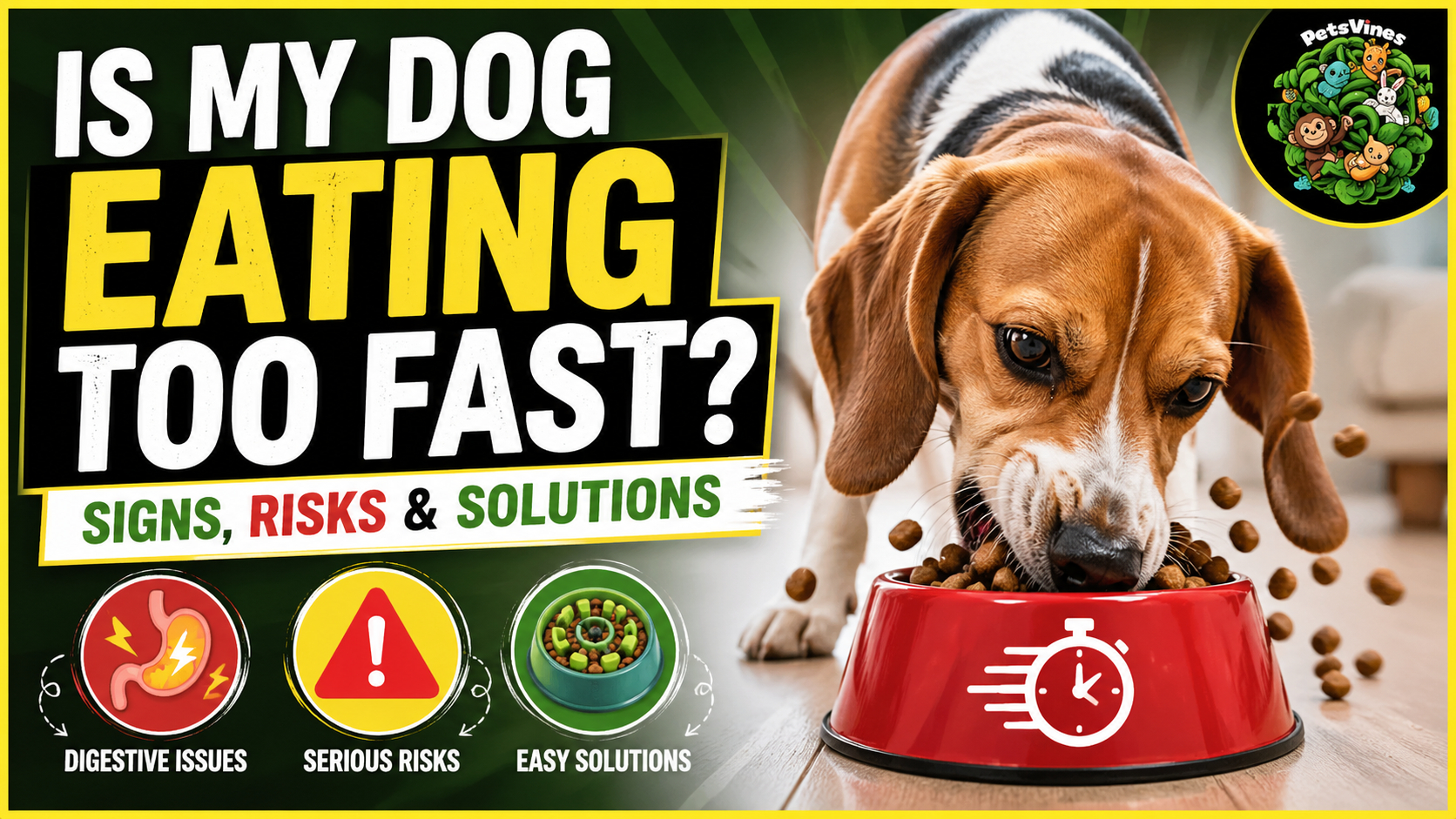
Is My Dog Eating Too Fast: Yes, your dog is likely eating too fast if they finish their meal in under 60 seconds, gag or vomit shortly after eating, or appear to barely chew before swallowing. Fast eating in dogs can cause serious health problems including bloat (GDV), choking, and chronic digestive issues. The fix? Slow feeder bowls, puzzle feeders, smaller meal portions, and consistent mealtime routines can all help.
You set the bowl down, and before you’ve even stepped away from the kitchen — it’s gone. Sound familiar?
If you’ve ever asked yourself “is my dog eating too fast?”, you’re not alone. Millions of dog owners around the world deal with this exact issue, and while it might look harmless — or even a little funny — the reality is that speed-eating is one of the most underrated health risks for dogs.
From vomiting and choking to a life-threatening condition called bloat, eating too quickly can have serious consequences. The good news? It’s entirely manageable once you know what’s causing it and what to do about it.
This guide covers everything you need to know — the signs, the science behind why dogs gulp their food, the real dangers involved, and eight practical, vet-backed strategies to slow your dog down at mealtime.
How Fast Is Too Fast? Signs Your Dog Is Eating Too Quickly
A dog eating too fast typically finishes a meal in under 60 seconds, swallows kibble whole without chewing, gulps in visible amounts of air, and often regurgitates food shortly after. If your dog also seems restless, bloated, or uncomfortable after eating, speed-eating is likely the cause.
So how do you know if your dog has a speed-eating problem? Here are the most common red flags:
- Meal finished in under 60 seconds — particularly for medium or large breed dogs
- Little to no chewing — kibble goes down in one gulp
- Gagging or coughing during or right after eating
- Vomiting undigested food within minutes of finishing the bowl
- Visible bloating or a distended belly post-meal
- Excessive burping or flatulence after meals
- Restlessness or discomfort — pacing, lying down and getting up repeatedly
If your dog checks two or more of these boxes regularly, you’re dealing with a speed-eating problem that deserves attention.
Why Do Dogs Eat So Fast? The Real Reasons Behind the Behaviour
Dogs eat fast primarily due to survival instincts inherited from their wild ancestors, competition with other animals, anxiety around food, or underlying health conditions that increase hunger. Understanding the root cause helps you choose the right solution.
1. Ancestral Survival Instincts
Dogs are descended from wolves, and in the wild, meals were never guaranteed. A pack that caught prey had to eat quickly before another predator arrived. That “eat fast or lose it” mentality is deeply hardwired into many dogs — even the ones who have never missed a meal in their lives.
2. Competition — Real or Imagined
Multi-dog households are a classic breeding ground for speed-eating. When one dog sees another eating nearby, the instinct to protect their share kicks in hard. But here’s what surprises many owners: single dogs can also develop this behaviour if they were previously in a shelter, a litter with many siblings, or any environment where food was scarce or shared.
3. Irregular Feeding Schedules
Dogs that aren’t fed on a consistent schedule can develop anxiety around mealtimes. When they’re unsure when their next meal is coming, they treat every bowl like it might be their last — and eat accordingly.
4. High-Palatability Foods
Some commercial dog foods are specifically formulated to be highly appealing — rich in flavour, smell, and fat. A dog that finds their food irresistible will naturally want to eat it as fast as possible.
5. Underlying Medical Conditions
Sometimes speed-eating isn’t behavioural at all — it’s a symptom. Conditions like intestinal parasites (worms), diabetes, hyperthyroidism, or Cushing’s disease can cause a dog to feel insatiably hungry. If your dog has recently developed this habit suddenly or alongside weight loss, increased thirst, or lethargy, a vet check is essential.
The Real Dangers of Eating Too Fast
Dogs that eat too fast risk choking, regurgitation, excess gas, and most dangerously, gastric dilatation-volvulus (GDV) — commonly called bloat — which is a life-threatening emergency requiring immediate surgery.
This is where the conversation gets serious.
Choking and Gagging
When food is swallowed whole and too quickly, it can easily become lodged in the throat. Even if your dog doesn’t fully choke, repeated gagging puts stress on the oesophagus and can cause long-term irritation.
Vomiting and Regurgitation
One of the most common outcomes of speed-eating is bringing the food right back up. This is especially common in dogs eating dry kibble — the food hits the stomach fast, absorbs water, expands, and the body rejects it. It may look like vomiting but is often regurgitation (the food barely had time to be digested).
Excess Gas and Digestive Discomfort
Gulping food means swallowing large amounts of air. That air has to go somewhere — and it usually ends up causing painful bloating, excessive flatulence, and general GI discomfort.
Gastric Dilatation-Volvulus (GDV) — The Biggest Risk
This is the danger that no dog owner should ignore.
GDV, commonly called bloat, occurs when the stomach fills with gas and then twists on itself, cutting off blood supply to the stomach and spleen. It progresses rapidly and without emergency surgery, it is fatal.
According to the American Kennel Club, GDV is one of the most serious emergencies in veterinary medicine. Large and giant breeds — Great Danes, German Shepherds, Standard Poodles, Boxers — are particularly at risk, though it can happen in any breed.
Warning signs of GDV include:
- Unproductive retching (trying to vomit but nothing comes up)
- Swollen, hard abdomen
- Excessive drooling
- Restlessness and distress
- Pale gums
- Rapid heart rate and weakness
If you see these signs after a meal, get to an emergency vet immediately. Every minute matters.
8 Vet-Approved Ways to Slow Down Your Dog’s Eating
The most effective ways to slow a dog’s eating include using slow feeder bowls, puzzle feeders, muffin tins, hand-feeding, splitting meals into multiple smaller portions, and removing competition triggers. Most dogs show improvement within a few days of making changes.
Here are eight practical solutions, ranging from the simplest to the most creative:
1. Use a Slow Feeder Bowl
Slow feeder bowls are specifically designed with ridges, mazes, and raised sections that force your dog to eat around obstacles. Research from the Journal of Veterinary Behavior has found that slow feeder bowls can reduce eating speed by up to 10x in some dogs. They’re affordable, easy to clean, and one of the most effective first steps.
2. Try a Snuffle Mat or Puzzle Feeder
Snuffle mats scatter food among fabric fibres, turning mealtime into a foraging game. Puzzle feeders require dogs to slide, flip, or unlock compartments to access their food. Both engage your dog’s brain, slow down eating dramatically, and provide mental enrichment — a win on every front.
For more dog feeding tips and product ideas, explore our dog care guide at PetsVines.
3. Spread Food on a Licki Mat or Baking Sheet
For wet food or mixed meals, spreading food across a licki mat or flat baking sheet forces your dog to lick small amounts at a time rather than wolfing down large mouthfuls.
4. Divide Meals Into Smaller, More Frequent Portions
Instead of two large meals per day, try three or four smaller ones. This reduces the volume your dog is eating at any one sitting and keeps hunger anxiety lower throughout the day. Many dogs become calmer and more relaxed around food once they learn meals are predictable and frequent.
5. The Muffin Tin Method
Place portions of your dog’s daily food into the cups of a standard muffin tin. It’s simple, free, and surprisingly effective — your dog has to move from section to section, naturally slowing down the pace.
6. Use Kibble for Training Sessions
Rather than serving your dog’s entire meal in a bowl, use part of their daily kibble allowance for training throughout the day. This turns feeding into an enriching activity and removes the “race to finish the bowl” dynamic entirely.
7. Separate Dogs at Mealtimes
If you have multiple dogs, feed them in different rooms or with a visual barrier between them. Eliminating the perceived competition immediately removes one of the most powerful triggers for speed-eating.
8. Work With Your Veterinarian
If you’ve tried behavioural solutions without much improvement — or if your dog’s speed-eating is a new development — it’s time for a vet visit. A veterinarian can screen for underlying conditions like parasites, thyroid issues, or diabetes that might be driving excessive hunger. They can also advise on whether a diet change could be contributing to the problem.
Breeds Most Prone to Fast Eating (And Bloat Risk)
While any dog can eat too fast, certain breeds are more predisposed to both speed-eating and GDV. These include:
- Great Danes (highest risk for bloat)
- German Shepherds
- Standard Poodles
- Boxers
- Labrador Retrievers (notorious for food obsession)
- Golden Retrievers
- Beagles (driven by scent and appetite)
- Basset Hounds
If you own one of these breeds, being proactive about mealtime habits isn’t just a good idea — it could genuinely save their life.
What to Do If Your Dog Vomits After Eating
Occasional regurgitation of food right after eating is usually not an emergency — it’s often the direct result of eating too fast. However, you should contact your vet if:
- Vomiting happens consistently after every meal
- Your dog vomits blood or bile
- Your dog seems lethargic, in pain, or won’t eat at all
- The abdomen appears distended or hard after vomiting
Never ignore repeated vomiting in dogs. It’s always better to rule out something serious.
When Is Fast Eating a Medical Emergency?
To be very clear: if your dog is retching unproductively, has a visibly swollen belly, seems in severe distress, or collapses after eating, this is a veterinary emergency. Head to the nearest animal hospital immediately and tell them you suspect GDV.
GDV can kill a dog within hours. Speed of treatment is everything.
FAQs
Q: Is it normal for puppies to eat fast? Yes, puppies often eat quickly because they’re used to competing with littermates. The same solutions apply — slow feeders, smaller portions, and consistent schedules. Starting good habits early makes a big difference.
Q: Can a dog eating too fast cause long-term damage? Repeated speed-eating can lead to chronic gastritis, oesophageal irritation, and significantly increases the lifetime risk of GDV. It’s worth addressing now rather than waiting.
Q: My dog eats fast but never seems sick — should I still worry? Yes. Many dogs eat fast for years before a health issue surfaces. Prevention is always better than treatment, especially with something as serious as bloat.
Q: Do slow feeder bowls actually work? For most dogs, yes — and quite effectively. Studies have shown significant reductions in eating speed. Some dogs require extra patience to adjust, but most adapt within a week.
Q: Should I elevate my dog’s food bowl? Interestingly, contrary to old advice, research now suggests that elevated bowls may actually increase bloat risk in large breeds. Stick to floor-level feeding unless advised otherwise by your vet.
Take Mealtime Seriously
Your dog’s mealtime habits are a direct window into their health. If they’re consistently clearing the bowl in seconds flat, that behaviour is telling you something — whether it’s anxiety, competition, or a medical need that deserves attention.
The good news is that this is one of the most fixable problems in pet care. A slow feeder bowl, a split feeding schedule, and a calm mealtime environment can transform how your dog eats within a matter of days.
Don’t wait for a health scare to take action. Start small, be consistent, and if in doubt — call your vet.