
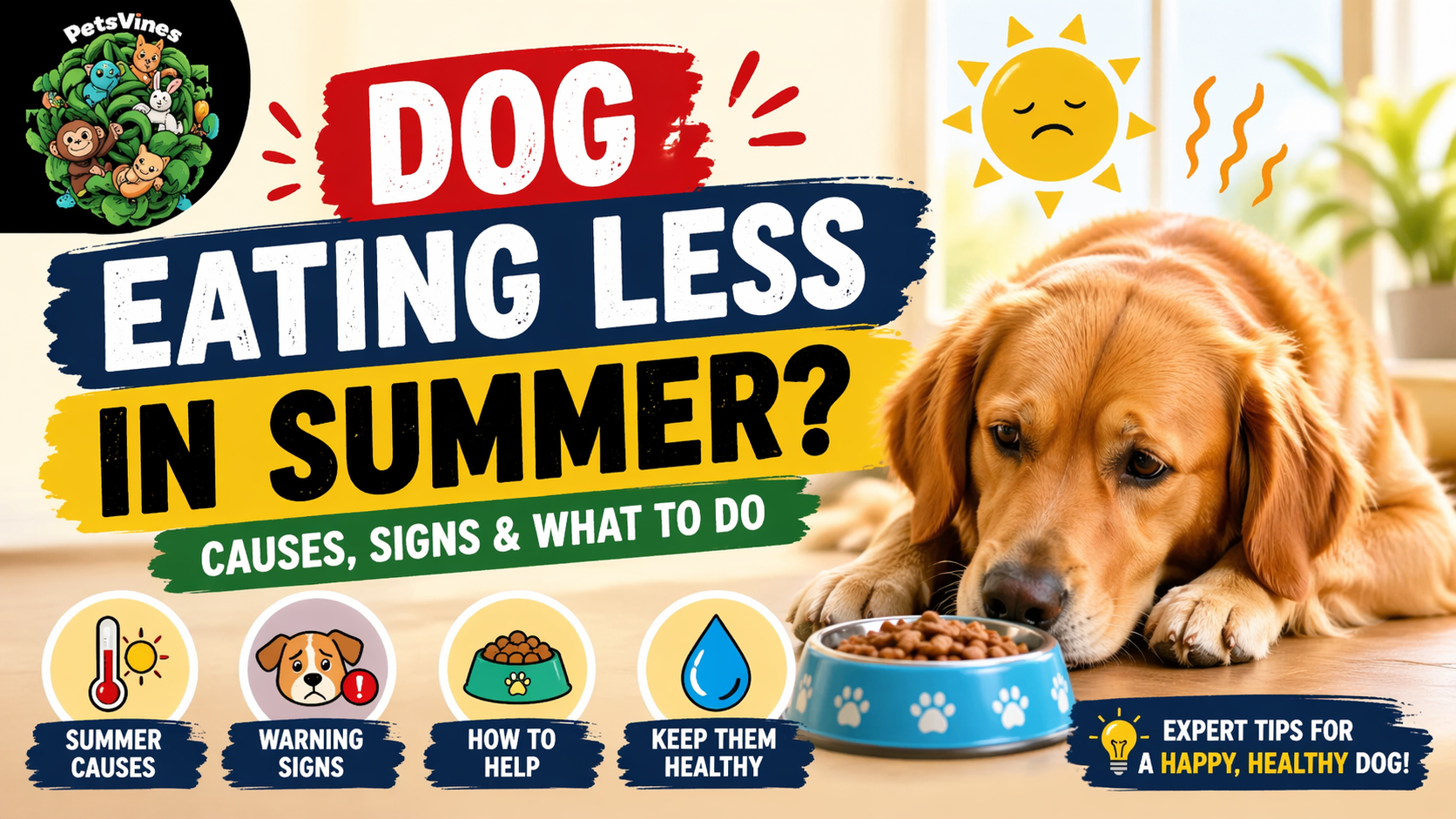
Dog Eating Less in Summer? Yes — it’s completely normal for dogs to eat less during hot weather. As temperatures rise, dogs become less active and need fewer calories. Heat also slows digestion and metabolism, making them feel fuller for longer. Dogs, like cats, could eat up to 15% less during the summer months. Unless your dog hasn’t eaten for more than 24–48 hours or shows other symptoms, a reduced appetite in summer is typically nothing to worry about.
You set down your dog’s bowl, walk away, and come back ten minutes later to find it’s barely been touched. If this sounds familiar every time the temperatures climb, you’re not alone — and your dog isn’t being fussy.
Dogs are remarkably in tune with their environment, and summer is one season that genuinely changes how they feel, move, and eat. Research shows that dogs eat less in the summer and more in winter. That’s not just anecdotal — there’s real biology behind it, and understanding it can help you tell the difference between a dog that’s naturally adjusting to the heat and one that might need a vet’s attention.
In this guide, you’ll learn exactly why your dog’s appetite drops in summer, what signs are normal versus concerning, and practical steps you can take to keep your dog healthy, hydrated, and well-nourished through the warmer months. Whether you’re a new dog owner or a seasoned pet parent, this is the resource you’ve been looking for. For more expert dog care advice, explore the PetsVines dog care hub.
Is It Normal for Dogs to Eat Less in Summer?
Yes, in most cases it is completely normal. A dog that eats slightly less during a heatwave is responding to its body’s natural signals — not staging a hunger strike.
Not all dogs will reduce their food intake, but if your dog is usually food-motivated and happily clears their bowl, and you notice they’re eating less in summer, the heat is likely the reason.
Think of it this way: when it’s sweltering outside, do you feel like sitting down to a heavy three-course meal? Probably not. Dogs experience something remarkably similar. Their bodies are smart enough to match food intake with energy output — and in summer, both tend to drop.
That said, “normal” has limits. A slight reduction over a few days is one thing. Refusing food entirely for 24–48 hours or more, especially with other symptoms, is a different story altogether.
Key Reasons Behind Reduced Appetite
1. Heat Affects Metabolism
Dogs burn fewer calories in hot weather because they are less active. Unlike winter, they don’t need extra energy to stay warm.
- Lower calorie needs = less hunger
- Natural biological adaptation
2. Reduced Physical Activity
Most dogs slow down in summer to avoid overheating.
- Less exercise = less appetite
- More resting = reduced energy demand
3. Increased Hydration Needs
Dogs drink more water in summer, which can make them feel full.
- Water can temporarily suppress appetite
- Hydration becomes a priority over food
4. Heat Stress or Mild Discomfort
Even mild heat can make dogs feel sluggish and uninterested in food.
According to the American Kennel Club (AKC), dogs are more prone to heat-related appetite changes during warmer months.
Why Is My Dog Not Eating as Much in the Heat? The Science Behind It
It’s unclear exactly why pets might eat less in the summer, but a recent six-year study on cats found they ate around 15% less in the warmer months — and researchers believe the same temperature and daylight-driven mechanisms apply to dogs.
Here’s what’s actually happening inside your dog’s body:
1. Reduced Activity = Lower Caloric Need
Dogs often slow down during summer. With shorter walks, fewer high-energy activities, and more lounging in the shade, they simply don’t need as many calories. Their body instinctively adjusts intake to match output. It’s basic energy economics.
A study of dog owners found that 81.7% thought their dog’s activity decreased in hot weather, and 87% believed their dogs exercised less vigorously. So if your dog is less active, their reduced appetite is likely just a perfectly calibrated response.
2. Heat Slows Digestion and Metabolism
More daylight and higher temperatures can cause metabolic changes in dogs — their metabolism can slow down, and they may digest food more slowly. When digestion slows, your dog feels fuller for longer, which naturally reduces how much they want to eat at mealtime.
By eating less, dogs limit the internal heat generated during digestion, helping them maintain a comfortable internal temperature. Digesting food creates body heat — so in summer, eating less is also a way of staying cool. It’s a surprisingly elegant biological response.
3. Hormonal Changes Triggered by Longer Days
Increased daylight hours and temperatures may cause hormonal changes in dogs, which can cause them to digest food at a slower rate, meaning they feel fuller for longer. This is similar to how humans experience seasonal mood and appetite shifts — light exposure affects hormonal rhythms in mammals broadly.
4. Heat and Discomfort Suppress Appetite Directly
Just like humans, dogs may feel sluggish or slightly nauseous when it’s very hot. Elevated body temperatures can affect appetite, especially after exercise or sun exposure.
If your dog has just come in from a hot walk and turns away from their food, that’s normal. Their body is still working hard to cool down — digestion can wait.
5. Disrupted Routine
A change in routine — going on holiday, guests coming to visit — can also affect your dog’s appetite during summer. Dogs are creatures of habit. Travel, house guests, new environments, or even a shift in your own schedule can throw off their eating patterns independently of the heat.
Which Dogs Are Most Affected?
Not every dog responds to summer heat equally. Breed, coat type, size, age, and health status all play a role.
Different breeds are affected by heat in different ways — dogs with long hair will struggle more than short-haired breeds. Brachycephalic (flat-faced) breeds like Bulldogs, Pugs, and French Bulldogs are also particularly heat-sensitive, as they have a harder time regulating body temperature through panting.
Certain breeds with heavier or thicker coats may become less active due to the heat, leading to consuming lesser amounts of food.
Older dogs and puppies also tend to be more vulnerable to heat’s effects. Senior dogs may already have slower metabolisms, and adding summer heat to the mix can further dampen their appetite. Puppies, on the other hand, are still developing thermoregulation and may react unpredictably.
Warning Signs: When “Eating Less” Becomes a Vet Visit
Here’s where it’s crucial to know your dog. A little less kibble in the bowl during a heatwave? Probably fine. But there are clear red flags that warrant a call to your vet.
Watch out for these symptoms alongside reduced appetite:
- Vomiting or diarrhoea — could signal heatstroke, infection, or food intolerance
- Excessive lethargy beyond typical warm-weather laziness
- Signs of dehydration — dry gums, sunken eyes, skin that doesn’t spring back when pinched
- Excessive panting or drooling — especially if your dog hasn’t been exercising
- Refusal to eat for more than 24–48 hours
- Changes in behaviour — unusual withdrawal, aggression, or clinginess
- Rapid weight loss
If your dog refuses food for more than 24–48 hours, that’s your cue to call the vet. Changes in behaviour or temperament — irritability, clinginess, or withdrawal — can sometimes accompany appetite issues and may point to discomfort or pain Dog Eating Less in Summer.
Heatstroke is a genuine medical emergency in dogs. If your dog collapses, has glazed eyes, is drooling excessively, or has a very rapid heartbeat, seek emergency veterinary care immediately.
In some cases, decreased appetite can be a sign of a more severe condition, such as an infection, and it’s important to consult a veterinarian to rule out any underlying health issues.
How to Help Your Dog Eat Better in Summer: 8 Practical Tips
You don’t have to sit back and watch your dog pick at their food all summer. These vet-informed strategies can make a real difference.
1. Shift Mealtimes to Cooler Parts of the Day
If your dog’s meals coincide with peak heat hours — 10 a.m. to 4 p.m. — they might be too uncomfortable to eat. Offering food in the cooler parts of the day can help. Try feeding in the early morning or evening when temperatures have dropped. You’ll often find your dog’s appetite is much better.
2. Serve Food at Room Temperature or Slightly Cooled
Very warm food can be even less appealing in hot weather. If you use wet food, serve it at room temperature or refrigerate it briefly. Many dogs find chilled food more appealing in summer.
3. Try Frozen Treats and Hydrating Foods
Try feeding frozen treats and hydrating foods as a way to keep your dog interested in eating while also helping them stay cool and hydrated. You can freeze dog-safe foods like plain yoghurt, blueberries, or watermelon (seedless) in silicone moulds for simple, nutritious summer snacks.
4. Keep Water Fresh and Accessible at All Times
Dehydration is one of the fastest routes to appetite suppression. Always ensure your dog has access to clean, cool water — multiple bowls around the house, especially near their feeding area, can make a big difference. On very hot days, add ice cubes to the bowl.
5. Don’t Leave Food Out in the Heat
Wet food left out in summer heat spoils quickly and can smell off-putting to your dog — and rightly so. Serve fresh portions and discard what’s not eaten within 20–30 minutes.
6. Try Smaller, More Frequent Meals
Instead of one or two large portions, try splitting your dog’s daily food allowance into three or four smaller meals. This is easier on a sluggish digestive system and may increase overall consumption through the day.
7. Add Low-Sodium Broth or Toppers
A splash of low-sodium chicken or beef broth over dry kibble can make food significantly more enticing. Just ensure the broth contains no onion, garlic, or other dog-toxic ingredients.
8. Keep Them Cool Before Mealtime
If your dog is overheated, they won’t eat well. Ensure they have a cool, shaded space to rest before meals. A cooling mat or a fan can help them settle before food is offered.
Should You Adjust Your Dog’s Food Portions in Summer?
This depends on your individual dog. Because dogs could eat up to 15% less during summer months, many owners find that slightly reducing the portion size prevents waste — but this should only happen if your dog is consistently leaving food uneaten, not as a preemptive move.
If your dog is maintaining healthy weight, energy levels, and behaviour, a small voluntary reduction in intake is nothing to correct. If, however, they are losing noticeable weight, you may need to make the food more appealing rather than simply reducing it further.
Always consult your vet before making significant changes to your dog’s diet, especially if they are elderly, pregnant, very young, or managing any chronic conditions.
Keeping Your Dog Healthy All Summer: The Bigger Picture
Appetite is just one part of summer dog health. According to the American Kennel Club, dogs can suffer from heatstroke when their body temperature exceeds 104°F (40°C) — a condition that develops faster than most owners expect.
To keep your dog thriving this summer:
- Avoid exercising during peak heat hours. Walk in the early morning or after sunset.
- Never leave your dog in a parked car. Even on a mild day, temperatures inside a car can reach dangerous levels within minutes.
- Watch for signs of heatstroke — excessive panting, drooling, confusion, and collapse.
- Groom appropriately — a professional groom can help heavy-coated breeds stay cooler, though shaving is not always recommended (a dog’s coat also protects against sunburn).
- Provide shade and ventilation at all times if your dog is outdoors.
For more comprehensive guidance on dog health, nutrition, and seasonal care, visit PetsVines — a trusted resource for pet owners worldwide.
FAQ’s
Q: Is it normal for dogs to eat less in summer? Yes. Most dogs naturally reduce their food intake during hot weather as their activity levels and caloric needs decrease. This is a normal physiological response.
Q: How much less do dogs eat in summer? Research suggests dogs may eat up to 15% less during the warmer months, though this varies by breed, age, and individual dog.
Q: When should I be worried about my dog not eating in summer? If your dog hasn’t eaten for 24–48 hours, or if reduced appetite is accompanied by vomiting, diarrhoea, lethargy, or signs of dehydration, contact your vet promptly.
Q: What can I feed my dog in summer to encourage eating? Try cooled or frozen food, hydrating toppers like plain broth, and shifting mealtimes to cooler parts of the day. Smaller, more frequent meals can also help.
Q: Do all dogs eat less in summer? Not all dogs will reduce their intake, but those that are usually food-motivated may eat less when the heat is particularly intense.
Q: Can summer heat cause weight loss in dogs? Mild weight fluctuation is possible if appetite decreases significantly, but dramatic or rapid weight loss always warrants a vet check.
Trust Your Dog, Know the Signs
Summer appetite changes in dogs are, in the vast majority of cases, a completely natural part of the seasonal rhythm. Your dog isn’t being difficult — their body is simply adapting to the heat in a perfectly sensible way.
Your job as a pet owner is to make eating as comfortable and appealing as possible, keep them hydrated, and stay alert to the warning signs that distinguish a normal summer slump from something that needs professional attention.
When in doubt, always call your vet. And for ongoing dog care tips, breed guides, nutrition advice, and more, head over to PetsVines — because informed pet owners raise happier, healthier dogs. Many pet owners report that their dogs eat less during peak summer months but return to normal eating patterns once temperatures drop. For example: A moderately active dog may reduce intake by 15% during summer but remains perfectly healthy — showing this is often a seasonal adjustment, not a problem.