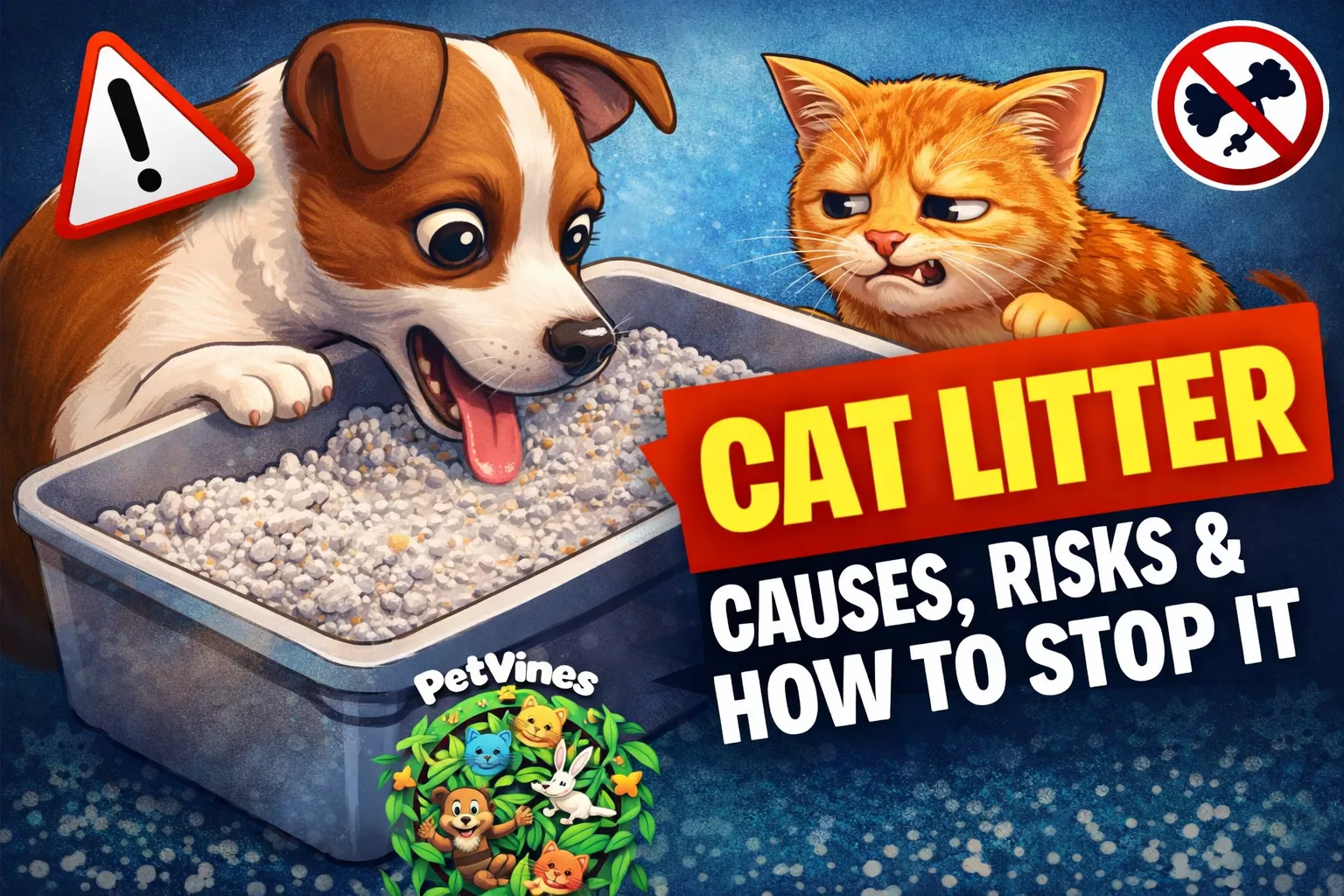
Dogs eating cat litter mainly because they are attracted to the smell and taste of cat feces, which contains undigested protein from a cat’s high-protein diet. This behavior, known as coprophagia, may also occur due to boredom, curiosity, stress, or nutritional deficiencies. While common, it can expose dogs to parasites, bacteria, and intestinal blockages, so preventing access to the litter box and addressing the underlying cause is important.
If you’ve ever caught your dog digging into the litter box, you’re not alone. Dog eating cat litter is a surprisingly common problem in households with both pets. Many dog owners are shocked—and honestly disgusted—when they discover their dog treating the litter box like a snack bar.
While it may seem bizarre to us, dogs are natural scavengers. The smell of cat feces, leftover nutrients, and curiosity can make litter boxes extremely tempting. Unfortunately, this habit can also expose dogs to parasites, bacteria, and digestive problems, which means it shouldn’t be ignored.
In this comprehensive guide, you’ll learn:
- Why dogs eat cat litter and cat poop
- The health risks involved
- Warning signs your dog may be sick
- Practical strategies to stop the behavior
- When to contact a veterinarian
By the end, you’ll have a clear action plan to protect your dog’s health and keep them out of the litter box for good.
Why Dogs Eat Cat Litter
Dogs often eat cat litter because they are attracted to the smell and nutrients in cat feces. Other causes include boredom, curiosity, learned habits, stress, or nutritional deficiencies.
Let’s break down the most common reasons.
1. Attraction to the Smell of Cat Poop
Cat feces can smell like food to dogs.
Cats eat diets high in protein and fat, and some of these nutrients remain partially undigested in their stool. Dogs, with their highly sensitive noses, detect these smells easily and may see it as a “treat.” (Veterinary Care at Your Fingertips)
For dogs, the litter box can literally smell like a buffet.
2. Natural Scavenging Behavior
Dogs evolved as scavengers. This means they naturally explore the world with their mouths and investigate anything that smells edible.
Eating feces—called coprophagia—is a behavior that sometimes appears in puppies and may continue into adulthood.
Even healthy, well-fed dogs may occasionally engage in this behavior.
3. Boredom or Lack of Mental Stimulation
Dogs that are under-stimulated may develop strange habits to entertain themselves.
Examples include:
- Digging
- Chewing furniture
- Raiding the litter box
Veterinary experts note that boredom and stress can trigger feces-eating behaviors in dogs. (PetMD)
4. Nutritional Deficiencies
Sometimes dogs eat unusual things because their diet lacks certain nutrients.
Possible deficiencies include:
- Protein
- Digestive enzymes
- Vitamins
- Minerals
If your dog is eating cat litter frequently, it may be worth reviewing their diet with a veterinarian.
5. Habit or Learned Behavior
Dogs repeat behaviors that reward them.
If your dog successfully finds “treats” in the litter box multiple times, the habit can become reinforced.
Eventually, they may check the litter box regularly just in case.
Is It Dangerous for Dogs to Eat Cat Litter?
Yes. While small amounts may not cause serious problems, eating cat litter can expose dogs to parasites, bacteria, and potentially dangerous intestinal blockages.
1. Parasites and Bacterial Infections
Cat feces can carry harmful pathogens, including:
- Toxoplasma gondii
- Roundworms
- E. coli
- Salmonella
If a dog eats contaminated feces, it may develop infections or digestive issues. (Purrfect Insights)
2. Intestinal Blockage from Clumping Litter
Clumping cat litter absorbs moisture and expands.
Inside a dog’s stomach or intestines, this can form hard masses that block the digestive tract, potentially requiring emergency surgery. (Purrfect Insights)
This risk is especially high if the dog eats large amounts.
3. Digestive Upset
Dogs that ingest litter or feces may develop:
- Vomiting
- Diarrhea
- Constipation
- Excess gas
- Stomach pain
These symptoms occur because litter and feces irritate the digestive system. (Veterinary Care at Your Fingertips)
4. Chemical Sensitivity
Some cat litters contain:
- Fragrances
- Deodorizers
- Chemical additives
Sensitive dogs may experience allergic reactions or stomach irritation after ingesting them.
Symptoms to Watch If Your Dog Ate Cat Litter
Most dogs will show mild digestive symptoms, but severe signs may indicate intestinal blockage or infection.
Common symptoms include:
- Vomiting
- Diarrhea
- Loss of appetite
- Lethargy
- Abdominal pain
- Constipation
- Dehydration
Veterinary experts recommend monitoring your dog closely if they eat litter or feces. (The Vet Desk)
Emergency Warning Signs
Contact a veterinarian immediately if your dog shows:
- Persistent vomiting
- Severe abdominal pain
- Inability to pass stool
- Extreme lethargy
- Swollen abdomen
These symptoms may indicate intestinal obstruction, which can be life-threatening.
How to Stop Your Dog from Eating Cat Litter
The most effective solutions include restricting access to the litter box, improving your dog’s diet, increasing exercise, and using positive training methods.
Here are proven strategies.
1. Move the Litter Box to a Dog-Free Area
This is the simplest solution.
Consider placing the litter box:
- Behind a baby gate
- In a room only cats can access
- On a raised surface
- Inside a cat-only enclosure
2. Use a Covered or Top-Entry Litter Box
Covered litter boxes make it harder for dogs to access feces.
Many cat owners report success with:
- Top-entry litter boxes
- Enclosed litter furniture
- Hidden litter cabinets
3. Clean the Litter Box Frequently
A clean litter box reduces temptation.
Experts recommend scooping at least once daily, or after every use if possible. (PetMD)
Less poop means fewer opportunities for your dog.
4. Improve Your Dog’s Diet
If nutritional deficiency is suspected:
- Switch to high-quality dog food
- Ensure balanced protein levels
- Ask your vet about digestive supplements
Dogs fed balanced diets are less likely to seek nutrients elsewhere.
5. Increase Exercise and Mental Stimulation
Bored dogs are more likely to develop unwanted habits.
Daily stimulation should include:
- Walks
- Playtime
- Puzzle toys
- Training sessions
Mentally satisfied dogs are less likely to raid the litter box.
6. Train the “Leave It” Command
Training can be very effective.
Steps:
- Teach “leave it” using treats
- Reward your dog for ignoring the litter box
- Practice consistently
- Never punish the dog
Positive reinforcement works best for behavior change.
When to See a Vet
You should consult a veterinarian if:
- Your dog frequently eats cat litter
- They show digestive symptoms
- The behavior appears suddenly
- You suspect nutritional deficiencies
A vet may check for:
- Parasites
- Digestive disorders
- Nutritional imbalances
- Behavioral problems
Early diagnosis prevents serious complications.
FAQ’s
Why does my dog keep eating cat litter?
Dogs usually eat cat litter because they are attracted to the smell of cat feces. Other causes include boredom, curiosity, nutritional deficiencies, or habit.
Can cat litter kill a dog?
In rare cases, yes. Large amounts of clumping litter can cause intestinal blockages, which may require emergency surgery.
Is cat poop toxic to dogs?
Cat poop is not always toxic, but it may contain parasites and bacteria that can make dogs sick.
Should I punish my dog for eating cat litter?
No. Punishment can increase stress and worsen the behavior. Positive training and prevention are more effective.
Final Thoughts
While dog eating cat litter is common, it’s not a behavior you should ignore. Beyond being unpleasant, it can expose your dog to parasites, infections, digestive problems, and dangerous intestinal blockages.
The good news is that with the right strategy—restricting access to the litter box, improving your dog’s diet, and providing mental stimulation—you can usually stop the habit.
Consistency is key. Most dogs can break the behavior once the underlying cause is addressed for more expert pet care tips, visit Petsvines.com
You’ll find in-depth guides on dog nutrition, behavior, health, and training to help you become a more confident pet owner.