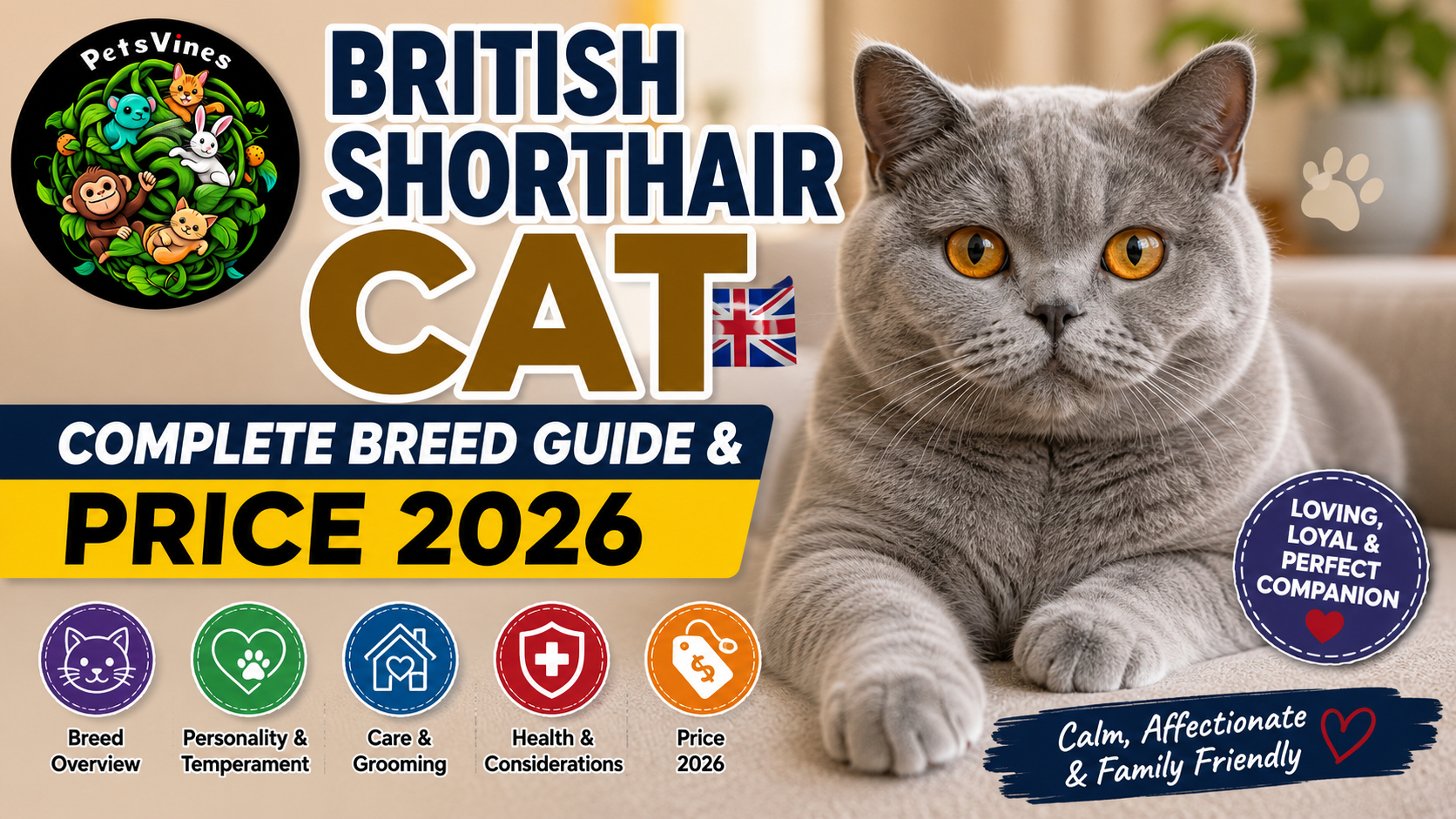
| Origin | United Kingdom (oldest natural English breed) |
| Size | Medium to large |
| Weight | 7 to 17 lbs |
| Lifespan | 12 to 17 years |
| Coat | Short, dense, plush, double coat |
| Temperament | Calm, easy-going, independent, loyal |
| Price (breeder) | $1,200 to $2,000 |
| Grooming | Low to moderate – weekly brushing |
| Good with children | Yes |
| Good with other pets | Yes |
| Activity level | Low to moderate |
The British Shorthair is the cat breed that most consistently looks like a living stuffed toy. Round face, enormous copper or gold eyes, dense plush coat, solid rounded body, and a gaze of absolute unshakeable serenity. They are also one of the oldest cat breeds in existence, with ancestry tracing back to cats brought to Britain by Romans nearly two thousand years ago.
What makes the British Shorthair particularly remarkable is that their temperament actually matches their appearance. They are as calm, dependable, and unflappable in daily life as they look in photographs. This guide covers what makes the British Shorthair one of the most practical and rewarding breeds to own.
British Shorthair History
The British Shorthair is recognized by Britannica as the oldest natural English breed of cat, with roots in the working cats brought to Britain by Roman soldiers around 43 AD. These cats interbred with European wildcat populations over centuries, eventually producing the sturdy, muscular, thick-coated working cat that became the foundation of the breed. Harrison Weir, considered the founder of the cat fancy movement, is credited with standardizing the British Shorthair as a recognized breed at the world’s first cat show at Crystal Palace in 1871.
British Shorthair Personality
The British Shorthair occupies a distinct and appealing middle ground in the cat temperament spectrum. They are neither the extremely demanding, attention-seeking cats like Siamese or Bengals, nor the aloof, unapproachable cats that some people associate with cats generally. They are calm, dignified, independently affectionate cats that enjoy company without requiring it constantly.
Key personality traits include:
- Calm and unflappable: British Shorthairs are one of the least reactive breeds to environmental changes, new people, and household disruption. They adapt well to new situations and are generally untroubled by the events of a busy household.
- Independently affectionate: British Shorthairs enjoy being near their people without necessarily needing to be held or cuddled constantly. They tend to prefer sitting beside you rather than on you. Do not mistake this independence for coldness: they are genuinely loyal cats who notice and care about your presence.
- Good with children and other pets: Their tolerant, even-tempered nature makes British Shorthairs a consistently good choice for families. They are patient with children (though they may object to being carried constantly) and generally peaceful with other cats and dogs introduced appropriately.
- Not hyperactive: British Shorthairs are not a demanding, high-energy breed. They enjoy play but are equally content to supervise household activities from a comfortable vantage point. This makes them practical for owners who cannot dedicate extensive time to vigorous daily play sessions.
- Quiet: British Shorthairs are not particularly vocal. When they do communicate, it is usually brief and purposeful rather than the persistent commentary of a Siamese or Bengal.
British Shorthair Appearance
The British Shorthair has a distinctly rounded appearance: broad chest, strong rounded head, full cheeks, short nose, and large round eyes that are typically copper, gold, or blue (in whites and colorpoints). The overall impression is solid, chunky, and extremely cuddly-looking.
The coat is one of the defining features: short, dense, and extraordinarily plush, sometimes described as having a “crisp” texture that springs back when stroked. The most famous color is British Blue (solid gray-blue), but British Shorthairs come in virtually every color and pattern including white, black, cream, golden, silver tabby, colorpoint, and bicolor. The golden British Shorthair has become particularly sought-after in recent years.
Like Maine Coons and Ragdolls, British Shorthairs are slow to mature. They typically reach full adult size at 3 to 5 years of age. Males are significantly larger than females.
British Shorthair Care Requirements
Grooming
The British Shorthair’s dense, plush coat sheds year-round and more heavily during seasonal coat changes in spring and autumn. Weekly brushing with a soft slicker brush or rubber grooming mitt is sufficient for most of the year. During peak shedding periods, twice-weekly brushing significantly reduces hair around the home. Because the coat is short and does not mat, grooming is straightforward and generally well tolerated by the breed. For a complete grooming guide, see our article on how to groom a cat at home.
Weight Management
British Shorthairs are a breed particularly prone to obesity, partly because of their naturally stocky build (which can mask weight gain) and partly because of their relatively low activity level. Feeding measured, portion-controlled meals rather than free-feeding is especially important for this breed. An overweight British Shorthair develops joint problems, diabetes, and cardiac stress earlier and more severely than a breed with a higher natural activity level. For feeding amounts by weight, see our complete cat feeding guide.
Exercise and Enrichment
British Shorthairs are not high-energy cats, but they benefit from and genuinely enjoy regular play sessions. Two 10 to 15 minute interactive play sessions per day with a wand toy or feather toy maintains a healthy activity level and prevents the gradual weight gain that sedentary indoor life can produce. Puzzle feeders are an excellent tool for British Shorthairs because they add a mental challenge to eating and slow food consumption, both of which support weight management.
British Shorthair Health Issues
The British Shorthair is generally a healthy and long-lived breed. The two main breed-specific health conditions to be aware of are:
Hypertrophic cardiomyopathy (HCM): HCM is present in British Shorthair lines, and a DNA test is available for the most common HCM mutation in the breed (though multiple genetic variants can cause HCM, and DNA testing does not guarantee a cat will be free of all forms). Annual cardiac screening via echocardiogram from age 2 onwards is recommended by veterinary cardiologists for British Shorthairs, regardless of DNA test results. Reputable breeders have breeding cats screened annually and can provide documentation.
Polycystic kidney disease (PKD): Fluid-filled cysts in the kidneys that progressively impair kidney function. PKD has a well-established DNA test, and reputable British Shorthair breeders screen all breeding cats and provide PKD-negative documentation for both parents.
Blood type incompatibility: British Shorthairs have a higher frequency of Blood Type B than most domestic cat breeds. Blood Type B kittens from Type A mothers can develop neonatal isoerythrolysis (NI), a severe and often fatal condition caused by maternal antibodies. Responsible breeders blood-type both parents and manage breeding pairings to avoid this complication.
British Shorthair Price 2026
| Source | Price Range 2026 | Notes |
|---|---|---|
| Reputable breeder (pet quality) | $1,200 to $2,000 | HCM, PKD test results and blood type documentation expected |
| Reputable breeder (show quality) | $2,000 to $3,000+ | Champion bloodlines, GCCF or TICA registration |
| Rescue or breed-specific shelter | $100 to $400 | Usually adults |
| Online (use caution) | Varies widely | Verify breeder health screening before purchasing |
Golden and silver British Shorthairs typically command higher prices due to their striking coloration and ongoing demand. Blue British Shorthairs remain consistently priced at the standard range due to their broad availability.
Is a British Shorthair Right for You?
The British Shorthair is an excellent choice for apartment dwellers, families with children, owners who want a calm, loyal, and low-drama companion, first-time cat owners who want an affectionate but not demanding breed, and households with other pets. They are less suited to owners who want a highly interactive, follow-you-everywhere companion (a Ragdoll or Maine Coon may be better), or owners who find independent cat personalities frustrating.
FAQs
What is the personality of a British Shorthair cat?
British Shorthairs occupy a distinct middle ground in the cat temperament spectrum. They are calm, unflappable, and independently affectionate, enjoying the company of their people without requiring constant attention or interaction. They prefer sitting beside you rather than on you, adapt well to environmental changes and busy households, are patient with children and other pets, are not hyperactive, and communicate briefly and purposefully rather than with persistent vocalization. They are genuinely loyal cats who notice and care about your presence without being demanding about it.
Are British Shorthairs good for first-time cat owners?
Yes, British Shorthairs are consistently recommended for first-time cat owners. Their calm and adaptable temperament is forgiving of owners still learning feline communication, and their straightforward grooming needs and relatively low activity level make them practical for owners managing full schedules. The main ongoing consideration is monitoring body weight through regular veterinary check-ups, as the breed is particularly prone to obesity given its naturally stocky build and lower activity level.
How long do British Shorthairs live?
British Shorthairs are a long-lived breed, typically reaching 12 to 17 years with appropriate veterinary care, a healthy diet, and an indoor lifestyle. Some individuals live into their late teens. Their longevity is one of the breed’s genuine advantages for owners seeking a long-term companion, and it also underscores the importance of proactive cardiac and kidney health monitoring throughout their lives.
Why do British Shorthairs not like being held?
British Shorthairs are tolerant cats but tend to prefer sitting beside their owners over being carried or held for extended periods. This preference is personality-driven rather than a sign of unfriendliness or poor bonding. Most British Shorthairs will enjoy brief cuddles but become uncomfortable when held for long periods. Respecting this preference and allowing the cat to initiate contact on their own terms actually strengthens the bond rather than weakening it.
Are British Shorthairs the same as Scottish Folds?
No, though the two breeds are related through historical breeding programs. The key difference is genetic: Scottish Folds carry the TRPV4 mutation that causes both folded ears and osteochondrodysplasia, a painful lifelong joint disease affecting every Scottish Fold cat. British Shorthairs do not carry this mutation and do not develop OCD. British Shorthairs are recognized by the GCCF and FIFe; Scottish Folds are not. For owners attracted to the Scottish Fold’s round appearance and calm temperament but concerned about its health implications, the British Shorthair is a direct alternative without the inherited joint disease.
What health problems do British Shorthairs have?
British Shorthairs have three breed-specific health concerns. Hypertrophic cardiomyopathy (HCM) is present in British Shorthair lines, with annual cardiac screening via echocardiogram recommended from age 2 regardless of DNA test results. Polycystic kidney disease (PKD) causes progressive kidney failure from fluid-filled cysts and has a reliable DNA test that reputable breeders use on all breeding cats. Blood type B incompatibility is more common in British Shorthairs than most other breeds and can cause a severe, often fatal condition called neonatal isoerythrolysis in kittens from mismatched parent blood types.
How much does a British Shorthair cost in 2026?
From a reputable breeder, a pet-quality British Shorthair costs between $1,200 and $2,000, with show-quality cats from champion bloodlines ranging from $2,000 to $3,000 or more. Rescue and breed-specific shelter adoption costs $100 to $400, though adults are more common than kittens. Golden and silver British Shorthairs typically command higher prices due to their striking coloration and strong demand. Blue British Shorthairs remain consistently priced at the standard range due to their broad availability.
What should I ask a British Shorthair breeder before buying?
Always request HCM cardiac screening documentation for both parents, PKD DNA test results showing both parents are negative, and blood type documentation confirming the parents are a compatible pairing. Reputable British Shorthair breeders have breeding cats screened annually and provide this documentation readily. Also confirm GCCF or TICA registration and ask whether the breeder conducts feeding trials or follows WSAVA nutrition guidelines. A breeder unable to provide health documentation should be avoided regardless of price or kitten availability.
How much grooming does a British Shorthair need?
The British Shorthair’s dense, plush double coat requires weekly brushing with a soft slicker brush or rubber grooming mitt for most of the year. During peak shedding periods in spring and autumn, twice-weekly brushing significantly reduces hair around the home. The coat is short and does not mat, making grooming straightforward and generally well tolerated by the breed. Despite its plush appearance, the British Shorthair is a lower-maintenance grooming commitment than long-haired breeds.
Why are British Shorthairs prone to obesity and how do I prevent it?
British Shorthairs are particularly prone to obesity due to their naturally stocky build, which can mask gradual weight gain, combined with their relatively low activity level as a calm indoor breed. Their build means an overweight British Shorthair can appear normal until significant excess weight has accumulated. Feeding measured, portion-controlled meals rather than free-feeding is essential, as is incorporating two short daily interactive play sessions. An overweight British Shorthair develops joint problems, diabetes, and cardiac stress earlier and more severely than more active breeds.
How long does it take for a British Shorthair to be fully grown?
Like Maine Coons and Ragdolls, British Shorthairs are slow to mature and typically do not reach their full adult size until 3 to 5 years of age. Males are significantly larger than females, with males reaching up to 17 pounds at full maturity. This slow development means a British Shorthair kitten may appear large early on but will continue filling out in muscle and body mass for several years after their first birthday.
For more cat breed guides and health information, explore the full PetsVines Cat Care hub.
Also Visit: Scottish Fold Cat: Personality, Health Risks and Price 2026