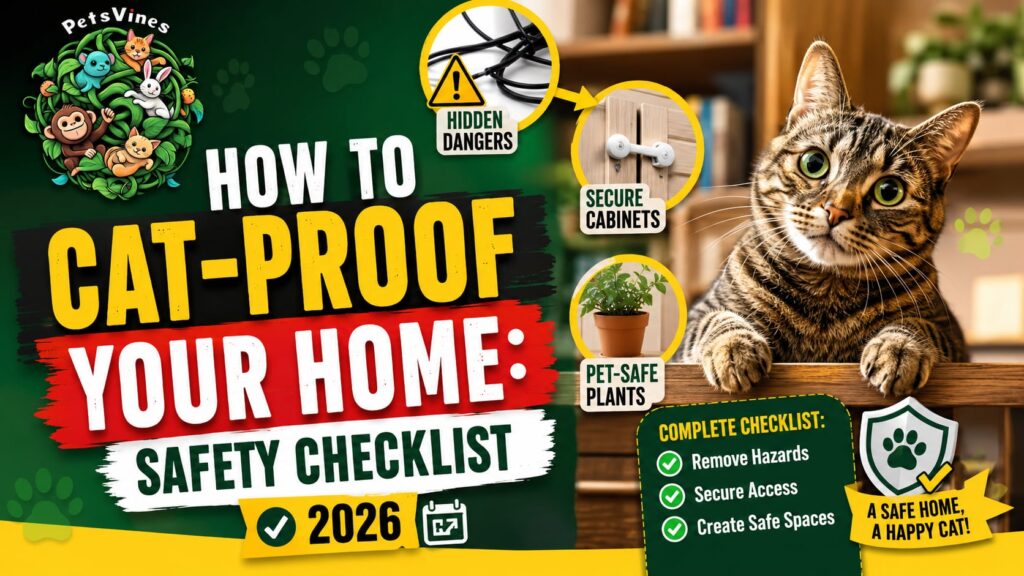
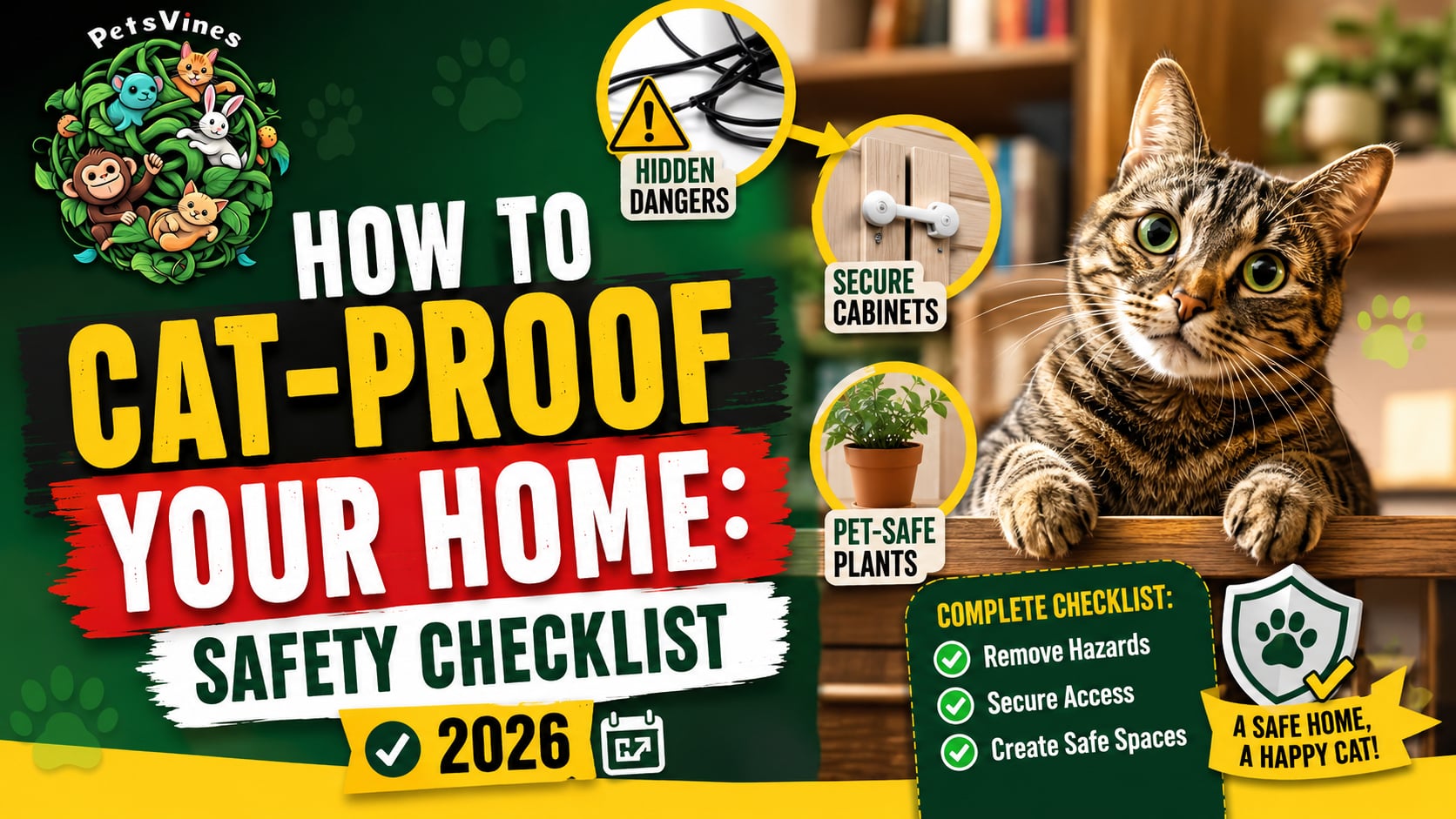
How to Cat-Proof Your Home: Cats are extraordinarily curious, extraordinarily agile, and extraordinarily capable of accessing spaces that seem completely secure to humans. They can open cabinet doors, reach countertops from across the room, squeeze through gaps far smaller than their apparent body size, and navigate their environment in three dimensions in ways that regularly surprise even experienced cat owners.
Cat-proofing your home before bringing a cat or kitten home, and reviewing safety periodically as your household changes, prevents the most common causes of accidental injury and toxin exposure that veterinary emergency rooms treat daily. This guide covers every major hazard category with specific, actionable steps.
Hazard 1: Toxic Plants (The Most Common Serious Risk)
Toxic plants are one of the most underestimated hazards in cat households. Many popular houseplants and garden plants are genuinely dangerous to cats, and some cause rapid organ failure even from small exposures.
Warning: Lilies Are a Cat Emergency
All parts of true lilies (Lilium species including Easter lily, tiger lily, Asiatic lily, and daylilies) are extremely toxic to cats. Even a single petal, leaf, or a small amount of pollen on a cat’s coat that is ingested during grooming can cause acute kidney failure within 24 to 72 hours. If you have a cat, do not keep true lilies in your home or garden. If your cat has any contact with a lily, contact the ASPCA Animal Poison Control Center at (888) 426-4435 or go to an emergency vet immediately, even without symptoms. Early treatment within hours dramatically improves outcomes.
| Plant Category | Examples | Toxicity Level | Effect on Cats |
|---|---|---|---|
| True lilies | Easter lily, tiger lily, daylily, Asiatic lily | Severe – can be fatal from tiny amounts | Acute kidney failure within 24-72 hours |
| Toxic bulb plants | Tulips, daffodils, hyacinths | Moderate to severe | Gastrointestinal distress, cardiac effects from bulbs |
| Toxic common houseplants | Pothos, philodendron, dieffenbachia | Moderate | Oral irritation, vomiting, drooling |
| Toxic succulents | Jade plant, aloe vera (in large amounts) | Mild to moderate | Vomiting, lethargy |
| Toxic flowering plants | Oleander, foxglove, azalea, rhododendron | Severe | Cardiac arrhythmia, potentially fatal |
| Safe alternatives | Spider plant, Boston fern, orchids, catnip, cat grass | Non-toxic | Safe for cats to investigate and chew |
The complete ASPCA list of toxic and non-toxic plants is available at aspca.org/pet-care/animal-poison-control/toxic-and-non-toxic-plants and is the most comprehensive reference available for plant toxicity assessment.
Hazard 2: Human Medications
Human medications are among the most common causes of accidental cat poisoning. Cats metabolize many common medications very differently from humans due to their unique liver enzymes, and doses that are safe for humans can be fatal to cats.
- Acetaminophen (Tylenol): A single regular-strength acetaminophen tablet can be fatal to a cat. Cats lack the liver enzyme (glucuronyl transferase) that processes acetaminophen in humans. Even small amounts destroy red blood cells and cause liver failure within hours.
- NSAIDs (ibuprofen, naproxen, aspirin): All non-steroidal anti-inflammatory drugs are toxic to cats at human doses. They cause gastrointestinal ulceration and acute kidney failure.
- Antidepressants: Many antidepressants, particularly SSRIs and tricyclics, cause serious neurological effects in cats even at small doses.
- ADD/ADHD medications (amphetamines): Even tiny amounts can cause severe tremors, seizures, and cardiovascular crisis in cats.
- Sleep aids and cold medications: Multiple ingredients in these products are toxic to cats.
Store all human medications in cat-proof containers or locked medicine cabinets. Never leave pills on countertops. Be aware that dropped pills are a significant risk, as cats may eat them out of curiosity. If you drop medication near a cat, locate and secure it immediately.
Hazard 3: Household Chemicals
Cleaning products, automotive chemicals, pest control products, and garden chemicals pose serious risks to cats. Cats walk through chemicals on surfaces and then ingest them during grooming. Even products that dry completely on surfaces can leave residues that accumulate on paw pads.
- Cleaning products: Keep cats out of rooms being cleaned until surfaces are dry. Rinse floors thoroughly after mopping with chemical cleaners.
- Essential oils: Tea tree oil, eucalyptus, peppermint, citrus oils, and many others are toxic to cats. These are commonly used in home diffusers without owners realizing the risk. Cats cannot metabolize many essential oil compounds efficiently due to their liver enzyme profile. Even passive diffuser exposure in enclosed spaces can cause toxicity over time.
- Antifreeze (ethylene glycol): Has a sweet taste that attracts cats. Even a teaspoon can be fatal. Store antifreeze securely and clean up any spills in garages or driveways immediately.
- Rodenticides: Rat and mouse poisons are often highly toxic to cats through direct ingestion or through eating a poisoned rodent.
Hazard 4: Windows, Balconies, and Falls
High-rise syndrome, the term used by veterinarians for cats that fall from windows and balconies, is a surprisingly common emergency. Despite cats’ remarkable righting reflex and ability to land on their feet, falls from heights above a few floors frequently cause serious injuries including fractured jaws, ruptured hard palates, broken legs, and internal bleeding. Even falls from first and second floor windows can cause injuries if the cat lands on a hard or irregular surface.
Secure all windows with cat-proof screens that cannot be pushed out. Standard window screens are not sufficient: cats can push them out or through them with relatively little force. Look for window guards or secondary screen products designed specifically for pet safety. Never assume a screen is secure enough without testing it against a cat’s pushing force. Keep balcony doors secured or install a cat-safe enclosure (catio) for any outdoor balcony access.
Hazard 5: String, Cord, and Linear Foreign Bodies
String, yarn, ribbon, tinsel, rubber bands, hair ties, dental floss, and any other linear material presents a serious intestinal hazard to cats. Because of the barbed structure of a cat’s tongue, linear objects that are mouthed and begin to be swallowed cannot be spat back out. The material passes into the digestive system where it can become anchored at one point while the intestines continue to contract around it, causing the intestine to bunch and potentially perforate. Intestinal foreign body obstruction is a surgical emergency with high mortality if not treated promptly.
Store all string, ribbon, and linear objects completely out of cat access. Do not leave sewing projects, gift wrap ribbons, or yarn accessible. Supervise all play with wand toys that have string components and store them safely between sessions. If you see string entering your cat’s mouth or notice string protruding from the mouth or anus, do not pull it. Contact your veterinarian immediately.
Hazard 6: Small Objects and Choking Risks
Cats, particularly young cats and kittens, investigate objects by batting, mouthing, and sometimes swallowing them. Small objects at risk of being swallowed include: rubber bands, hair ties, buttons, jewelry, coins, small toy parts (googly eyes, bells from cat toys), food packaging ties, and any hard small object a cat can bat and then mouth.
Conduct a floor-level survey of your home from a cat’s eye view. You will find objects you did not know were accessible. Secure or remove anything that could be swallowed. Be particularly vigilant after activities that involve small items: sewing, craft projects, children’s toy play, and jewelry removal.
Hazard 7: Hot Surfaces and Enclosed Spaces
Cats are attracted to warm surfaces and will investigate stoves, ovens, dryers, and dishwashers. Always check inside the dryer before starting a cycle as cats sometimes climb in through partially open doors. Keep stove burners off and use stove covers when not in use. Never leave the oven door open and unattended with a cat in the home.
Cats also sometimes curl up in bags, backpacks, and luggage. Before zipping any bag closed, check that a cat has not climbed inside. Cats have been seriously harmed by being transported accidentally inside closed luggage or bags.
The Cat-Proofing Checklist
- Remove or relocate all true lilies and other toxic plants from the home and yard
- Store all human medications in cat-proof containers, locked if possible
- Secure all household chemicals and cleaning products in locked or inaccessible cabinets
- Identify and eliminate essential oil diffuser use in enclosed spaces where cats sleep
- Install cat-safe window screens that cannot be pushed out
- Secure balcony access with cat-safe screening or enclosure
- Seal all string, ribbon, and linear material storage
- Conduct a floor-level survey for small swallowable objects
- Check dryer before every cycle
- Keep toilet lid down (kittens can fall in and drown)
- Secure cabinet doors with cat-proof latches if your cat opens them
- Ensure trash cans are secured with cat-proof lids
- Store antifreeze and automotive chemicals completely inaccessible
- Save ASPCA Animal Poison Control Center number: (888) 426-4435
FAQs
Are candles safe around cats?
Open flame candles are a burn and fire hazard around cats because cats can knock them over with tail swipes or body contact. A curious cat can also burn their face, whiskers, or paws investigating a flame. Battery-operated flameless candles are the safest alternative. If you use real candles, use stable, heavy holders and never leave them burning unattended.
Is essential oil diffusion safe for cats?
No. Many essential oils are toxic to cats, including tea tree oil, peppermint, eucalyptus, citrus oils, and clove oil. Cats can inhale aerosolized oil particles and absorb compounds through their skin and respiratory tract. Chronic diffuser exposure in enclosed spaces has been linked to liver toxicity and respiratory irritation in cats. If you use essential oil diffusers, ensure the cat has access to well-ventilated areas away from the diffuser and avoid using known toxic oil types entirely.
My cat eats my houseplants. How do I stop them?
Provide cat grass (wheatgrass, oat grass) and catnip as appropriate plant-chewing outlets. Move toxic plants completely out of cat access (including off countertops that cats can reach). Place non-toxic deterrents like citrus peels near plants you want to protect, as most cats dislike citrus scent. Some owners use commercial cat deterrent sprays on plant soil and pot edges.
Keep the ASPCA Animal Poison Control Center number saved in your phone: (888) 426-4435. It is available 24 hours a day, 7 days a week. For more cat safety guides, explore the full PetsVines Cat Care hub.
Attique Shehzad
Pet Care Content Specialist | PetsVines.com
Attique Shehzad is a dedicated pet care writer with extensive research experience in feline health, nutrition, and behavior. All PetsVines articles are fact-checked against authoritative veterinary sources.
Sources and References
- ASPCA Animal Poison Control – Complete Toxic and Non-Toxic Plant List
- American Veterinary Medical Association (AVMA) – Cat Safety and Toxin Awareness
- American Association of Feline Practitioners (AAFP) – Feline Safety Guidelines
- VCA Animal Hospitals – Common Cat Toxins and Hazards
- ASPCA Animal Poison Control Center: (888) 426-4435