
If you’ve ever woken up to the sound of your dog in distress, or worse, discovered a mess on your floor, you know just how stressful dog diarrhea can be. It’s one of the most common issues dog owners face, and the good news is that most mild cases can be managed right at home with the right food choices.
But here’s the thing: feeding your dog the wrong thing during a digestive upset can actually make it worse. That’s why knowing exactly what to feed (and what to skip) makes all the difference.
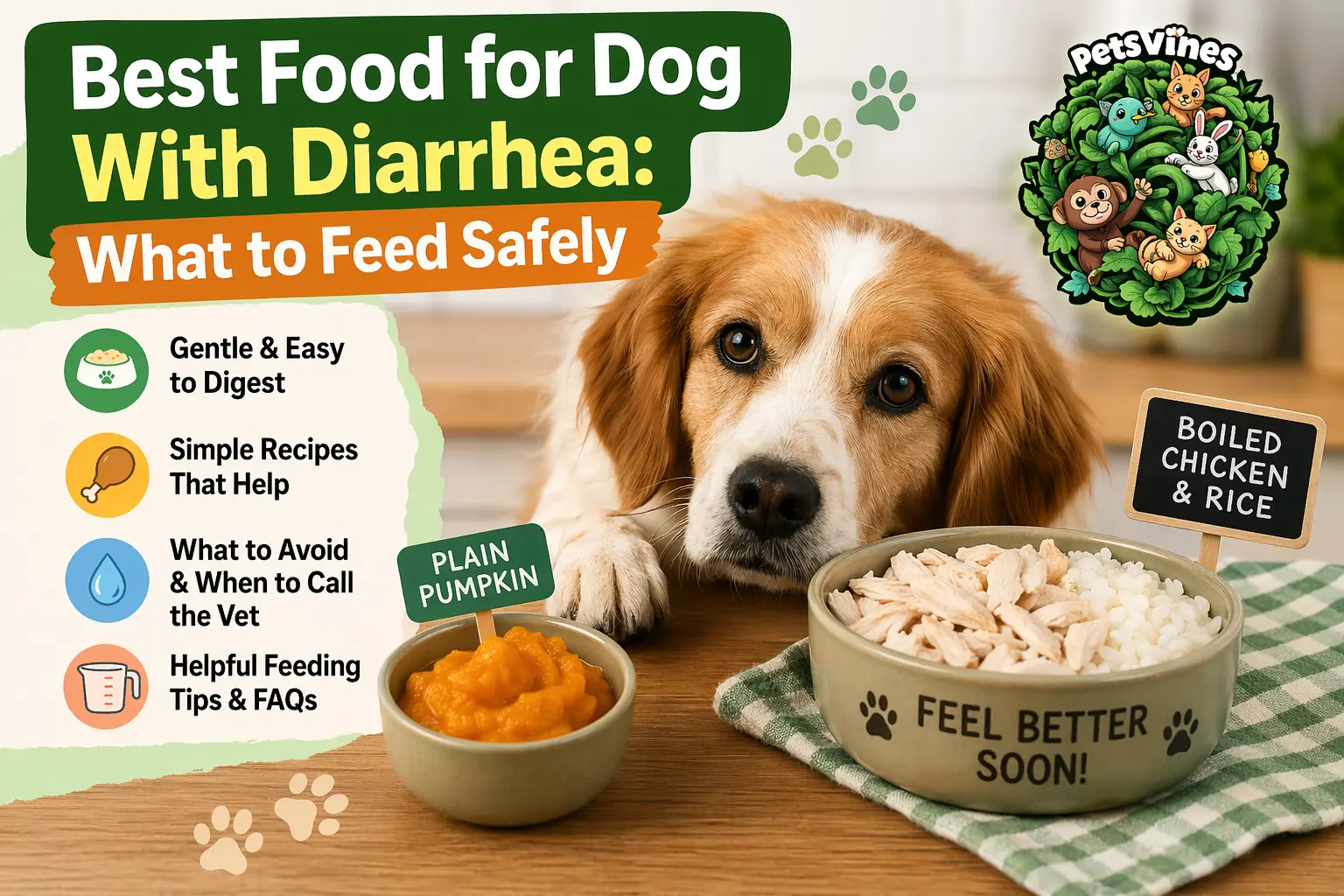
The best food for a dog with diarrhea is a bland diet of plain boiled chicken (boneless, skinless) and white rice in a 1:1 ratio. Feed small amounts every 2–3 hours. You can also add plain canned pumpkin, boiled sweet potato, or plain Greek yogurt for extra gut support. Avoid fatty, spicy, or rich foods until your dog fully recovers.
Why Dogs Get Diarrhea in the First Place
Before jumping to solutions, it helps to understand what’s going on. Common causes of dog diarrhea include abrupt food changes, stress, intestinal parasites like giardia or roundworms, viral and bacterial infections, and chronic GI diseases such as Inflammatory Bowel Disease (IBD).
In many cases, it’s something pretty simple, like your dog snatching something off the counter or eating a new treat too fast. Dietary indiscretion, such as getting into trash, eating human food, or scavenging outdoors, is one of the most common causes vets see.
Mild diarrhea that lasts less than 48 hours in an otherwise happy, hydrated dog is usually not an emergency. But if it persists, or if your dog is vomiting, lethargic, or there’s blood in the stool, call your vet right away.
Should You Fast Your Dog First?
For mild diarrhea in healthy adult dogs, a short fast of up to 12 hours can help the digestive system rest and recover. Always keep fresh water available. Do not fast puppies, senior dogs, or dogs with existing health conditions without veterinary guidance.
If your dog only has diarrhea and is not vomiting, there is actually no need to withhold food, doing so may make them reluctant to eat when you start feeding again. [Source: petmd] That said, many vets still suggest a brief break from food for adult dogs who got into something they shouldn’t have.
The golden rule: always keep fresh water available, even during a fast. Diarrhea causes rapid fluid loss, and dehydration can become a serious concern, especially in small dogs, puppies, and seniors.
The Best Foods for a Dog with Diarrhea
1. Boiled Chicken and White Rice — The Classic Combo
This is the go-to recommendation from virtually every vet out there, and for good reason. A bland diet of boiled chicken breast (without skin or bones) and cooked white rice gives the digestive system a break, reduces intestinal irritation, and helps firm up stool.
Use a 1:1 ratio of boiled meat to rice — for example, 1 cup boiled chicken and 1 cup rice, and begin by feeding about 2 tablespoons of the mixture per 10 pounds of body weight, offering small meals every two to three hours during the first day.
Pro Tip: Skip all seasonings, oils, and butter. Plain is the goal here.
2. Plain Canned Pumpkin
Pumpkin is high in soluble fiber, which helps bulk up loose stool and soothe GI inflammation — which is why so many vets recommend it during diarrhea recovery. Just make sure you’re buying plain canned pumpkin, not pumpkin pie filling, which contains sugar and spices that can make things worse.
Start with 1–2 teaspoons for small dogs or 1–2 tablespoons for larger breeds mixed into their bland meal.
3. Boiled Sweet Potato
Sweet potatoes are another high-fiber option that works similarly to pumpkin. They’re gentle on the stomach, packed with vitamins, and most dogs love the taste. Serve them plain and boiled — no butter, salt, or sugar added.
4. Plain Greek Yogurt
Plain Greek yogurt helps firm up stools and provides probiotics that can help restore the GI tract’s gut flora balance. It’s also higher in protein than regular yogurt. To start, only serve in small amounts, about 1 to 2 tablespoons — since too much dairy can actually worsen diarrhea. [Source: Chewy]
5. Plain Cooked Oatmeal
Oatmeal is mild, fiber-rich, and easy on a sensitive stomach. Cook it with water (not milk), keep it plain, and serve in small portions. It’s especially helpful for dogs who are sensitive to chicken or rice.
6. Boiled Ground Turkey or Lean Hamburger
For dogs sensitive to chicken, boiled lean turkey is a great substitute. If using hamburger, boil and drain well to remove any grease, which can worsen diarrhea.
7. Plain Scrambled Eggs
Eggs provide high-quality protein and are easy on the stomach. Use a nonstick pan or a tiny amount of cooking spray, and avoid butter entirely. Scrambled or hard-boiled both work fine.
What About Commercial Dog Food Options?
If you’d rather not cook from scratch, there are some solid commercial options too.
Veterinary diet dog foods, such as Hill’s i/d and Royal Canin Gastrointestinal, contain prebiotics and highly digestible ingredients to support gut health. These require a vet authorization and are a great choice for dogs with ongoing or recurring digestive issues.
You can also look for limited-ingredient dry foods with a short list of recognizable ingredients. For more guidance on choosing the right dry food, check out PetsVines’ guide to dog nutrition and feeding, it breaks down how to read labels, understand ingredients like choline chloride in dog food (a vital nutrient that supports brain and liver health), and compare different food types.
Wet Food vs. Dry Food During Recovery
Many dog owners wonder whether wet or dry food is better when their dog has diarrhea. Here’s a quick breakdown:
Dry food (kibble) during recovery should be your regular food, gradually reintroduced after the bland diet phase. It’s generally more stable and easier to portion.
Wet food, while palatable and hydrating, does come with some disadvantages of wet dog food worth knowing about, including higher cost, shorter shelf life once opened, and the potential for loose stools in sensitive dogs if overfed. During an active diarrhea episode, wet food isn’t typically the first choice unless it’s a prescription GI formula.
How Much Should You Feed?
Getting the portions right matters just as much as picking the right food.
A common question from new dog owners is how many cups in a pound of dog food — and the answer varies by food type. For dry kibble, roughly 4 cups equal 1 pound. For raw or fresh food, the measurement differs because of moisture content.
If you’re feeding a raw diet and your dog gets diarrhea, you may want to temporarily switch to cooked bland food during the upset. When resuming raw feeding, the general guideline is to feed 2–3% of your dog’s body weight per day — but always confirm with your vet based on your dog’s age, breed, and activity level. For more detail on how much raw food to feed your dog, visit PetsVines for a breakdown by weight and life stage.
Foods to Avoid When Your Dog Has Diarrhea
Avoid fatty meats, dairy (except small amounts of plain yogurt), spicy or seasoned foods, high-fat treats, raw meat during active illness, and any food with artificial additives. These can irritate the gut and prolong recovery.
Here’s a more complete list of what to keep away from your dog:
- Fatty meats like bacon, sausage, or skin-on chicken
- Milk, ice cream, or most cheeses — most dogs are lactose intolerant
- Seasoned or spiced foods — garlic, onion, and salt are all harmful
- Rich table scraps or leftovers
- High-fiber foods too early — things like large amounts of pumpkin can worsen early-stage diarrhea
- New foods or treats — now is not the time to experiment
Fat is one of the hardest nutrients for the body to digest during diarrhea it speeds up intestinal contractions and can trigger or worsen pancreatitis in sensitive dogs.
How to Transition Back to Regular Food
Once your dog has had firm, normal stools for about 48 hours, it’s safe to start reintroducing their regular diet — but do it slowly.
Over the next three to five days, gradually increase the portion of regular food while decreasing the bland diet. By day seven, most dogs should be fully back on their regular food and feeling fine. If diarrhea returns at any point, go back to bland food and call your vet.
Don’t Forget Probiotics and Hydration
Diarrhea often disrupts the gut’s healthy bacteria. Adding a dog-safe probiotic helps restore that balance and supports faster recovery. Look for products specifically formulated for dogs, human probiotics aren’t the same and may not be effective.
And above all: keep that water bowl full. Hydration is non-negotiable throughout the entire recovery process.
When to Call the Vet
Home care works well for mild cases, but some situations need professional attention. Contact your vet if your dog:
- Has diarrhea lasting more than 48–72 hours
- Is vomiting along with the diarrhea
- Has blood in their stool (red or tarry black)
- Seems lethargic, weak, or refuses to drink
- Is a puppy, senior, or has a pre-existing condition
Never try human medications such as Pepto Bismol or Imodium unless directed by a veterinarian, as they can be harmful to certain dogs. Cornell University College of Veterinary Medicine
Final Thoughts
Dealing with a dog’s diarrhea isn’t fun for anyone, especially your pup. But with the right bland diet, proper hydration, and a little patience, most dogs bounce back within a few days.
Stick to the basics: boiled chicken and rice, plain pumpkin, and small frequent meals. Avoid anything fatty, spicy, or rich until things normalize. And when in doubt, your vet is always the best resource.
Want to learn more about feeding your dog right every day, not just during tummy troubles? Visit PetsVines for expert guides on dog nutrition, raw feeding, food labels, and more.
FAQs
1. What is the best food for a dog with diarrhea?
The best food for a dog with diarrhea is a bland, easy-to-digest diet like boiled chicken and white rice. These foods help soothe the digestive system and reduce irritation. Serve in small portions and avoid seasoning, oil, or spices.
2. Can I feed my dog rice every day during diarrhea?
Yes, you can feed plain white rice temporarily during diarrhea, but only for a few days. Rice is easy to digest and helps firm up stools. However, it is not nutritionally complete, so transition back to regular dog food gradually.
3. How long should I feed bland food to my dog?
You should feed bland food for 2 to 3 days or until your dog’s stool returns to normal. Once improvement is seen, slowly mix regular dog food back into the diet over several days.
4. Is pumpkin good for dogs with diarrhea?
Yes, plain canned pumpkin (not pie filling) can help dogs with diarrhea because it contains fiber that supports digestion. Use small amounts, as too much fiber can worsen symptoms.
5. Should I stop feeding my dog if it has diarrhea?
Not always. If your dog is active and not vomiting, you can continue feeding small portions of bland food. However, if symptoms worsen or your dog becomes weak, consult a veterinarian immediately.
6. What foods should dogs avoid during diarrhea?
Dogs should avoid:
- Fatty or greasy foods
- Dairy products
- Spicy or seasoned human food
- Treats and table scraps
- Sudden diet changes
These can irritate the digestive system and worsen diarrhea.
7. When should I take my dog to the vet for diarrhea?
You should contact a vet if:
- Diarrhea lasts more than 24–48 hours
- There is blood in the stool
- Your dog is vomiting or lethargic
- Your dog is a puppy or senior
- Signs of dehydration appear
8. How much should I feed my dog during diarrhea?
Feed small, frequent meals instead of large portions. Start with a reduced quantity and gradually increase as your dog improves. Always ensure access to fresh water.
9. Can wet dog food cause diarrhea?
Yes, in some cases. One of the disadvantages of wet dog food is that it can be rich and harder to digest for sensitive dogs. Sudden switching to wet food may also trigger diarrhea.
10. How many cups are in a pound of dog food?
On average, 1 pound of dry dog food equals about 3.5 to 4 cups, but this varies depending on kibble size and density. Always check the packaging for accurate measurements.