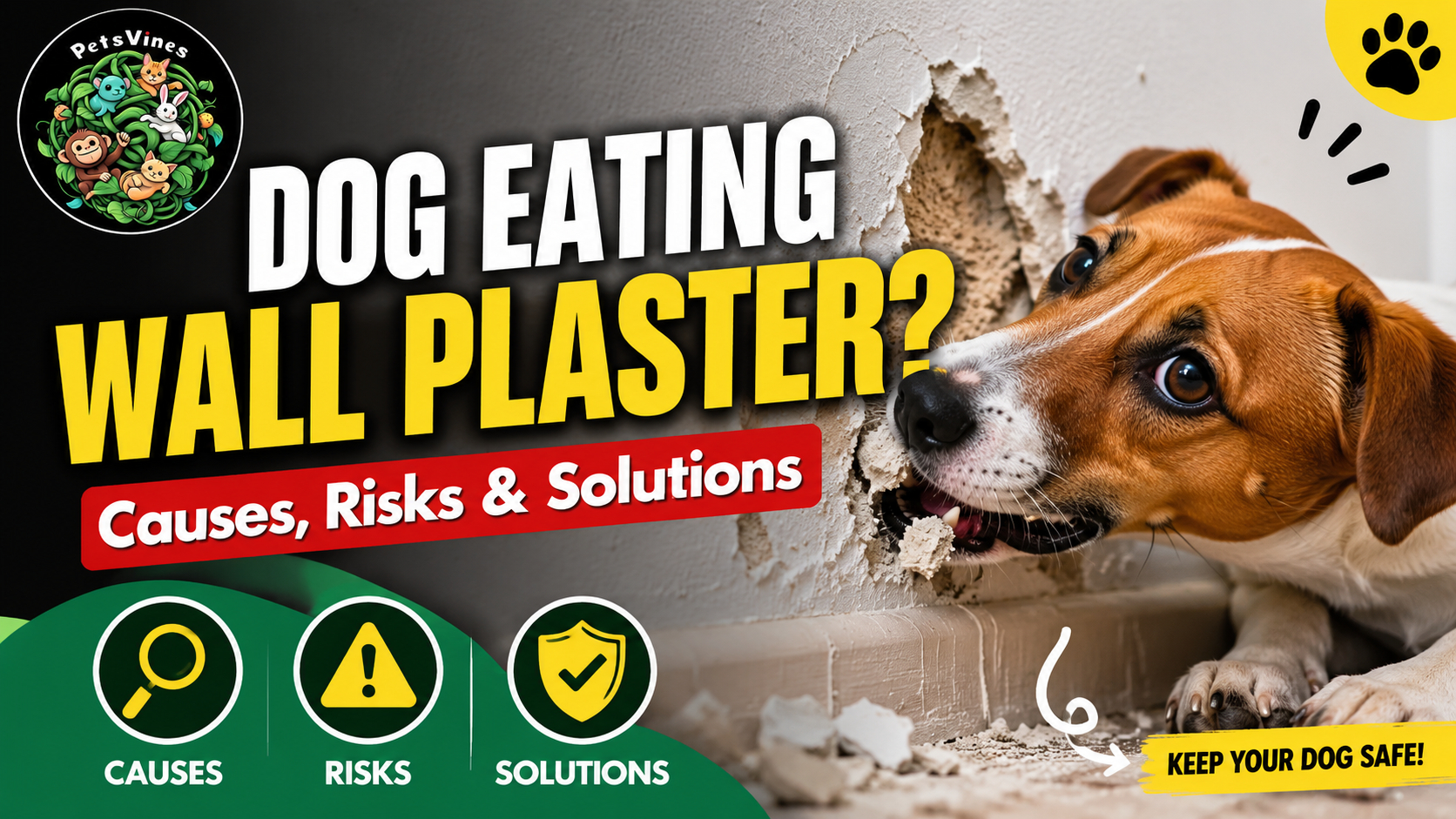
Dogs eat wall plaster due to a condition called pica, which is the compulsive ingestion of non-food items. The most common triggers include boredom, separation anxiety, nutritional deficiencies, and underlying medical conditions. While small amounts of plaster are not typically toxic, ingesting it can cause gastrointestinal irritation, blockages, and in older homes, exposure to harmful materials like lead. The behavior should never be ignored — always consult a vet. You walk into the room and find your dog gnawing on the wall — again. There’s a growing hole in the plaster, a guilty-looking dog, and a million questions racing through your head. Is this dangerous? Why is my dog doing this? And more urgently: how do I make it stop?
You’re not alone. Thousands of pet owners deal with this exact problem, and while it might seem like simple bad behavior, the truth runs deeper. A dog eating wall plaster is often sending you a signal — about their mental state, their health, or their environment.
This guide breaks down every reason this happens, what the health risks really are, and — most importantly — what you can actually do to fix it. No fluff, no vague advice. Just clear, expert-backed answers.
What Is Pica in Dogs? The Condition Behind the Behavior
Dogs eat wall plaster primarily because of a condition called pica — a compulsive urge to consume non-food items. Pica involves the ingestion of items that provide zero nutritional value to the dog, such as dirt, stones, plastic, fabric, and yes, wall plaster.
It’s important to distinguish between chewing and eating. Many dogs chew on baseboards or walls out of habit or boredom, but never actually swallow the material. Pica goes a step further — the dog is actively ingesting the material. There are no specific tests that diagnose pica, but once it is suspected, additional testing is needed to rule out underlying medical causes of the behavior.
Pica is more commonly seen in puppies and younger dogs, though it can appear at any age. Terriers, spaniels, and collies appear more likely to eat non-food items than other breeds, and dogs with anxiety or insufficient activity and enrichment are especially at risk.
Why Is My Dog Eating Wall Plaster? 7 Real Causes
Understanding why your dog is doing this is the first step toward solving it. The causes fall into two main categories: behavioral and medical.
1. Boredom and Lack of Mental Stimulation
Many dogs chew on drywall and plaster because it provides sensory reinforcement — dogs simply love to chew, and the behavior can persist or escalate when they don’t have sufficient outlets. A dog left alone for hours with nothing to do will find its own entertainment — and your walls become a target.
This is especially common in high-energy breeds like Border Collies, Huskies, and working dogs that need significant daily exercise and mental stimulation to stay balanced.
2. Separation Anxiety
This is one of the most frequent drivers of wall destruction. Dogs experiencing separation distress will often attempt to re-establish contact with family members by eating through the walls of their enclosure. This can happen when owners are away from home entirely, or even when they’re home but in a different room.
The scale of canine separation anxiety is significant. Studies estimate that between 20% and 40% of dogs experience some form of separation anxiety, with some localized studies suggesting even higher rates. One 2022 report found dog separation anxiety jumped well over 700% in just two years following the COVID-19 pandemic, as dogs grew accustomed to constant owner presence and then struggled when routines changed.
3. Nutritional Deficiencies
Zinc and iron deficiencies have been specifically linked to pica behavior in dogs. If a nutritional gap is behind the wall-eating, your veterinarian will need to rule out a medical condition causing the deficiency before recommending dietary adjustments.
Dogs that are eating plaster may be instinctively drawn to the calcium content in gypsum-based plaster. Their bodies are telling them something is missing from their diet — even if the solution they’ve found is completely wrong.
4. Fear-Based Escape Behavior
Dogs confined to a garage or specific room often develop wall-chewing behavior after experiencing repeated loud noises like thunderstorms or fireworks. These sounds can trigger severe fear responses, and the dog may begin eating through the wall in a desperate attempt to escape. Even after the original threat is gone, the escape behavior can persist.
5. Attention-Seeking Behavior
Some dogs learn that chewing on walls immediately brings their owner into the room — for play, food, or attention. Even negative attention is rewarding to a bored dog. When the owner doesn’t respond quickly enough, the behavior often escalates.
6. Predatory Drive
Some dogs begin chewing at walls because they can hear or smell animals within — mice, rats, insects, or even termites moving behind the plaster. This triggers their natural predatory instincts, and the wall becomes prey. If your dog focuses on a very specific spot on the wall, this is worth investigating.
7. Underlying Medical Conditions
Pica can be the result of illness, intestinal parasites, anemia, or hormonal disorders. While it is more often linked to behavioral causes, ruling out medical triggers is always the essential first step.
For older dogs specifically, sudden wall-eating can be a sign of dental pain or cognitive dysfunction, which your vet should evaluate.
Is Wall Plaster Dangerous for Dogs? Understanding the Health Risks
This is the question most pet owners ask first — and the answer is nuanced.
Modern Plaster and Drywall
Most modern drywall is made primarily of gypsum and is not inherently toxic. However, it can cause constipation or a dangerous physical blockage if consumed in large quantities. Ingesting plaster is generally considered a medium-urgency situation — while the material is typically non-toxic in small amounts, it can cause significant gastrointestinal irritation, and the primary concern is a physical blockage in the stomach or intestines.
Older Homes: Lead Paint Risk
If you live in a home built before 1978, the risk profile changes significantly. Older wall plaster may be coated with lead-based paint. Lead is acutely toxic to dogs, causing neurological symptoms, seizures, and in severe cases, death. If your dog has been eating plaster in an older home, this is a veterinary emergency.
The Real Health Dangers of Pica
Dogs with pica face several serious health risks, including intestinal blockage (where a foreign object prevents food and water from passing through the gut), perforation of the stomach or intestines from sharp fragments, broken teeth, choking hazards, and poisoning — depending on what materials were in the plaster.
Compulsive ingestion can also lead to ulcers and chronic irritation of the gastrointestinal tract over time.
There is also a risk of intestinal obstruction if a large amount is ingested. If your dog has consumed a significant quantity of plaster, don’t wait for symptoms — call your vet.
Warning Signs to Watch For
Take your dog to the vet immediately if you notice:
- Repeated vomiting or retching
- Lethargy or sudden loss of energy
- Swollen or painful abdomen
- Straining to defecate or no bowel movement
- Drooling excessively
- Loss of appetite
Dogs showing stomach pain, repeated vomiting, or difficulty passing stool after eating non-food items need prompt veterinary attention.
What to Do Immediately If Your Dog Ate Wall Plaster
If you just discovered your dog has been eating plaster, here’s what to do right now:
- Remove your dog from the area and prevent further access to the damaged wall.
- Check the age of your home. If it was built before 1978, lead paint exposure is possible — call your vet now.
- Identify how much was eaten. A small lick or nibble is very different from a chunk.
- Watch for symptoms listed above for the next 24–48 hours.
- Call your vet. Even if your dog seems fine, report what happened. Your vet may recommend monitoring, induced vomiting, or an X-ray depending on the amount ingested.
Do not attempt to induce vomiting at home without direct veterinary guidance.
How to Stop a Dog From Eating Wall Plaster: Proven Solutions
Stopping this behavior requires identifying the root cause first. Here’s a comprehensive, practical approach:
Step 1: Visit Your Vet First
Before you do anything behavioral, rule out medical causes. Ask your vet to check for nutritional deficiencies, parasites, and any gastrointestinal issues. Your vet will likely ask questions related to the dog’s dietary habits and should eliminate medical problems or nutritional deficiencies before behavioral intervention begins.
Step 2: Increase Physical Exercise and Mental Enrichment
If boredom is the trigger, the fix is straightforward — give your dog more to do.
- Aim for at least 60–90 minutes of physical exercise per day for medium to large breeds.
- Use puzzle feeders, snuffle mats, and food-dispensing toys to engage their brain.
- Rotate toys regularly to keep novelty high.
- Consider doggy daycare or a dog walker if you’re away for long hours.
Step 3: Address Separation Anxiety Directly
Giving a dog a reaction when they eat drywall — whether positive (distraction) or negative (discipline) — may actually reinforce the behavior, as the dog learns it gets a reaction from you. Providing more attention in general, rather than reacting to the behavior, tends to be more effective.
For true separation anxiety:
- Practice gradual desensitization — start with very short departures and slowly increase duration.
- Create a calm departure routine. Don’t make arrivals and departures emotionally charged.
- Use calming aids such as adaptil (dog-appeasing pheromone) diffusers, calming chews, or anxiety wraps.
- In severe cases, consult a board-certified veterinary behaviorist, as medication may be appropriate.
Step 4: Block Access and Use Deterrents
While you’re working on the root cause, protect your walls:
- Use bitter apple spray or other chew-deterrent products on affected areas.
- Install baby gates or exercise pens to block access to the room.
- Cover the damaged area with furniture or wall guards so it’s no longer accessible.
Step 5: Provide Appropriate Chewing Outlets
Dogs need to chew — it’s not a flaw, it’s biology. Channel that drive:
- Offer high-quality chew toys like bully sticks, Kongs stuffed with frozen food, or rubber chew toys.
- Rotate options to keep interest fresh.
- Reward your dog with praise when they chew on appropriate items.
Step 6: Consider Professional Help
To treat pica properly, it’s best to work with both a vet and a specialist dog trainer. If the behavior has been going on for weeks or months without improvement, a Certified Applied Animal Behaviorist (CAAB) or a veterinary behaviorist can design a tailored behavior modification plan.
Preventing Future Wall Damage
Once you’ve addressed the behavior, take steps to make sure it doesn’t come back:
- Keep your dog mentally and physically stimulated every day — consistency matters more than intensity.
- Establish a predictable routine. Dogs thrive on structure. Fixed mealtimes, walks, and play sessions reduce anxiety significantly.
- Don’t punish after the fact. Dogs don’t connect punishment to past behavior. If you discover wall damage after it’s happened, clean it up and focus on prevention — not discipline.
- Check in with your vet annually about your dog’s diet and behavior. Small nutritional imbalances can quietly fuel pica for months before it becomes obvious.
For more expert guidance on dog behavior, health, and care, explore the full dog resource library at PetsVines.
When to See a Vet vs. a Behaviorist
| Situation | Who to See |
|---|---|
| First incident, small amount eaten | Vet (monitoring) |
| Ongoing or escalating behavior | Vet + behaviorist |
| Older home (possible lead exposure) | Emergency vet |
| Dog showing vomiting/lethargy | Emergency vet |
| Behavior linked to fear or anxiety | Vet + certified behaviorist |
| Nutritional deficiency suspected | Vet (bloodwork/diet review) |
FAQ’s
Is it normal for puppies to chew on walls?
Chewing is normal for puppies — they explore the world with their mouths. However, eating and swallowing wall plaster is not normal at any age. If your puppy is actually ingesting the material, consult your vet. For general chewing, redirect to appropriate toys and supervise closely.
Can dogs get sick from eating plaster?
Yes, they can. While modern plaster is not highly toxic, it can cause stomach upset, constipation, or dangerous blockages if eaten in quantity. Older homes present the additional risk of lead exposure. Any time you suspect your dog has eaten plaster, monitor closely and consult a vet.
Why does my dog only eat the wall in one spot?
Focused chewing in one location often indicates a predatory response — your dog may smell or hear rodents, insects, or other animals inside the wall. Check for pest activity in your home.
Does my dog have pica if it eats plaster once?
Not necessarily. A single incident of curiosity doesn’t equal a pica diagnosis. Pica refers to a persistent, compulsive pattern of eating non-food items. If it keeps happening, that’s the signal to get a professional evaluation.
What to Do Next
A dog eating wall plaster isn’t just a home repair problem — it’s a communication problem. Your dog is telling you something: they’re bored, anxious, nutritionally deficient, or medically unwell. The wall is just the symptom.
The good news? Every cause discussed in this article is treatable with the right approach. Start with a vet visit, address the root cause — whether that’s enrichment, anxiety management, or a dietary tweak — and be consistent. Most dogs improve significantly once their real needs are being met.
Don’t wait until the behavior escalates or your dog ends up in the emergency room with a blockage. Act now, be patient, and work with professionals when needed.
Ready to learn more about keeping your dog healthy, happy, and out of trouble? Visit PetsVines for expert-written guides on everything from dog nutrition and behavior to training and health — written by people who genuinely love animals.
Also Visit: Dog Eating Habits Changed? 12 Reasons & What to Do