
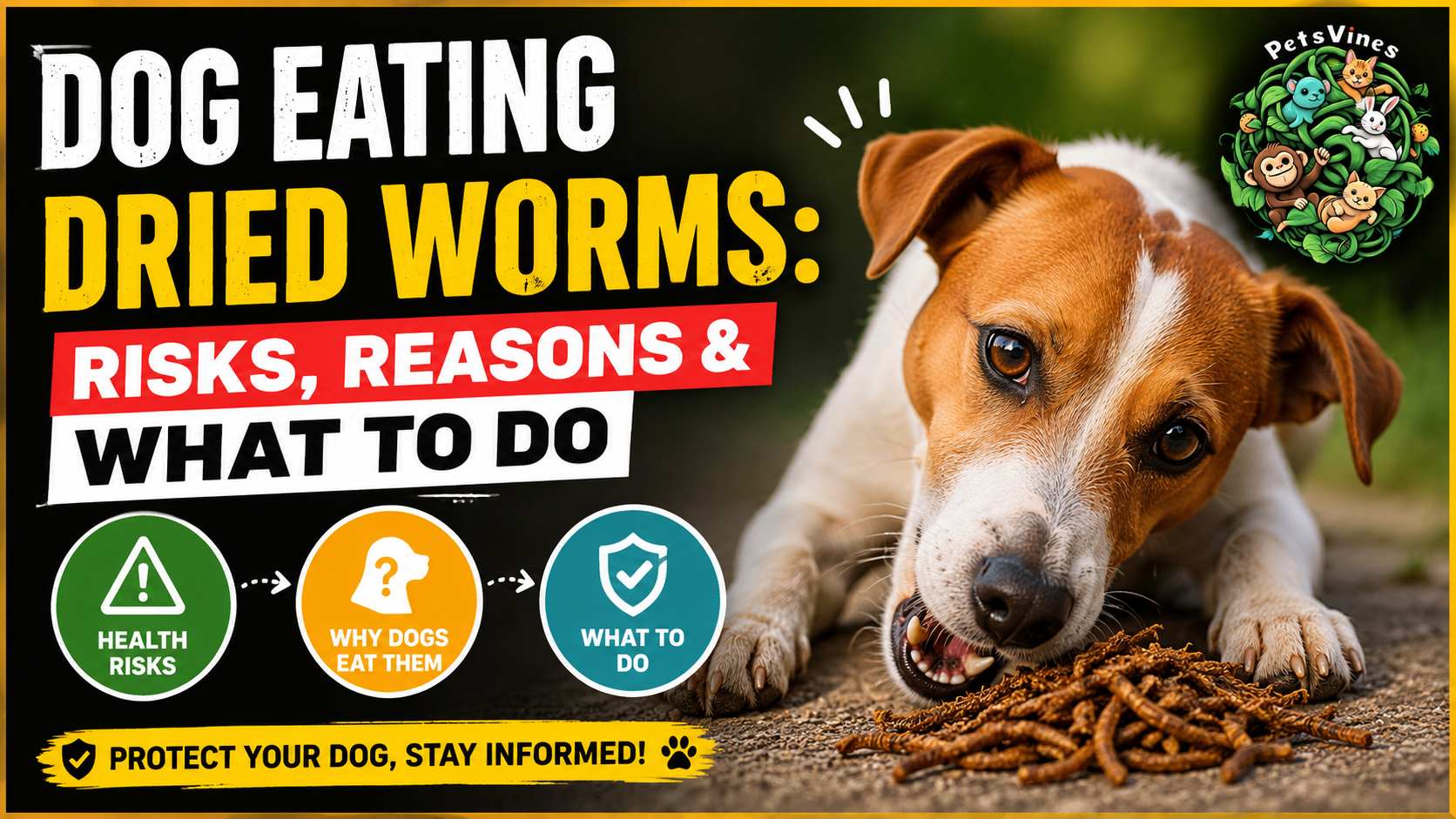
Dog eating dried worms is generally not immediately toxic, but it carries real health risks. Dried earthworms can still harbor parasite eggs — particularly Toxocara roundworm larvae — and harmful bacteria that survive the drying process. If your dog ate dried worms, monitor for vomiting, diarrhea, lethargy, or changes in stool, and consult your vet, especially if the behavior is frequent.
You step outside after a rainy night, and before you can stop it — your dog has already hoovered up a handful of dried, sun-shriveled worms off the pavement. Sound familiar?
If you’re a dog owner, you’ve probably witnessed this at least once. And the first question that races through your mind is always the same: Is this going to make my dog sick?
The honest answer is: it depends. While a single dried worm isn’t necessarily a death sentence, there are real risks that every pet owner should understand — including parasites, bacterial infections, and what it might mean about your dog’s health or behavior.
In this guide, you’ll get expert-backed, vet-informed answers to everything you need to know about dogs eating dried worms: why they do it, what the actual dangers are, when to call your vet, and how to stop the behavior for good.
Why Do Dogs Eat Dried Worms in the First Place?
Dogs are natural scavengers driven by instinct, curiosity, and scent. Dried worms have a strong odor that many dogs find irresistible — it’s not always a sign of a nutritional problem, but it can be.
Dogs don’t see the world the way we do. They explore it with their noses and mouths first. The exact reason dogs eat worms isn’t fully known — experts can’t always agree on why dogs eat certain things, such as grass, and the same uncertainty applies to worms. Dogs are natural scavengers, and if they find something edible, they’re often quick to pick it up.
Scent Is the Biggest Driver
Many dogs seek out dry, dead worms on the sidewalk specifically, sometimes showing more interest in dried worms than live ones. It’s likely because dogs prefer the scent, taste, or texture of dried worms. As repulsive as it sounds to us, the concentrated smell of a decomposed, dried worm is apparently quite appealing to a dog’s 300 million olfactory receptors.
Could It Be a Nutritional Deficiency?
This is a common worry among pet owners, and it’s worth addressing seriously. Dogs eating dried worms might, in some cases, be seeking nutrients like protein or minerals missing from their diet — a behavior sometimes linked to pica, which can indicate dietary deficiencies or boredom. However, veterinarians generally caution against assuming a nutritional cause right away. The behavior is often simply because dogs enjoy the taste, texture, or act itself — and some are attracted to the strong odor of dried worms.
Boredom, Curiosity, and Habit
Puppies especially explore through mouthing. Younger dogs may start eating dried worms out of curiosity and then develop it into a habit. Some dogs simply enjoy the crunchy texture of dried worms — the canine equivalent of a snack they’ve discovered on their own.
If your dog is obsessively seeking out dried worms on every walk, it’s worth a conversation with your vet to rule out underlying issues. You can explore more dog behavior and health topics at PetsVines Dog Care Hub.
Are Dried Worms Actually Dangerous for Dogs?
Yes, dried worms can be dangerous. Drying does NOT eliminate parasites or their eggs. Dogs that eat dried worms regularly are at real risk of roundworm infection, bacterial upset, and in rare cases, more serious parasitic diseases.
This is the most important part of this article, so let’s be clear and direct.
The Parasite Problem: Roundworms Are the #1 Risk
Earthworms swallow soil as they move through it — and in that soil, they can pick up the eggs of parasites left behind by other dogs and wildlife. Specifically, the eggs of Toxocara roundworm larvae can be ingested by earthworms, and when your dog eats that earthworm — dried or not — they risk contracting roundworm infection.
Critically, just because worms are dried up does not mean the eggs are dead. Parasite eggs are remarkably hardy and can survive the drying process. This is the key fact many pet owners don’t realize. You might assume that a crispy, shriveled worm on your driveway is “safe” — but the microscopic eggs it carries can still be alive and infective.
Roundworms are among the most common intestinal parasites in dogs, particularly puppies. According to the AKC’s Chief Veterinary Officer Dr. Jerry Klein, these worms are parasites to their host — they live in the dog and benefit by getting nutrients at the host’s expense, denying the dog from thriving to its ultimate healthy state.
Other Parasites to Know About
Worms can be carriers of parasites such as roundworms and tapeworms, which can cause digestive issues or more serious health conditions if ingested by your dog.
There’s also a lesser-known but serious risk: Capillaria plica, a parasitic worm that can be transmitted by earthworms and affects a dog’s urinary tract. While rare, documented cases — including kidney failure — have been reported in dogs with heavy earthworm ingestion histories. This is a stark reminder that even “harmless-looking” behavior can carry serious consequences.
Additionally, whipworm eggs are incredibly hardy and can survive in the environment for years, still capable of infecting dogs when eaten. Dried worms that have been sitting on a driveway for days may still carry these eggs.
Bacterial Infection Risk
Beyond parasites, worms can carry bacteria that are harmful to dogs, potentially leading to an upset stomach or more severe symptoms. This is typically less severe than a full parasitic infection, but it’s still unpleasant — and in immunocompromised dogs or puppies, bacterial illness can escalate quickly.
Are Dried Worms Ever Safe?
Commercially processed dried worms (sold as pet food or fish bait) that have been heat-treated are a different matter entirely. These are cleaned, processed, and rendered safe. The worms we’re talking about here — the ones drying on your pavement after rain — have had none of that processing and carry all the risks outlined above.
Symptoms to Watch for After Your Dog Eats Dried Worms
Most dogs that eat a small number of dried worms will show no immediate symptoms. But if symptoms do appear — or if worm-eating is a regular habit — you need to act fast.
Watch your dog carefully for 24–48 hours after ingestion. Key warning signs include:
- Vomiting — especially if repeated or contains worms
- Diarrhea — watery, bloody, or mucus-filled
- Lethargy — unusual tiredness or disinterest in play
- Distended or painful abdomen
- Changes in stool — spaghetti-like worms visible in poop (roundworms), rice-like segments (tapeworms), or bloody stools (hookworms)
- Weight loss despite normal eating
- Scooting or excessive anal licking
- Coughing — in cases of heavy roundworm infestation, larvae can migrate to the lungs
While the risks are generally low for healthy dogs on a regular deworming schedule, it’s still important to watch for signs of discomfort after ingestion, including vomiting, diarrhea, or lethargy.
If your dog is a puppy, act sooner rather than later. Puppies, kittens, and older or immunocompromised dogs have a higher risk of parasite infestations due to underdeveloped or weakened immune systems.
What Should You Do If Your Dog Ate Dried Worms?
Step 1: Don’t Panic
A single incident of eating one or two dried worms is unlikely to cause serious harm in a healthy adult dog. Earthworms themselves are not toxic to dogs, and the risks are generally low, especially if your dog is otherwise healthy and on a regular deworming schedule.
Step 2: Monitor Closely
Keep an eye on your dog for 24–72 hours. Note any changes in appetite, energy levels, bowel movements, or behavior. Take photos of any abnormal stool — your vet will thank you.
Step 3: Call Your Vet
If any symptoms appear, or if your dog ate a large quantity of dried worms, contact your veterinarian. They may recommend:
- A fecal examination to check for parasite eggs
- A deworming treatment (common options include fenbendazole, pyrantel pamoate, or milbemycin)
- Bloodwork if the behavior has been ongoing
A fecal exam is an important step because the majority of worms will not be visible to the human eye — a vet will need to examine the sample under a microscope to check for worm eggs.
Step 4: Review Your Deworming Schedule
To prevent worm infections, it’s important to provide year-round parasite prevention starting in puppies as young as eight weeks, plan for regular fecal examinations, and ensure proper environmental hygiene such as cleaning up poop immediately and treating your yard for fleas and ticks.
For comprehensive dog health guidance, visit PetsVines — a trusted resource for pet owners worldwide.
Can Worms Spread from Your Dog to You?
This is a question every responsible pet owner should ask — and the answer is yes, some can.
Some of these parasitic worms are zoonotic, meaning they can pass from animals to humans. According to Dr. Klein of the AKC, children are especially at risk of contracting parasitic worms because they may play barefoot in sand or dirt infected with feces containing worm larvae, or accidentally ingest larvae present on the fur or from the saliva of an infected dog.
Roundworm larvae in particular — Toxocara canis — can cause a condition in humans called visceral larva migrans, where larvae migrate through human tissues and organs. While serious cases are rare, it underscores why preventing your dog from eating earthworms (dried or live) is important for your whole family’s health.
Practical hygiene steps:
- Wash hands after handling your dog, especially after outdoor play
- Use gloves when cleaning up dog feces
- Keep children from playing in areas where dog feces may have been deposited
- Maintain your dog’s deworming schedule year-round
How to Stop Your Dog from Eating Dried Worms
Consistent training using “leave it” and “drop it” commands, combined with outdoor supervision and environmental management, is the most effective approach.
Train the “Leave It” Command
This is the single most valuable command for this situation. When your dog sniffs a dried worm, a firm, calm “leave it” followed by rewarding compliance with a high-value treat creates a powerful positive association. Consistency is key — the command needs to work every time.
Supervise Outdoor Time
You should always supervise your dog outdoors — not just to prevent them from getting lost or hurt, but to make sure they’re not getting into things they shouldn’t. After rain, when earthworms are most likely to surface and dry on pavement, be especially vigilant.
Clean Up Worm-Heavy Areas
After it rains, try to remove dried worms from the pavement before your dog can get to them. Removing debris like piles of leaves and clumps of grass can also help, since dogs may dig through debris looking for worms.
Address Potential Nutritional Gaps
If your dog’s worm-eating seems obsessive and is paired with other unusual eating behaviors (eating dirt, feces, or non-food items), talk to your vet about a nutritional review. A diet switch or supplement could reduce the drive to scavenge.
Use a Short Leash During High-Risk Walks
On rainy or post-rain days, keep your dog on a short leash in worm-heavy areas. This gives you faster physical control if they lunge for a worm before you can intervene verbally.
FAQ’s
Can dried worms make a dog sick?
Yes. While not immediately toxic, dried worms can carry parasite eggs (like roundworm larvae) and bacteria that survive the drying process and can infect your dog.
Are dried worms safe for dogs?
No — not wild dried worms found on pavement. Commercially processed, heat-treated dried worms sold as food are a different matter, but naturally dried worms carry real parasite and bacterial risks.
My dog ate dried earthworms — what should I do?
Monitor for 24–72 hours. Watch for vomiting, diarrhea, lethargy, or changes in stool. If symptoms appear or your dog ate a large amount, contact your vet. A fecal exam may be needed.
Why does my dog prefer dried worms over live ones?
Dogs are likely drawn to the stronger, more concentrated scent of dried worms. The crunchier texture may also be appealing. It’s a sensory preference, not necessarily a health signal.
Can worms from earthworms spread to humans?
Yes. Roundworm eggs (Toxocara canis) can be zoonotic. Practice good hygiene and maintain your dog’s deworming schedule to protect your whole household.
Don’t Ignore This Behavior
A dog eating dried worms once in a while is unlikely to land them in an emergency clinic — but it’s not a habit worth tolerating, either. The parasite risks are real, the eggs are hardy, and the behavior can escalate if left unchecked.
The smart play: train the “leave it” command, supervise outdoor time (especially post-rain), keep up with your vet’s recommended deworming schedule, and get a fecal exam if the behavior is frequent.
Your dog can’t protect themselves from what they don’t know is dangerous. That’s your job — and now you have the knowledge to do it well.
Also Visit: How Much Food Should a 7 Pound Dog Eat? Complete Feeding Guide