
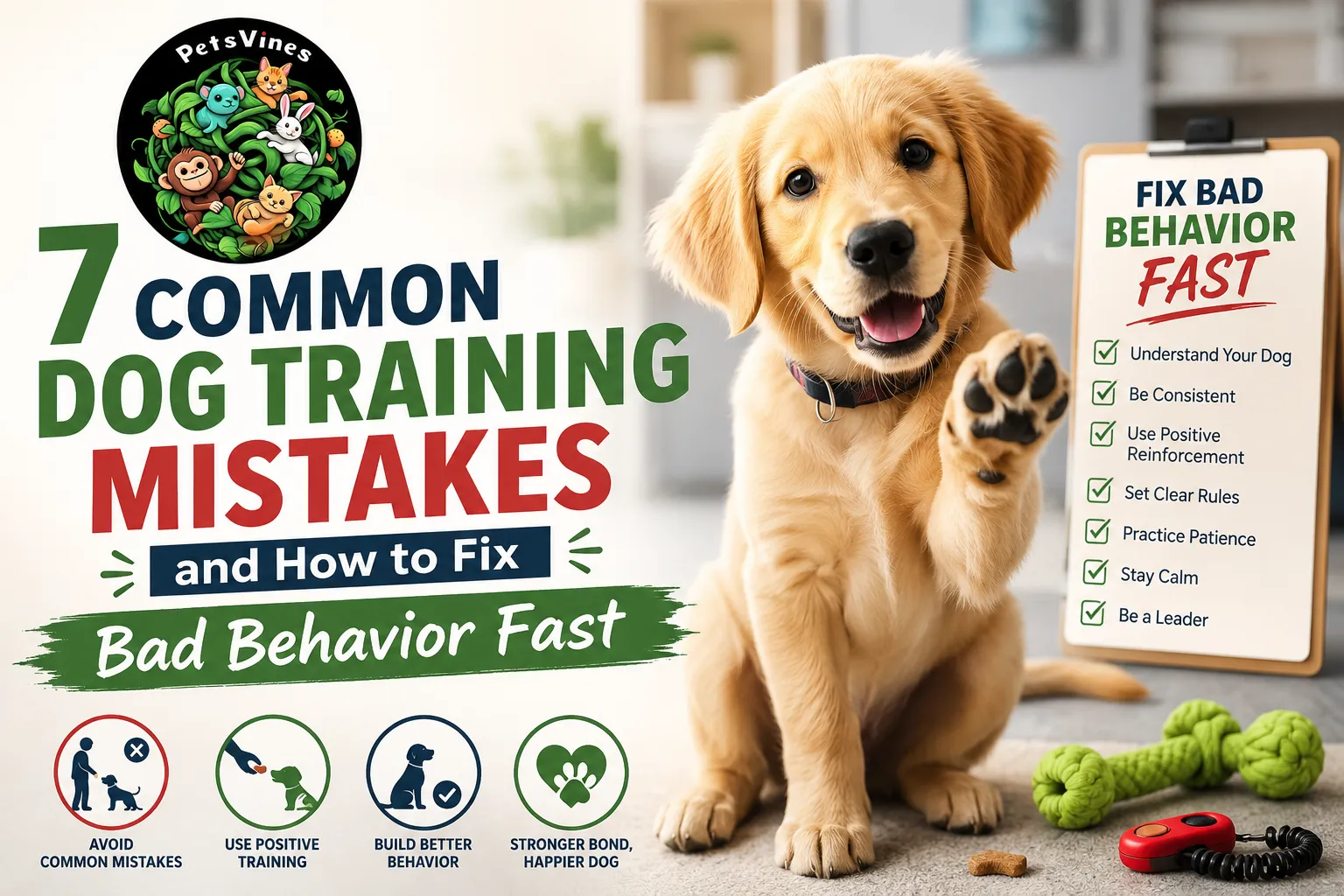
All dog owners want their dog to be exceptionally good, yet it is not a simple process to train a dog. The majority of pet owners believe that when they command the dog to perform a particular task, the dog will do so and, in return, receive a reward. This is not as easy as it may sound, particularly when you are training the dog for the first time.
If you are dealing with a similar situation, this blog will help you identify mistakes in training a dog and how to fix dog behavior problems.
Why Dog Training Often Goes Wrong
Most of the time, pet owners take the training the wrong way. They focus on the bad behavior of their dog and just talk about how they do not have any control over their dog. Most of the dog training is not that complicated.
To avoid any problems during the training, dog parents need to understand where they stand with their dog. When they identify the basis of their relationship and how much understanding they have, training will become easy. Most of the time, the following are the major reasons why dog training goes wrong from the dog owner’s perspective.
- They think it’s their dog’s fault that they are not picking up the hints
- They expect their dogs to know everything
- They assume that there’s a certain age at which they can train their dog
Common Dog Training Errors
Even good training efforts can go wrong if the basics are missed. Small habits or shortcuts can confuse your dog and slow progress. Spotting these errors helps make your training more effective. In the following sections, we will discuss the common dog obedience training issues and how to fix them.
-
Being Irregular with Commands
When rules and commands do not change, dogs learn best. When you allow your dog to be on the couch today and rebuke them tomorrow, they will be confused.
How to Fix It:
- Words should be used consistently (e.g., always say “sit,” not sometimes “sit down” or “stay still”).
- All the family members should use the same rules and commands
- Find a routine; dogs love routine
-
Using Punishment Instead of Positive Reinforcement
Yelling, scolding, or abusing does not help at all; instead, it makes your dog fearful and anxious. This punishing situation can break the trust between you and your dog due to negative reinforcement. In such cases, dogs start to obey out of fear and will not develop any confidence or reliability.
How to Fix It:
- Focus on rewarding good behavior instantly with praise, treats, or playtime
- Redirect the behavior that you don’t want. For example, if your dog chews carpet or rugs, give them toys to chew on
- Show patience and calm behavior. Dogs learn quickly with encouragement
-
Expecting Too Much Too Soon
Just like human beings, dogs need time to learn and develop new skills as well. Repetition and consistency are significant when training a dog, and commands come second. Dogs can’t generalize a behavior; they need consistent commands to opt for one behavior.
How to Fix It:
- Keep the training sessions short but consistent. For example, 10 to 15 minutes at the same time and place every day
- Celebrate small victories, like when your dog has learned the sit command and stayed in the same position for a few seconds
- Be persistent and patient; every dog is not the same. Some take longer to learn new behavior, and some learn quickly
-
Not Proofing Behaviors in Different Environments
Your dog has mastered the commands to sit quietly in a room. But when you take your dog to the park, the “sit command” does not work. The problem here is not the dog but the environment. You have been training him to sit in a room, not in a park. Again, dogs do not generalize the behaviors.
How to Fix It:
- Train your dog for a single command in multiple environments or situations to build confidence and reliability.
- Slowly and gradually make them familiar with different distractions
- Give them exposure to outside environments to solidify training
-
Using a Harsh or Negative Tone
Dogs are generally very sensitive to body language and tone. They tend to give more attention to a calm and assertive voice rather than a loud or yelling tone. Keeping the calmness in tone is as important as teaching them commands. Maintaining a positive communication style makes your dog eager to listen and respond.
How to Fix It:
- Use a positive, calm, and relaxing tone during training
- Do not yell, as it causes confusion
- Keep the communication consistent so your dog can live to your expectations
-
Skipping Socialization and Exposure
Sometimes, dog parents can be possessive and do not give their pet exposure. This could be a dog obedience training issue due to the limited exposure. Exposure to new environments, people, and experiences helps build confidence. This will also help them to get familiar with multiple environments.
How to Fix It:
- Start socialization as early as possible.
- Take your dogs to stalls, pet-friendly restaurants, play areas, etc., to minimize their fear.
- Keep the exposure positive and praise them for calm behavior.
- If you are part of a clinic or training environment, sourcing enrichment tools and socialization aids from a trusted veterinary marketplace can make it easier to introduce controlled exposure in a safe and structured way.
-
Not Using the Right Rewards
Every dog does not consider food, playtime, treats, or affection as a reward. As a dog parent, it is your responsibility to identify which reward works best for your pet. Experiment by giving different reinforcers to see what excites them the most. Also, keep rotating the rewards to analyze which reward to give when.
How to Fix It:
- Identify food, play, toys, or affection that attracts them the most.
- Use their favorite reward for difficult training to keep the enthusiasm high.
- Use the right rewards to reinforce the positive behavior.
- For those working closely with animals, such as veterinary students or clinic teams, using structured training aids and veterinary products can help standardize behavior training and improve consistency across different cases.
Conclusion
Dogs need time and patience to get beyond commands. Training mistakes can stretch the training period, but persistence will overcome the difficulties. Also, keep in mind that every dog is different, and their learning capabilities could differ as well. Some might learn the commands quickly, and some might need time. These setbacks are totally normal. Consistency, repetition, and positive reinforcement are key here.
FAQs
- What are the most common dog training errors?
Lack of consistency, ineffective timing, impatience, and positive reinforcement.
- How to fix dog behavior problems?
Give regular commands, praise good behavior, and use simple methods of dog behavior correction.
- What are the biggest errors in training the puppy?
Skipping socialization, expecting quick results, and not reinforcing basic commands early..
- What can I do to prevent bad dog behavior in training?
Divert negative behavior, remain calm, and strengthen positive behavior right away.
- What are the most effective dog training tips?
Make the sessions brief and regular, use rewards, and give only one command at a time.