
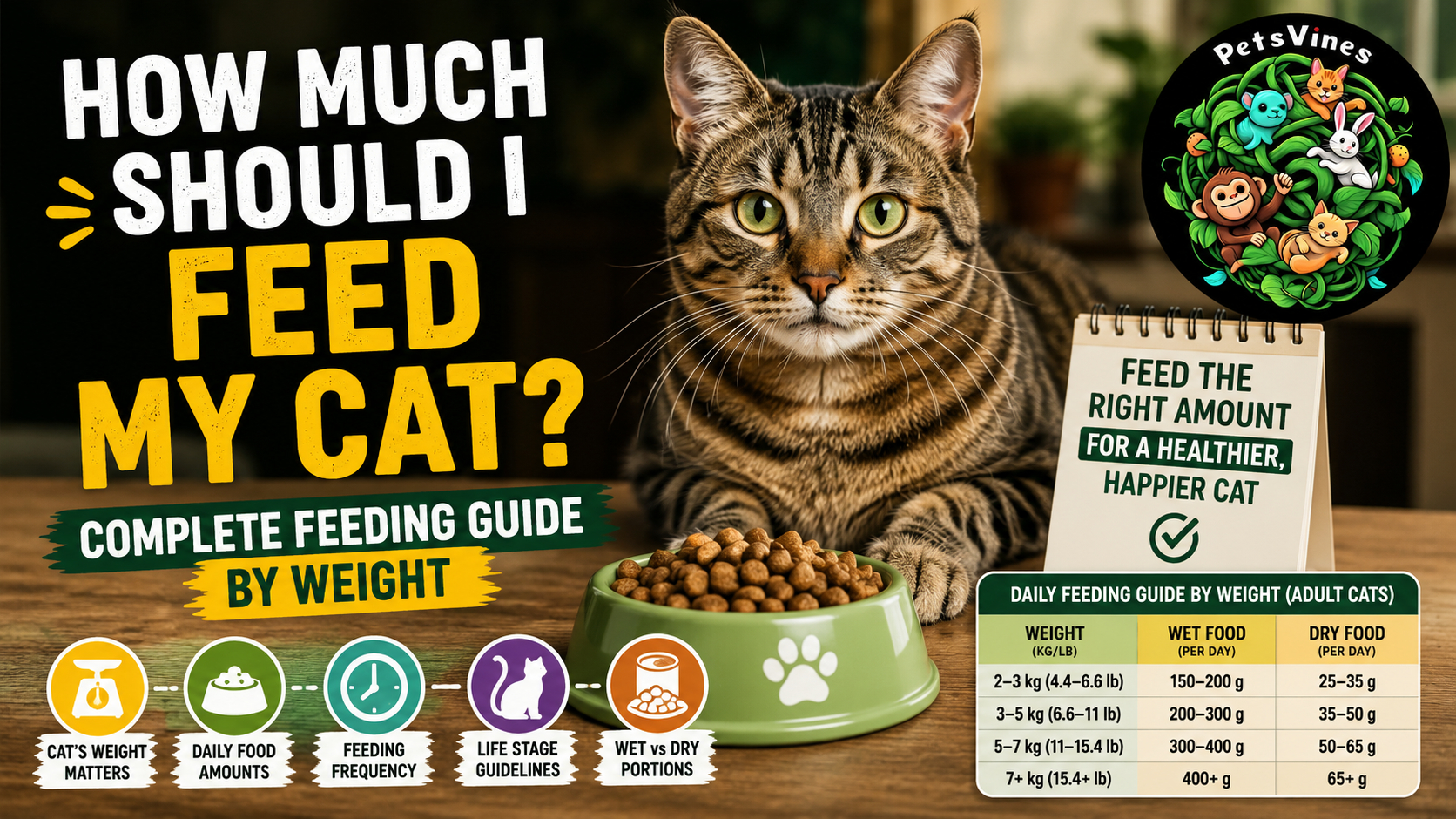
One of the most common mistakes cat owners make is not paying enough attention to how much they actually feed their cat. It is easy to free-fill a bowl with dry kibble and assume it is fine. The reality is that overfeeding is one of the leading drivers of feline obesity, which now affects more than half of all domestic cats in the United States according to the Association for Pet Obesity Prevention.
Why Bag Feeding Guidelines Are Just a Starting Point
The feeding recommendations printed on cat food packaging are calculated for an average cat of a given weight. Your cat may be significantly more or less active than the assumed average, may be spayed or neutered which reduces caloric needs by approximately 20 percent, may be a growing kitten with dramatically higher needs, or may be a senior cat with a slower metabolism. Additionally, measuring cups can overestimate actual food portions by 20 to 50 percent depending on kibble density.
The Calorie Calculation Method
The most reliable approach starts with your cat’s daily caloric need. According to PetMD, cats should eat about 25 to 35 calories per pound of body weight per day. Veterinary nutritionists use the Resting Energy Requirement formula:
RER = 70 x (body weight in kg) to the power of 0.75
Then multiply RER by a life stage factor to get the Daily Energy Requirement:
| Cat Type | Multiply RER By | Example: 4.5kg cat (RER = 209 kcal) |
|---|---|---|
| Neutered adult indoor | 1.2 | 251 kcal per day |
| Intact adult | 1.4 | 293 kcal per day |
| Inactive or obese-prone adult | 1.0 | 209 kcal per day |
| Active adult | 1.4 to 1.6 | 293 to 334 kcal per day |
| Weight loss | 0.8 x ideal weight RER | Based on target weight, not current weight |
| Kitten under 4 months | 3.0 | 627 kcal per day |
| Kitten 4 months to 1 year | 2.5 | 523 kcal per day |
| Senior cat 11 plus years | 1.1 to 1.4 | 232 to 293 kcal per day |
Simple Daily Calorie Reference by Weight
| Cat Weight | Estimated Daily Calories | Approximate Wet Food | Approximate Dry Food |
|---|---|---|---|
| 5 lbs (2.3kg) | 150 to 180 kcal | About 1 can (5.5oz) | About 0.33 cup |
| 7 lbs (3.2kg) | 185 to 220 kcal | About 1.2 cans | About 0.4 cup |
| 10 lbs (4.5kg) | 250 to 300 kcal | About 1.5 cans | About 0.5 cup |
| 12 lbs (5.4kg) | 285 to 340 kcal | About 1.8 cans | About 0.6 cup |
| 15 lbs (6.8kg) | 330 to 390 kcal | About 2 cans | About 0.7 cup |
These are estimates based on typical commercial cat food calorie densities. Always check the specific kcal per can or per cup printed on your food’s label, as this varies significantly between brands and formulas.
Feeding Frequency: How Often Should You Feed Your Cat?
Most adult cats do well with two meals per day, approximately 12 hours apart. Free-feeding leaves food available at all times but makes it very difficult to track intake and is strongly associated with feline obesity.
| Life Stage | Recommended Frequency | Notes |
|---|---|---|
| Newborn to 4 weeks | Every 2 to 3 hours | Mother’s milk or kitten milk replacer |
| 4 to 12 weeks weaning | 3 to 4 meals per day | Wet kitten food, gradually introducing solid food |
| 3 to 6 months | 3 meals per day | High calorie growth phase |
| 6 to 12 months | 2 to 3 meals per day | Continue kitten food formula |
| Adult 1 to 10 years | 2 meals per day | Morning and evening work well |
| Senior 11 plus years | 2 to 3 smaller meals | Easier on digestive system |
How to Tell If You Are Feeding the Right Amount
Run your hands along your cat’s ribcage. You should be able to feel individual ribs without pressing hard, but they should not be protruding visibly. Viewed from above, your cat should have a visible waist narrowing behind the ribs. Viewed from the side, there should be a slight abdominal tuck. If you cannot feel the ribs without pressing hard, your cat is likely overweight.
Tip: Weigh Your Cat Monthly
A kitchen scale or bathroom scale (weigh yourself, then weigh yourself holding the cat, then subtract) gives you a monthly weight trend far more informative than visual assessment alone. Weight changes of more than 5 to 10 percent over a month warrant a vet consultation.
Adjusting Portions for Weight Management
For weight loss: Never reduce a cat’s food intake by more than 25 percent below maintenance calories without veterinary supervision. Cats that lose weight too quickly are at high risk of developing hepatic lipidosis, the dangerous fatty liver disease discussed in our guide on cats not eating. A safe weight loss rate is approximately 1 to 2 percent of body weight per week.
For weight gain: Underweight cats may need calorie-dense wet food fed in multiple small meals throughout the day. Work with your vet to rule out underlying health causes for low weight before attempting to increase intake independently.
Treats: The Often-Forgotten Calories
Treats should make up no more than 10 percent of your cat’s total daily calorie intake. For a cat eating 250 calories per day, that is a treat budget of just 25 calories. Count treat calories into the daily total and subtract them from the meal portion to maintain accurate overall intake.
FAQs
How many calories does a cat need per day?
Most healthy adult cats need approximately 25 to 35 calories per pound of body weight per day. A 10-pound adult cat typically requires 250 to 300 calories daily. The exact amount varies based on age, activity level, spay or neuter status, and whether the cat is eating wet food, dry food, or a combination of both.
Why should I not just follow the feeding guidelines on the cat food bag?
Bag guidelines are calculated for an average cat of a given weight and do not account for your individual cat’s activity level, metabolism, or health status. Spayed or neutered cats need approximately 20 percent fewer calories than intact cats. Additionally, measuring cups can overestimate actual food portions by 20 to 50 percent depending on kibble density, making label guidelines an unreliable sole reference.
What is the RER formula and how do I use it to feed my cat?
RER stands for Resting Energy Requirement and is calculated as 70 multiplied by your cat’s body weight in kilograms to the power of 0.75. This gives your cat’s baseline calorie need at rest. You then multiply the RER by a life stage factor: 1.2 for a neutered indoor adult, 1.4 for an intact or active adult, 3.0 for a kitten under 4 months, and 0.8 of ideal weight RER for a cat on a weight loss plan.
How often should I feed my cat each day?
Most adult cats do best with two scheduled meals per day approximately 12 hours apart. Kittens aged 3 to 6 months need 3 meals per day, and seniors aged 11 and older benefit from 2 to 3 smaller meals to ease digestion. Free-feeding, where food is left out at all times, is strongly associated with feline obesity and is not recommended for most adult cats.
How can I tell if I am feeding my cat the right amount?
Run your hands along your cat’s ribcage. You should be able to feel individual ribs without pressing hard, but they should not be visibly protruding. Viewed from above, your cat should have a visible waist narrowing behind the ribs. Viewed from the side, there should be a slight abdominal tuck. If you cannot feel the ribs without pressing, your cat is likely overweight.
How much should I feed my cat for weight loss?
Never reduce your cat’s food intake by more than 25 percent below maintenance calories without veterinary supervision. Cats that lose weight too quickly are at serious risk of developing hepatic lipidosis, a dangerous fatty liver disease. A safe and healthy weight loss rate is approximately 1 to 2 percent of body weight per week.
My cat always acts hungry. Should I feed more?
Not necessarily. Cats are highly motivated to seek food even when they are not calorically deficient. If your cat is at a healthy body condition score, resist the urge to increase portions based on behavior alone. Scheduled meals with consistent measured portions are far more reliable than responding to apparent hunger from a cat that has already eaten adequately.
Should I free-feed my cat?
Free-feeding is convenient but is the feeding method most strongly associated with feline obesity. Scheduled portion-controlled meals twice daily are recommended by most veterinary nutritionists for adult cats, as they allow accurate tracking of daily intake and make it easier to spot appetite changes that might signal a health issue.
How many calories should treats make up in my cat’s diet?
Treats should account for no more than 10 percent of your cat’s total daily calorie intake. For a cat eating 250 calories per day, that is a treat budget of just 25 calories. Treat calories must be counted into the daily total and subtracted from the meal portion to keep overall intake accurate.
How do I feed multiple cats the correct individual amounts?
The most effective strategies are feeding cats in separate rooms during mealtimes, using microchip-activated feeders that open only for the assigned cat, and removing all food bowls between meals so no cat can finish another’s portion. This ensures each cat receives their individually calculated calorie amount rather than competing for a shared supply.
For more on what to feed your cat, read our complete guide to the best cat food brands for every life stage.
Also Visit: Best Kitten Food 2026: Top Picks for Growth and Development