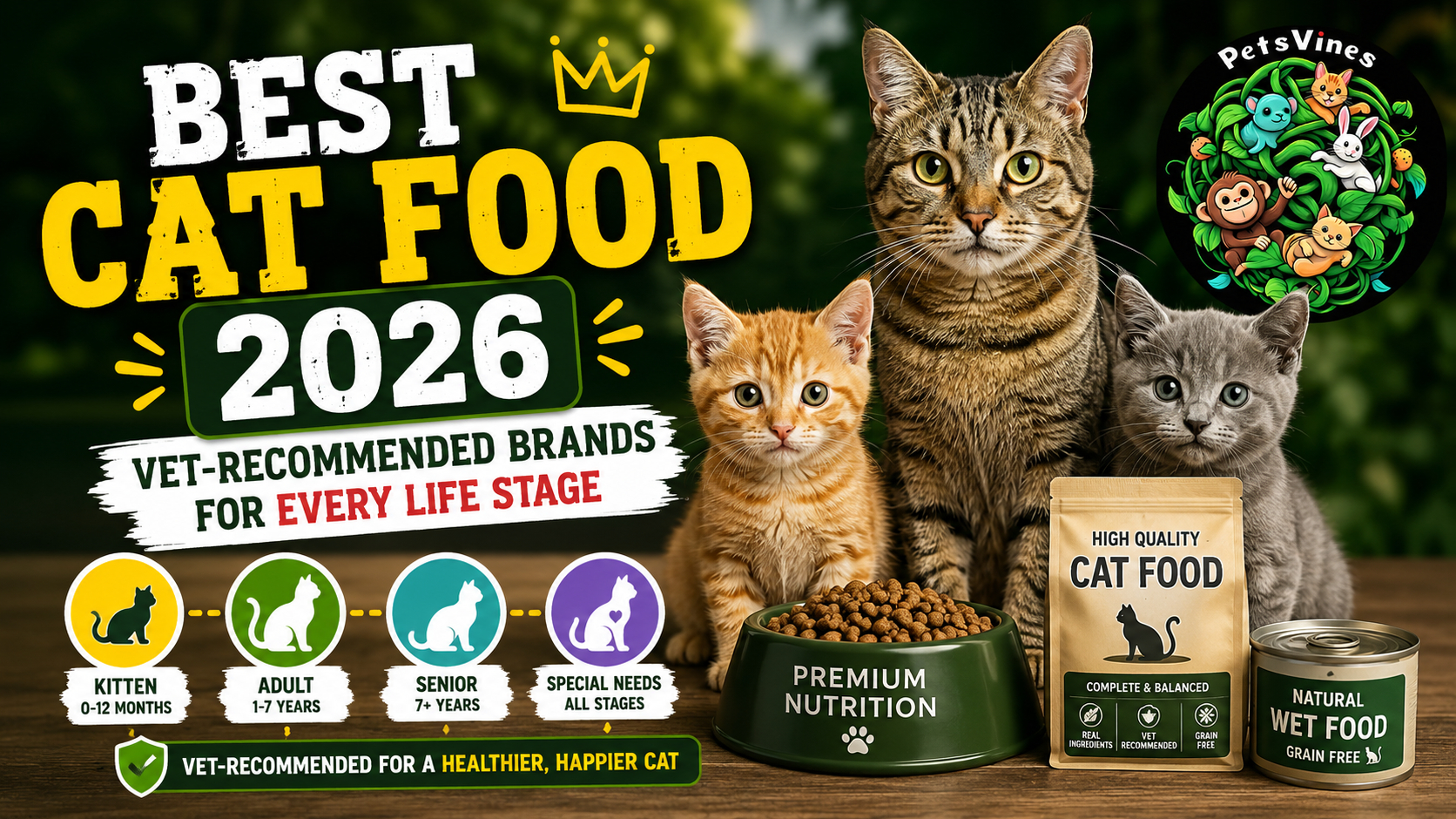
Walk down any pet food aisle and you will quickly feel overwhelmed. There are hundreds of brands, dozens of formulas, and bold marketing claims on almost every bag and can. It can be genuinely difficult to know what separates good cat food from great cat food, and what is simply clever packaging.
As pet care researchers who evaluate cat nutrition using veterinary literature and expert guidance, we built this guide around one principle: the best cat food gives your cat the specific nutrients they need at their current life stage, made by a company you can trust. This article shows you exactly what to look for, which brands consistently earn veterinarian recommendations, and how to match the right food to your individual cat.
If your cat is currently dealing with a health issue, also read our guide to why cats stop eating and when it becomes a medical concern.
What Makes a Cat Food High Quality?
AAFCO certification is non-negotiable. The Association of American Feed Control Officials sets the nutritional standards that all legitimate cat food must meet. Look for a statement on the label that reads “complete and balanced for [life stage] cats” either by meeting AAFCO nutritional profiles or by passing actual feeding trials. Feeding trial evidence is the gold standard because it demonstrates real-world nutritional adequacy, not just mathematical formulation.
Named animal protein must be first. Cats are obligate carnivores. Their bodies require animal-sourced protein because they cannot synthesize certain amino acids from plant sources. The first ingredient should be a named protein: chicken, turkey, salmon, beef, or similar. Vague terms like “meat” or “poultry” indicate lower-quality sourcing.
Taurine is essential. Cats cannot produce sufficient taurine on their own, and deficiency causes severe heart disease and blindness. Any complete cat food must contain taurine. According to the Cornell Feline Health Center, taurine deficiency is a well-documented risk in cats fed homemade or poorly formulated diets.
The brand invests in nutrition science. As Dr. Tavella, a veterinary nutritionist cited by Healthline, explains: “As veterinarians, we anchor recommendations in diets that are supported by feeding trials, formulation expertise, and quality control.” This is why brands like Purina Pro Plan, Hill’s Science Diet, and Royal Canin consistently top veterinary recommendation lists: not because they advertise the most, but because they invest the most in actual nutrition research.
| Quality Marker | What to Look For | Red Flag |
|---|---|---|
| AAFCO Statement | Complete and balanced for your cat’s life stage | No AAFCO statement at all |
| First Ingredient | Named animal protein: chicken, turkey, salmon | Meat meal or corn listed first |
| Taurine | Listed in ingredients or guaranteed analysis | Not mentioned anywhere on label |
| Company Research | Veterinary nutritionists on staff, feeding trials | No nutrition research, only marketing claims |
| Moisture Content | Wet: 70-80%, Dry: 8-10% | Misleading moisture claims |
| Artificial Additives | Absence of artificial colors, flavors, preservatives | Long list of artificial ingredients |
Best Dry Cat Food 2026
Purina Pro Plan Adult Cat
Purina Pro Plan is consistently the most recommended dry cat food among veterinary professionals. Real chicken or salmon is listed as the first ingredient, and the formula contains live probiotics for digestive health, omega-6 fatty acids for coat condition, and guaranteed levels of taurine. The brand has been conducting animal nutrition research for over 80 years and employs more than 500 scientists, veterinarians, and PhD-level nutritionists.
Hill’s Science Diet Adult
Hill’s Science Diet is formulated with easy-to-digest ingredients including lean protein and fiber, and contains a vitamin and antioxidant blend to support immune health. Dr. Anna Kaufman, a veterinarian at Bond Vet cited by NBC Select, specifically recommends Hill’s Science Diet for its ingredient quality and absence of artificial colors, flavors, and preservatives. Hill’s publishes the results of their clinical nutrition trials publicly.
Royal Canin Breed-Specific Formulas
Royal Canin offers formulas tailored to specific breeds including Maine Coon, Persian, British Shorthair, and Siamese. Their formulas meet both AAFCO and WSAVA global nutrition guidelines and are regularly cited in veterinary nutrition literature. If you have a purebred cat with known breed-specific health tendencies, Royal Canin is worth exploring with your vet.
Best Wet Cat Food 2026
Wet food offers a significant hydration advantage over dry food because it contains 70 to 80 percent moisture, compared to roughly 10 percent in dry kibble. According to Just Cats Clinic, cats naturally have a low thirst drive because their ancestors obtained most of their water from prey. For cats prone to urinary issues, kidney disease, or diabetes, wet food is often the dietary cornerstone of their management plan.
Purina Pro Plan Wet Cat Food
The wet line from Purina Pro Plan maintains the same nutritional rigor as the dry formulas. Water and a high-quality protein source are consistently the first two ingredients, the formulas are AAFCO-compliant, and the range includes specialized options for sensitive stomach, urinary health, and weight management.
Fancy Feast Classic Pate
Fancy Feast Classic Pate often surprises cat owners when veterinary nutritionists recommend it. The classic pate varieties are often surprisingly well-formulated, meeting AAFCO standards. This is a legitimate choice for owners on a budget who still want quality wet food.
Best Cat Food for Kittens
Kittens have dramatically different nutritional needs than adult cats. According to AAFCO Cat Food Nutrient Profiles, kittens need a minimum of 7.5 grams of protein per 100 kilocalories, compared to 6.5 grams for adult cats. For a full breakdown, see our dedicated guide to best kitten food 2026.
Best Cat Food for Senior Cats
Senior cats often benefit from foods that maintain muscle mass with higher protein, support joint health with omega-3 fatty acids, and account for reduced kidney function with controlled phosphorus. If your senior cat is losing weight or showing signs of illness, read our guide to how long cats live and what affects their lifespan.
What Ingredients to Avoid
- BHA, BHT, and ethoxyquin: Synthetic preservatives with ongoing safety debates in veterinary nutrition literature. Opt for foods preserved with mixed tocopherols instead.
- Corn syrup and added sugars: Cats have no nutritional need for carbohydrates and no sweet taste receptors.
- Unnamed meat byproducts: Terms like “animal digest” or “meat and bone meal” without a named animal source indicate low-quality protein sourcing.
- Artificial colors: Cats cannot perceive color the way humans do. Artificial dyes serve no nutritional purpose.
- Excessive fillers: Corn, wheat gluten, and soy in large quantities inflate the ingredient list without providing meaningful feline nutrition.
Tip: How to Transition Foods Safely
Any food change should happen over 7 to 10 days. Start by mixing 25% new food with 75% old food, then gradually increase the new food proportion every 2 to 3 days. Abrupt switching is one of the most common causes of cat vomiting and diarrhea.
FAQs
Is expensive cat food always better?
No. Price is not a reliable indicator of nutritional quality. What matters is the AAFCO statement, ingredient quality, and whether the brand invests in nutrition research and feeding trials. Fancy Feast Classic Pate is inexpensive but nutritionally sound, while many expensive boutique brands have never conducted feeding trials.
Can I feed my cat the same food every day?
Yes, as long as it is complete and balanced for their life stage. Some veterinary nutritionists suggest rotating proteins every few months to prevent food sensitivities from developing. Introduce any new food gradually over 7 to 10 days.
Is raw food safe for cats?
Raw diets are controversial in veterinary medicine. The FDA warns against raw pet diets due to risks of Salmonella, Listeria, and other pathogens that can be transmitted to both pets and humans. If you choose a raw diet, do so under the guidance of a veterinary nutritionist.
How do I know if my cat food is not working for my cat?
Signs that a food may not suit your cat include loose stools, vomiting shortly after eating, a dull or flaky coat, excessive scratching, consistent refusal to eat, or gradual weight loss. Consult your vet before switching foods rather than cycling through multiple brands independently.
Should indoor cats eat different food than outdoor cats?
Indoor cats have lower calorie needs because they are less active. Many brands offer indoor-specific formulas with reduced calories and higher fiber. See our full guide on best cat food for indoor cats 2026 for detailed recommendations.
The Bottom Line on Cat Food in 2026
There is no single best cat food for every cat. What should remain constant across any choice is this: AAFCO certification, named animal protein as the first ingredient, taurine in the formula, and a manufacturer you can trust with genuine nutrition expertise. When in doubt, ask your vet.
Also Visit: Cat Constipation: Signs, Causes and Safe Home Treatments