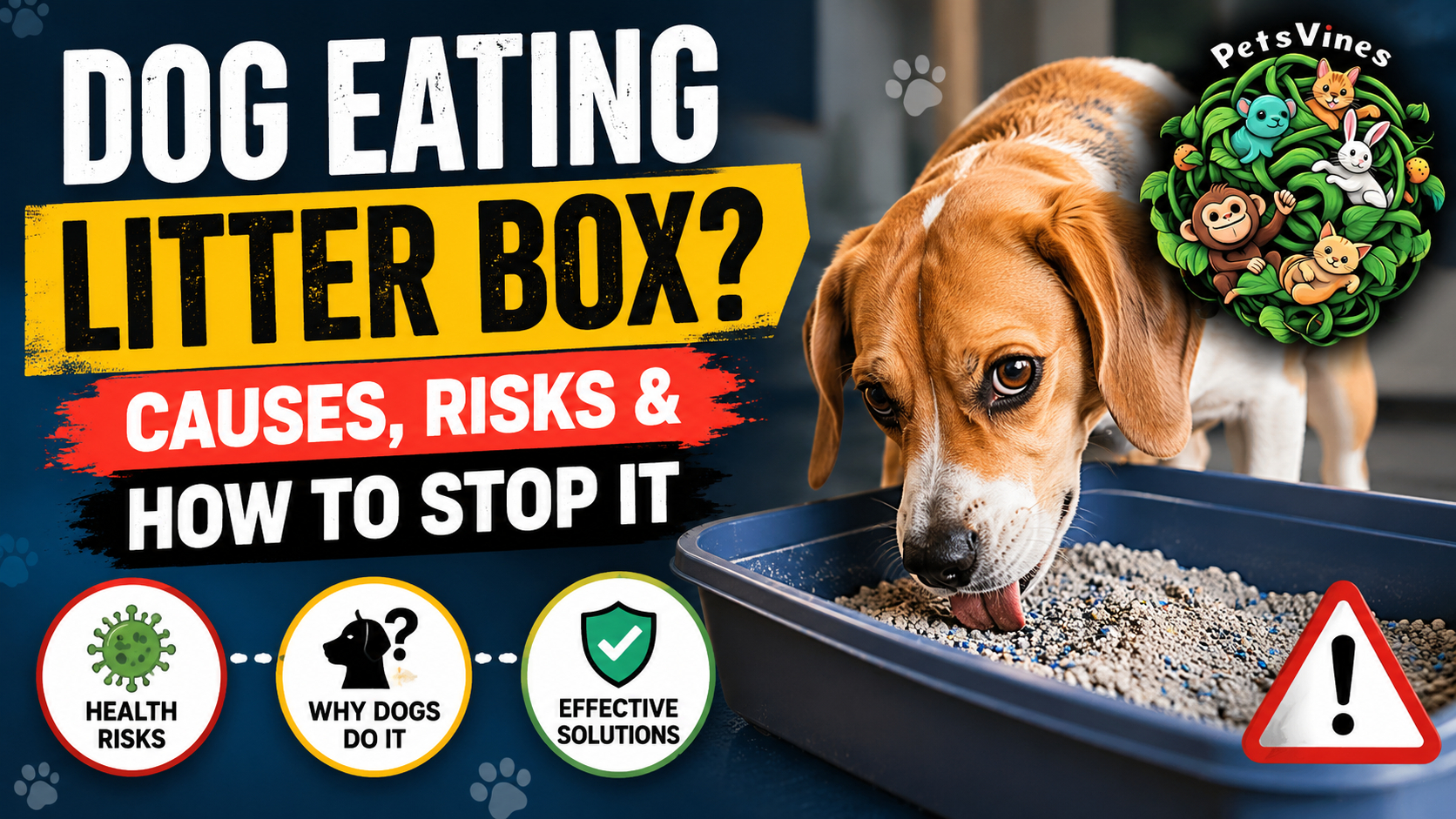
Dog Eating Litter Box: Dogs eat from the litter box because cat feces smells like protein-rich food to them — a behavior called coprophagia. It can also be driven by nutritional gaps, boredom, stress, or instinct. While usually not immediately dangerous, it does carry real health risks including parasites and bacterial infections. The most effective fix is blocking physical access to the litter box while addressing the root cause.
You walk into the room and catch your dog nose-deep in the cat’s litter box — again. It’s disgusting, it’s baffling, and you’re not alone. This is one of the most common complaints veterinarians hear from pet owners in multi-pet households.
The behavior even has a clinical name: coprophagia — the consumption of feces. And while it sounds alarming, it’s far more common than most people realize. Research presented at the American Veterinary Society of Animal Behavior found that 24% of dogs — roughly one in four — were observed eating feces at least once, and 16% were classified as “serious” poop eaters, caught in the act five or more times.
So what’s driving your dog to snack from the cat’s bathroom? Is it dangerous? And most importantly — how do you make it stop? This guide answers all of that, clearly and practically.
What Is Coprophagia and Is It Normal in Dogs?
Coprophagia is the act of eating feces. In dogs, it’s considered a relatively normal — if unwelcome — behavior rooted in instinct, curiosity, or nutritional need. It’s especially common in puppies and in homes with multiple pets.
Veterinarians and animal behavior experts see coprophagia fairly often, especially in puppies, food-motivated breeds, and dogs who are bored, stressed, or missing something in their diet.
The litter box, from your dog’s perspective, isn’t a bathroom — it’s a treasure chest of intensely interesting smells. Cats don’t fully break down all of the ingredients in their diet, which means dogs sniff cat poop and smell kibble or wet food. Cat food has a very high protein content, and these nutrients pass through in a partially digested form that’s extremely appealing to dogs.
In short: to your dog, the litter box smells like a snack bar.
Why Does My Dog Eat Cat Poop? The Real Reasons
1. It Smells Like Food
This is the most straightforward reason. While you might think cat poop smells gross, it probably smells like cat food to your dog. Since normal cat food appeals to a dog’s sense of smell, and many dogs love to eat cat food, this may be one of the reasons why they’re often ready to snack out of the litter box.
High-protein cat diets create feces that are rich in residual nutrients — and dogs, as natural scavengers, are wired to recognize and pursue calorie-dense food sources.
2. Instinct and Evolutionary Behavior
According to Dr. Benjamin Hart of UC Davis, this behavior is “a reflection of an innate predisposition of ancestral canids living in nature that protects pack members from intestinal parasites present in feces that could occasionally be dropped in the den/rest area.” In other words, your dog may be acting on a deeply embedded instinct to clean the shared living space — even if the litter box is decidedly not their territory.
A 2012 study also revealed that dogs may eat animal poop as a way of protecting other pack members from microbes found in feces left behind by other creatures. The Merck Veterinary Manual addresses coprophagia primarily as an exploratory behavior pattern.
3. Nutritional Deficiencies
Eating poop can be the result of a dietary deficiency. If your dog isn’t absorbing enough nutrients from their food — due to poor diet quality, digestive issues, or an underlying medical condition — they may seek out alternative nutrient sources. This is more common than many pet owners expect, particularly in dogs eating low-quality commercial kibble.
Other common causes of eating poop include intestinal parasites (worms) and poor nutrient absorption within the GI tract, such as chronic diarrhea or pancreatic issues.
4. Boredom, Stress, and Anxiety
Some dogs will begin to eat feces during periods of stress. Much like people with comfort foods, dogs will turn to the things they enjoyed as puppies to relieve stress. Dogs who have ample playtime and lots of interactive time with their families are less likely to develop coprophagia.
Dogs left alone for long periods, under-stimulated, or struggling with separation anxiety are significantly more prone to this behavior.
5. Attention-Seeking
Coprophagia can serve as a means for dogs to draw their owner’s attention — whether positive or negative. Even a scolding or reprimand counts as attention to a dog. If you’ve reacted strongly every time you caught your dog near the litter box, you may have accidentally reinforced the behavior.
6. Habit Formation
Even if the problem started out innocently enough, such as with normal puppy development, it can quickly become a habit or compulsive issue. Once a dog discovers the litter box is rewarding, they’ll keep coming back — regardless of the original trigger.
7. Age-Related Cognitive Changes
Some senior dogs who suddenly begin eating cat poop may be showing signs of canine cognitive dysfunction — a brain-aging condition that causes memory loss, confusion, and behavioral changes. If your older dog has recently started this behavior out of nowhere, a vet visit is warranted.
Is It Dangerous? Health Risks You Need to Know
Dog Eating Litter Box: Yes, there are real health risks. Cat feces can carry parasites, bacteria, and pathogens that can make your dog seriously ill — and in some cases, spread to humans. It’s not an emergency every time it happens, but it’s a habit worth breaking quickly.
While many dogs eat cat poop and are fine, eating any poop carries the potential for the dog to contract harmful bacteria and parasites. Here’s what you’re actually dealing with:
Parasites
Cat feces can contain Toxoplasma gondii, roundworms, hookworms, and tapeworm eggs. If the cat has intestinal parasites, your dog could contract an infection by eating their feces. Regular deworming of both pets is critical if your dog has ongoing access to the litter box.
Bacterial Infections
Harmful bacteria such as E. coli or Salmonella can be present in cat feces, putting your dog at risk of infection. These bacteria can also, in rare cases, be transmitted to humans — particularly young children or immunocompromised individuals living in the same household.
Litter Ingestion
This is a separate but equally serious concern. If your dog is eating from the litter box, they’re almost certainly ingesting litter granules alongside the feces. Clumping clay litters can expand inside the digestive tract, potentially causing blockages. This is a veterinary emergency if significant amounts are consumed.
Signs Your Dog May Need Veterinary Care
Watch for:
- Vomiting or diarrhea after a litter box visit
- Loss of appetite or lethargy
- Distended or painful abdomen
- Sudden weight loss
- Worm segments in their stool
If any of these appear, contact your vet promptly.
How to Stop Your Dog From Eating the Litter Box
The most reliable approach combines physical access prevention with training and addressing the underlying cause. No single solution works for every dog, but the strategies below have strong track records.
1. Block Physical Access — This Is Your First Move
The simplest and most immediately effective solution is making the litter box physically inaccessible to your dog.
- Baby gates or pet gates — Place one in the doorway of the room where the litter box lives. Choose a gate with a small cat door your cat can pass through but your dog cannot.
- Top-entry litter boxes — These require the cat to jump in from above, which most dogs find impossible to access.
- Covered litter boxes — A hooded box with a small entry flap adds a layer of difficulty, though determined larger dogs may still manage.
- Furniture-style enclosures — Purpose-built litter box furniture conceals the box inside a cabinet, allowing only the cat access through a small opening.
You can find self-cleaning cat litter boxes that help keep dogs out, or use a dog gate to restrict access to the box.
2. Scoop the Litter Box More Frequently
Research shows that 92% of coprophagic dogs prefer fresh poop — only one to two days old. This means the single most effective deterrent is removing the temptation entirely. Scooping the litter box at least once daily — ideally twice — dramatically reduces the window of opportunity.
3. Rule Out Medical Causes First
Before investing time in behavioral training, schedule a vet checkup. With a thorough exam, a complete history, and screening tests such as blood work and fecal examinations, your veterinarian will likely be able to pinpoint any medical reasons for coprophagia.
If a nutritional deficiency or digestive disorder is found, treating it often resolves the behavior entirely — and much faster than training alone.
4. Train the “Leave It” Command
The “leave it” command is one of the most practical tools in any dog owner’s kit. With consistent positive reinforcement training:
- Show your dog a treat in your closed fist.
- Say “leave it” and wait for them to back away.
- Reward with a different treat (not the one in your fist).
- Gradually apply this to real-world situations, including near the litter box.
Training your dog to leave the litter box alone can be effective when combined with providing plenty of mental and physical stimulation through interactive toys, regular walks, and training sessions. A tired and engaged dog is less likely to seek out undesirable behaviors.
5. Increase Mental and Physical Stimulation
Boredom is a major driver. Dogs who are under-exercised or mentally understimulated will find their own entertainment — and the litter box is an easy target.
- Add a second daily walk
- Introduce puzzle feeders or sniff mats
- Schedule more interactive play sessions
- Consider doggy daycare or a dog walker if you’re away for long hours
6. Improve Their Diet
Ensure your dog is receiving a nutritionally balanced diet that meets all their dietary needs. If you suspect a nutritional deficiency, consult your veterinarian to adjust their diet or recommend supplements.
Switching from a low-quality kibble to a higher-protein, nutrient-dense food sometimes resolves coprophagia without any other intervention.
7. Use Food Additives (With Caution)
There are commercial products designed to make cat feces less palatable to dogs — these are typically added to the cat’s food and alter the smell/taste of their feces. Always consult your veterinarian before using any deterrents to ensure they’re safe for both your cat and dog.
Note: reported success rates of food additives and tablets marketed to stop coprophagy ranged from 0 to 2% in formal studies, so these work best as a supplementary measure, not a standalone fix.
When to See a Vet Immediately
Most instances of litter box raiding are a behavioral nuisance rather than a medical emergency. However, call your vet right away if:
- Your dog ate a significant amount of clumping litter (obstruction risk)
- They show signs of vomiting, lethargy, or abdominal pain after the incident
- The behavior started suddenly in an older dog (cognitive dysfunction concern)
- Your dog has been doing this repeatedly for weeks with no improvement despite prevention efforts
If your dog shows signs of illness after eating cat poop, such as vomiting, diarrhea, or lethargy, seek veterinary care immediately. Early intervention can prevent complications and ensure your dog’s well-being.
FAQ’s
Q: Is it normal for dogs to eat cat poop?
Frustratingly, yes. Poop-eating behavior is seen in roughly 25% of dogs — it’s one of the most frequently reported concerns in multi-pet households.
Q: Can my dog get sick from eating cat litter?
Yes. Cat litter — particularly clumping varieties — can cause digestive blockages if ingested in quantity. Cat feces also carry parasites and bacteria that can infect your dog.
Q: Will my dog grow out of eating the litter box?
Puppies often do. Adult dogs who’ve developed the habit are less likely to self-correct without intervention — proactive steps are almost always needed.
Q: What’s the fastest way to stop it?
Block access to the litter box. It’s the quickest, most reliable fix while you work on training and rule out medical causes.
Q: Does punishment help?
No — and it can backfire. Dogs who are punished for accidents may hide the evidence by eating their own or other animals’ feces, which reinforces rather than discourages the behavior. Positive reinforcement and environmental management work far better.
Final Thoughts
A dog eating the litter box is gross — but it’s not a moral failing on your part or your dog’s. It’s a deeply instinctive behavior with clear biological and environmental roots. The good news is that with the right combination of physical barriers, consistent training, dietary review, and a vet checkup, most dogs can be redirected away from this habit for good.
The key is acting on it rather than hoping it resolves on its own. The longer the behavior goes unchecked, the more ingrained it becomes.
For more expert-backed guidance on dog behavior, health, and care, explore the dog care resources at PetsVines — and browse the full library of pet owner guides at PetsVines.com.