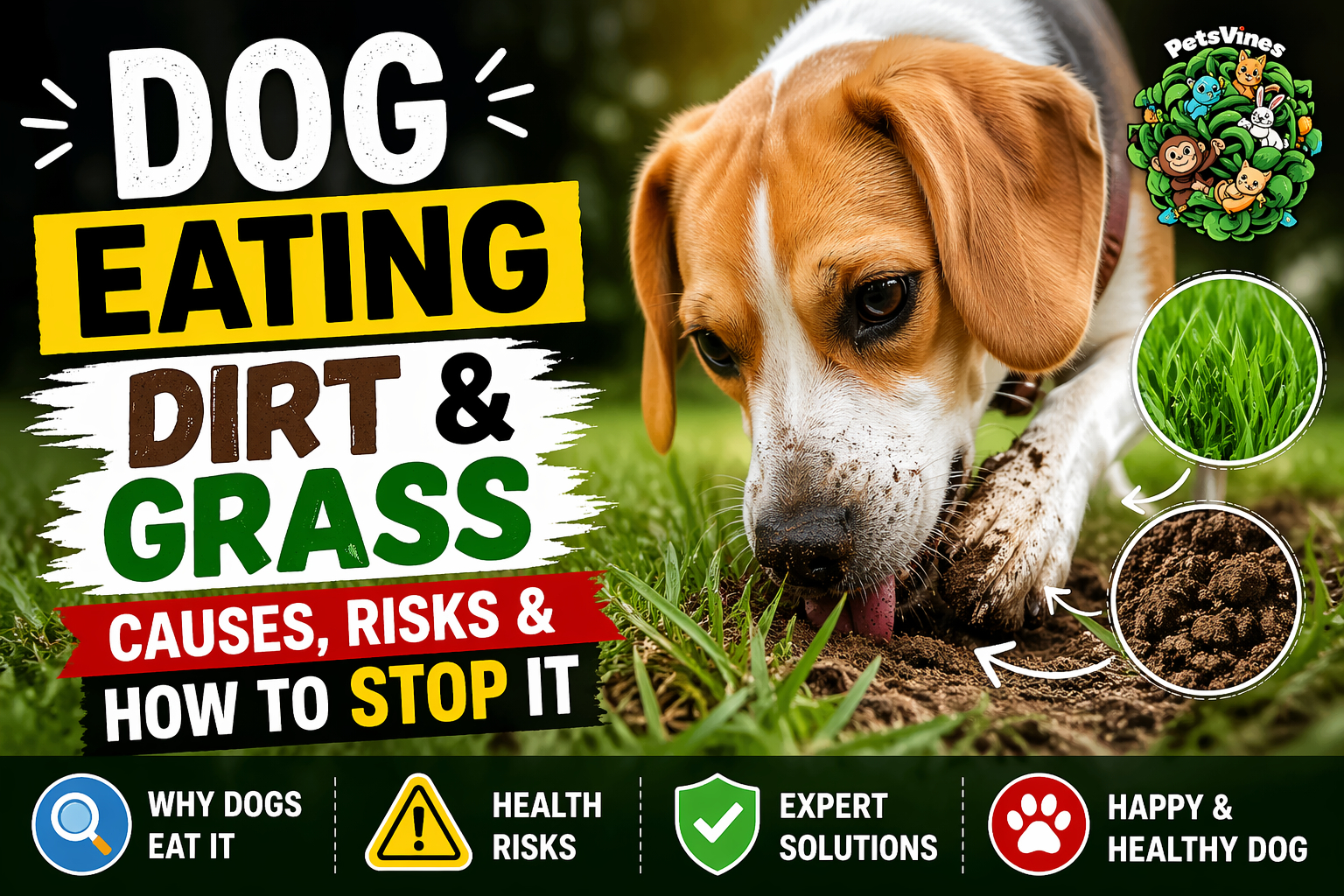
Dog Eating Dirt and Grass: Dogs eat dirt and grass for a range of reasons — from instinct and boredom to nutritional deficiencies and underlying health conditions. Occasional grass-eating is usually harmless, but frequent dirt consumption (known as geophagia) can signal something more serious. Identifying the root cause is the key to keeping your dog safe and healthy.
You glance out the window, and there’s your dog — snout-deep in the garden, happily munching on grass or scooping up mouthfuls of soil like it’s a five-star meal. It’s one of those behaviors that makes every dog owner stop and think: Is this normal? Should I be worried?
You’re not alone. This is one of the most common questions pet owners ask their veterinarians. And while it can look alarming, the answer isn’t always cause for panic — but it’s never something to completely ignore either.
Dogs eating dirt and grass is surprisingly common, and it spans breeds, ages, and sizes. Research shows that while just 8% of dogs exhibited signs of illness before eating grass, some cases do point to nutritional gaps, stress, or medical issues that need attention. Understanding why your dog is doing this is the first step toward knowing what — if anything — you should do about it.
In this guide, we’ll walk you through every major reason dogs eat dirt and grass, the health risks involved, warning signs to watch for, and practical, vet-approved strategies to curb the behavior.
What Is Pica in Dogs? (And Is That What’s Happening?)
Before diving into the specific causes, it helps to understand the broader condition that dirt and grass eating can fall under.
Pica is a condition where a dog consistently eats objects that are not food items — metal, plastic, cloth, rocks, paper, dirt, and feces are common examples. It’s typically considered a psychological, obsessive-compulsive habit, but it can also result from a medical condition or poor nutrition.
A specific form of pica called geophagia describes the compulsive consumption of dirt or mud. If your dog occasionally nibbles on a blade of grass, that’s one thing. But if they’re regularly and deliberately seeking out soil to eat, geophagia may be what you’re dealing with.
Pica affects up to 15% of dogs, with the most common causes being iron or zinc deficiency (in around 40% of cases), anxiety and compulsive disorders (35%), boredom and inadequate mental stimulation (20%), and underlying medical conditions like inflammatory bowel disease or diabetes (15%).
Why Do Dogs Eat Grass? The Most Common Reasons
The Short Answer for Voice Search
Dogs eat grass most commonly out of instinct, to soothe an upset stomach, out of boredom, or to add fiber to their diet. It’s rarely a sign of serious illness, though frequent or frantic grass-eating paired with vomiting should be checked by a vet.
1. Instinct and Ancestral Behavior
Long before dogs were domesticated, their wild ancestors ate whole prey — including the stomach contents of herbivores, which contained plant matter. Grass-eating may simply be a holdover from that instinct, hardwired into your dog’s behavior regardless of how full their food bowl is.
2. Fiber and Digestive Support
Some veterinarians suggest dogs may eat grass to add roughage and fiber to their diet, which can help them digest food more easily. If your dog’s diet is low in fiber, they might instinctively turn to the garden for a top-up.
3. Stomach Upset
Many owners assume their dog eats grass because they feel sick — and while this does happen, it’s less common than people think. Research shows that illness before grass-eating is rare, occurring in only 8% of cases. That said, some dogs do use grass to induce vomiting when they feel nauseous.
4. Boredom and Anxiety
A dog that’s under-stimulated, anxious, or lonely will often look for ways to self-soothe or pass the time. Grass chewing can become a repetitive coping mechanism. Anxiety is one of the recognized causes of pica, and eating grass can be a way dogs relieve stress.
5. They Simply Like It
Sometimes the answer is the simplest one. Some dogs just enjoy the taste and texture of grass. If it’s occasional, not accompanied by vomiting, and the grass hasn’t been treated with pesticides or herbicides, it’s generally considered safe.
Why Do Dogs Eat Dirt? When It Goes Beyond Grass
Dirt-eating tends to raise more red flags than grass-eating — and rightly so. While grass passes through relatively harmlessly, soil can harbor bacteria, parasites, pesticides, and sharp objects. Here are the main reasons dogs eat dirt:
1. Nutritional Deficiencies — The Most Common Medical Cause
Dietary deficiencies can cause dogs of any age to eat dirt to obtain minerals like sodium, iron, and calcium from the soil. Dogs that are underfed may also eat dirt and other objects due to hunger and nutritional deficiencies.
This is especially common in dogs fed low-quality or imbalanced diets. If you’re not sure whether your dog’s food meets nutritional standards, look for brands that follow the World Small Animal Veterinary Association (WSAVA) nutritional guidelines — a widely respected benchmark used by vets globally.
2. Anemia
Dogs with anemia — a deficiency in red blood cells — often crave iron-rich substances. Because soil contains iron and other trace minerals, dogs with this condition may instinctively gravitate toward dirt. This is a case where the behavior is a symptom, not just a quirk, and requires veterinary diagnosis and treatment.
3. Gastrointestinal Issues
Conditions like inflammatory bowel disease (IBD), gastritis, or intestinal parasites can trigger dirt-eating as a misguided attempt to settle an upset gut. If dirt-eating is accompanied by other GI signs — loose stools, vomiting, weight loss, or gas — a vet visit is essential.
4. Boredom, Stress, and Compulsive Behavior
Research suggests that behavioral causes of pica are far more common than medical ones. Dogs left alone in the yard for extended periods, dogs with separation anxiety, or those lacking enrichment often develop repetitive behaviors — and dirt-eating is one of the most common. Dogs who lack activity or stimulation may munch on dirt and soil to pass the time.
5. Puppies Exploring Their World
It’s quite common for puppies to eat dirt. Although it’s not fully understood why, it’s widely assumed to be partly due to the various scents emitted by dirt in different environments — a forest floor, a field, or a pile of mulch. Eating dirt may help puppies understand their surrounding environment. Most puppies grow out of this with age and proper training.
6. The Smell of Something in the Soil
Dogs have an incredibly sensitive sense of smell — up to 100,000 times more powerful than humans. Soil that smells like food, animal remains, compost, or even fertilizer can attract a dog’s nose and trigger eating behavior. The soil itself isn’t the draw — it’s what’s in it.
Health Risks: When Dirt and Grass Eating Becomes Dangerous
Occasional grass nibbling in a pesticide-free yard is rarely harmful. Dirt-eating, however, carries more consistent risks:
Parasites — Soil can contain roundworm, hookworm, and other parasite eggs that can infect your dog through ingestion. Regular deworming and vet check-ups are essential if your dog eats dirt regularly.
Toxins and Pesticides — Lawns and gardens treated with herbicides, pesticides, or fertilizers can poison a dog who eats the grass or soil. The National Pesticide Information Center notes the real risk of pesticide poisoning in pets who consume treated plant material.
Intestinal Blockages — Dirt often contains rocks, sticks, clay, or debris that can cause blockages in the digestive tract. Immediate veterinary attention is needed if your dog shows signs of intestinal blockage — vomiting, inability to defecate, or lethargy.
Bacterial Infections — Soil harbors bacteria including Salmonella and Clostridium, which can cause serious infections, especially in puppies, seniors, or immunocompromised dogs.
Dental Damage — Gritty soil wears down tooth enamel over time, and sharp debris can chip or fracture teeth.
When Should You Call the Vet?
Most dog owners can monitor mild, infrequent grass-eating at home. But you should contact your veterinarian if your dog:
- Eats dirt or grass every day or in large amounts
- Is vomiting repeatedly after eating grass or dirt
- Shows lethargy, weight loss, or appetite changes
- Has bloating, diarrhea, or signs of abdominal pain
- Is eating soil compulsively despite redirection
- Is a puppy eating large quantities of dirt — parasite risk is higher
- Has recently had access to treated lawns or chemical fertilizers
These signs suggest the behavior may be linked to an underlying condition that needs professional diagnosis, not just behavioral management.
How to Stop Your Dog from Eating Dirt and Grass
The Short Answer for Voice Search
To stop a dog from eating dirt and grass, identify and address the root cause first. Improve their diet, increase exercise and enrichment, use redirection during walks, and consult a vet if the behavior is frequent or compulsive.
Here are the most effective, vet-informed strategies:
1. Review and Upgrade Their Diet
If nutritional deficiency is suspected, switching to a high-quality, complete dog food is the first step. Look for WSAVA-compliant brands and consider having your vet run a blood panel to check for mineral deficiencies or anemia. Adding a vet-approved probiotic or fiber supplement may also help if digestive issues are involved.
For more dog care and feeding guidance, explore the PetsVines dog care hub — a practical resource for pet owners covering nutrition, behavior, and health.
2. Increase Mental and Physical Stimulation
A tired, engaged dog is far less likely to eat dirt out of boredom. Aim for:
- At least 30–60 minutes of daily exercise appropriate for your dog’s breed and age
- Puzzle feeders and enrichment toys to keep their mind active
- Training sessions — even short 10-minute sessions build focus and reduce anxiety
- Supervised outdoor time instead of leaving them alone in the yard
3. Redirect the Behavior
When you catch your dog sniffing or heading toward soil or grass, calmly redirect them before they get the chance to eat it. Consistency and timing are everything — the moment you notice the behavior is the moment to act. Here’s how to make redirection work effectively:
- Use a clear command like “leave it” or “no” in a calm, firm tone — avoid shouting, as it can increase anxiety and make the behavior worse.
- Reward immediately — the moment your dog looks away from the dirt or grass and responds to you, reward them with a treat, praise, or a favorite toy. Timing matters; the reward needs to come within seconds of compliance.
- Be consistent every single time — if you only redirect occasionally, your dog won’t learn. Every instance of the behavior needs the same response from you.
- Practice “leave it” indoors first — build the command in a low-distraction environment before relying on it outdoors where smells and stimulation are much stronger.
- Keep high-value treats on walks — a piece of chicken or a soft training treat will outcompete the appeal of dirt far better than a standard dry biscuit.
- Stay patient — habit-breaking takes time, especially with dogs that have been doing this for months. Expect gradual progress, not overnight results.
The more reliably you redirect, the faster the habit breaks — and the safer your dog stays.
4. Make the Area Less Appealing
If your dog has a specific spot they return to, you can:
- Use physical barriers (fencing off the area)
- Apply pet-safe deterrent sprays on the soil
- Remove compost, food scraps, or anything that might be attracting them to the area
5. Address Anxiety at the Root
If stress or separation anxiety is driving the dirt or grass eating, simply redirecting the behavior won’t be enough — you need to tackle what’s causing it. Behavioral interventions are often the most effective long-term solution. Here’s where to start:
- Talk to your vet first — describe when the behavior happens, how often, and what triggers it. They can assess whether a referral to a veterinary behaviorist is the right next step.
- Establish a consistent daily routine — dogs thrive on predictability. Fixed feeding times, walk schedules, and sleep routines significantly reduce baseline anxiety levels.
- Increase physical exercise — a well-exercised dog has less nervous energy to burn through destructive or compulsive behaviors. Even an extra 15–20 minutes of walking per day can make a noticeable difference.
- Add calm enrichment activities — sniff walks, lick mats, stuffed Kongs, and gentle nose-work games are excellent tools for soothing an anxious dog without overstimulating them.
- Avoid long periods of isolation — if your dog is left alone for extended hours, consider a dog walker, doggy daycare, or a trusted neighbor to break up the day.
- Never punish anxiety-driven behavior — punishment increases stress and almost always makes anxiety-based habits worse, not better.
For severe cases of separation anxiety or compulsive behavior, your vet may recommend a combination of behavioral therapy and medication. There is no shame in seeking professional support — it’s one of the kindest things you can do for your dog.
6. Rule Out Medical Causes
If you’ve addressed diet, boredom, and anxiety and the behavior persists, it’s time to look deeper. According to UC Davis School of Veterinary Medicine, underlying causes of pica in pets include nutritional deficiencies, compulsive behaviors, gastrointestinal issues, and conditions like inflammatory bowel disease — many of which won’t be visible to the naked eye. A thorough vet workup is the only way to know for certain. Here’s what that typically involves:
- Complete blood count (CBC) — checks for anemia, infection, and immune system irregularities that could be driving mineral cravings.
- Biochemistry panel — evaluates organ function including the liver and kidneys, which can influence appetite and cravings when compromised.
- Mineral and nutrient screening — identifies specific deficiencies in iron, zinc, calcium, or other key minerals that may be causing your dog to seek them out in soil.
- Fecal exam — rules out intestinal parasites like roundworm or hookworm, which are common in dogs that eat dirt and can cause significant digestive disturbance.
- Thyroid function test — thyroid imbalances can alter appetite and behavior in ways that mimic pica.
- Urinalysis — helps detect underlying conditions like diabetes or kidney disease that may contribute to unusual eating behaviors.
The good news is that once a medical cause is identified and treated, the dirt and grass eating often resolves on its own — no additional behavioral training needed. Don’t skip this step if the behavior is frequent, compulsive, or paired with any other physical symptoms.
Is It Ever Normal? What Vets Actually Say
The honest answer is: it depends on frequency, context, and the individual dog.
The occasional bite of backyard grass? Most vets consider it normal canine behavior. A dog that’s selectively nibbling clean grass in a pesticide-free environment isn’t doing themselves harm, and it’s not worth stressing over.
Dirt-eating, on the other hand, warrants more attention. While a puppy investigating the soil on a walk is expected, an adult dog who regularly and deliberately eats soil — especially if it’s compulsive or paired with other symptoms — should be evaluated.
The key is knowing your dog’s baseline. Any sudden change in behavior, including new or intensified dirt and grass eating, is worth a conversation with your vet.
Final Thoughts
Dogs eating dirt and grass is one of the most common (and perplexing) behaviors pet owners encounter. In many cases, it’s harmless — driven by instinct, curiosity, or a simple love of sniffing everything the earth has to offer. But in other cases, it’s your dog’s way of signaling that something isn’t quite right: their diet, their gut health, their mental wellbeing, or an underlying medical condition.
The smartest approach is always to watch, assess, and act. Monitor the frequency, look for accompanying symptoms, review their diet, and don’t hesitate to call your vet if something feels off. You know your dog better than anyone — trust that instinct.
For more expert-backed guidance on dog behavior, nutrition, and health, visit PetsVines — your go-to resource for caring for your four-legged family member.