
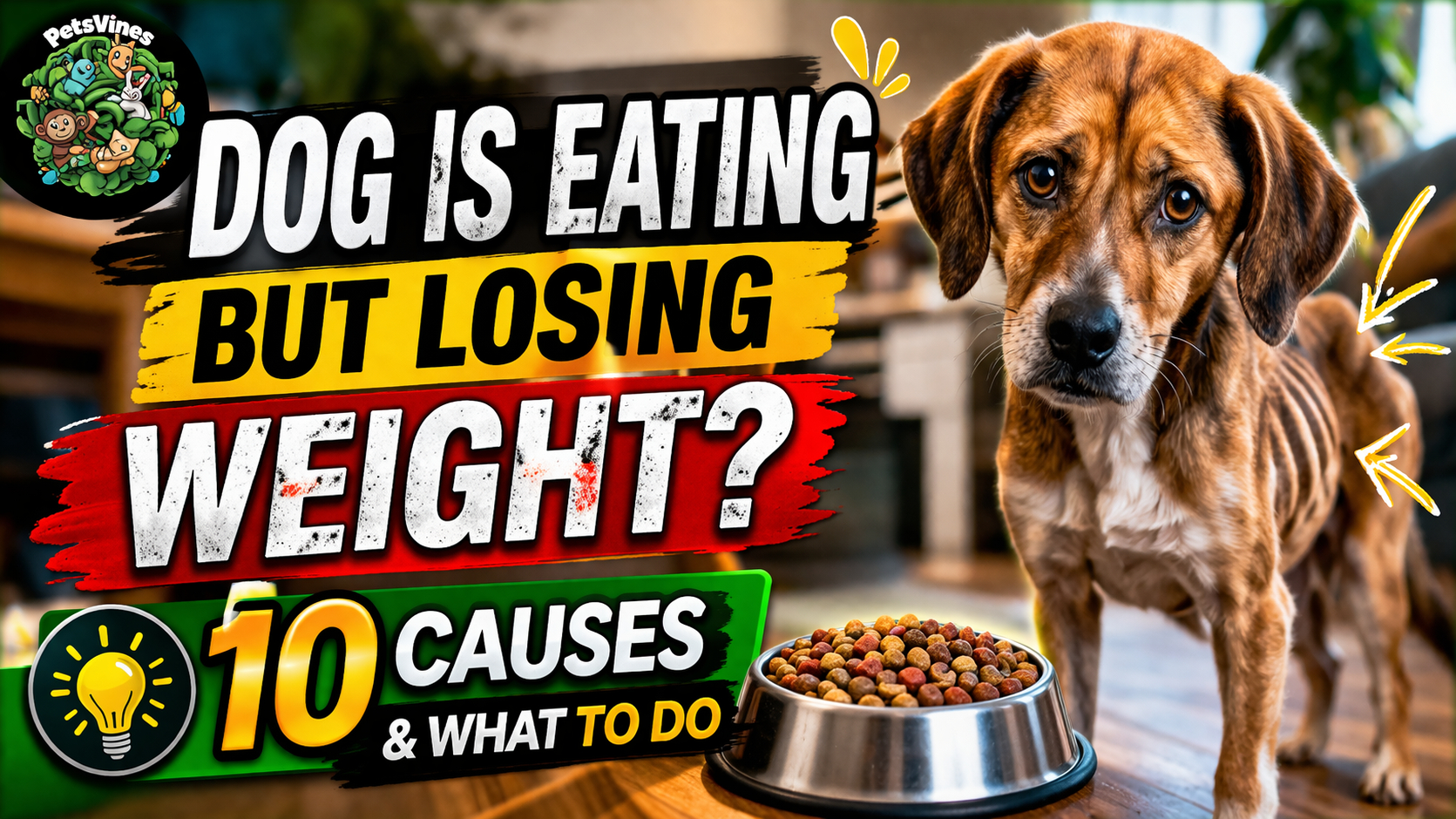
Why My Dog Is Eating But Losing Weight? When a dog eats normally but continues to lose weight, it usually points to an underlying medical condition — not a diet problem. The most common causes include intestinal parasites, diabetes, kidney disease, liver disease, exocrine pancreatic insufficiency (EPI), cancer, and inflammatory bowel disease. A veterinary exam with bloodwork is the fastest way to identify the cause and start treatment.
You fill the bowl. Your dog eats eagerly. And yet, somehow, they’re getting thinner. If this sounds familiar, you’re not imagining things — and you’re right to be concerned.
A dog that’s eating but losing weight is one of the more puzzling and worrying things a pet owner can face. Unlike a dog that simply refuses food, this situation suggests something is going wrong inside — the body isn’t absorbing, processing, or using nutrients the way it should.
The good news? Most causes are diagnosable and treatable — especially when caught early. In this guide, you’ll learn exactly why this happens, which medical conditions are most likely, what warning signs to watch for, and when it’s time to call your vet.
For more essential dog health guides, visit PetsVines Dog Care Hub.
What Does It Mean When a Dog Loses Weight While Eating?
A dog losing weight despite eating normally usually has a condition that prevents proper nutrient absorption or causes the body to burn calories faster than normal. This isn’t a food quantity issue — it’s a medical one. Common culprits include parasites, organ disease, metabolic disorders, and cancer. A vet visit is always the right first step.
Weight loss in dogs is clinically significant when a dog drops more than 10% of their normal body weight — and that’s a benchmark worth knowing. But you don’t need to wait for that threshold before taking action. Even gradual, subtle changes in your dog’s physique — visible ribs, a sharper waistline, or reduced muscle mass in the hind legs — are signs worth investigating.
There’s an important distinction to understand here: weight loss caused by poor appetite is one thing. Weight loss despite normal or even increased appetite is a red flag for systemic disease. Your dog’s body is telling you that something is interfering with how it processes food.
10 Reasons Your Dog Is Eating But Still Losing Weight
1. Intestinal Parasites
Worms — including roundworms, hookworms, tapeworms, and whipworms — are among the most common and easily missed causes of weight loss in dogs. These parasites literally steal nutrition from your dog’s digestive system, consuming the calories and proteins your dog needs to maintain body mass.
Puppies and dogs without regular deworming treatment are especially vulnerable. A fecal exam at your vet can confirm the presence of parasites in minutes, and treatment is straightforward.
Watch for: Visible worm segments in stool, a pot-bellied appearance, dull coat, diarrhea.
2. Exocrine Pancreatic Insufficiency (EPI)
EPI is one of the most underdiagnosed causes of weight loss in dogs that eat well. The pancreas stops producing the digestive enzymes needed to break down food, meaning nutrients pass through unabsorbed. Your dog can eat a full bowl of food and essentially starve at a cellular level.
German Shepherds and Rough Collies are genetically predisposed, but any breed can develop EPI. Dogs with EPI often have voluminous, pale, greasy stools and ravenous appetites.
Treatment: Pancreatic enzyme supplements added to every meal can be life-changing — and fast-acting.
3. Diabetes Mellitus
Diabetes in dogs works similarly to how it does in humans. The body either doesn’t produce enough insulin or can’t use it effectively, so glucose from food can’t enter the cells that need it for energy. Instead, the body breaks down fat and muscle — leading to weight loss even when food intake is normal or increased.
Dogs with diabetes often eat more but continue losing weight because their cells cannot access glucose properly. medivetgroup
Watch for: Increased thirst and urination, cloudy eyes (cataracts in dogs), sweet-smelling breath.
4. Kidney Disease (Chronic Renal Failure)
The kidneys regulate a remarkable number of bodily functions. When they begin to fail, toxin buildup suppresses appetite, disrupts protein metabolism, and causes nausea — all of which lead to muscle wasting and weight loss. Kidney disease is especially prevalent in older dogs and often progresses slowly before obvious symptoms appear.
Regular senior wellness exams with bloodwork can detect early kidney dysfunction before clinical weight loss becomes apparent.
5. Liver Disease
The liver is central to digestion, protein synthesis, and toxin processing. When it’s compromised, your dog may eat normally but fail to process nutrients effectively. Liver disease can stem from infections, toxins, cancer, or inherited conditions.
Watch for: Yellowing of the eyes or gums (jaundice), abdominal swelling, behavioral changes, dark urine.
6. Inflammatory Bowel Disease (IBD)
IBD causes chronic inflammation of the gastrointestinal tract, damaging the lining responsible for absorbing nutrients. Dogs with IBD often have unpredictable appetites — sometimes ravenous, sometimes reluctant — alongside persistent vomiting or diarrhea.
Inflammatory bowel disease, pancreatic insufficiency, and chronic gastroenteritis can all cause progressive weight loss medivetgroup even when the dog continues to eat.
7. Cancer
This is the word no pet owner wants to hear, but it needs to be addressed honestly. Cancer is one of the leading causes of unexplained weight loss in dogs — particularly in middle-aged to senior dogs. Tumors redirect the body’s nutritional resources, suppressing appetite and increasing metabolic demands simultaneously.
Weight loss from cancer is often accompanied by lethargy, lumps or swellings, sudden behavioral changes, or difficulty breathing. Early detection dramatically improves outcomes.
8. Cardiac (Heart) Disease
As heart disease progresses, the body works harder to maintain circulation, burning more calories in the process. Poor oxygen delivery to the gut can also impair digestion. Dogs with heart disease often lose muscle mass — a condition called cardiac cachexia — even when eating normally.
Watch for: Coughing (especially at night), exercise intolerance, rapid breathing, and abdominal bloating.
9. Hyperthyroidism and Other Hormonal Disorders
While hyperthyroidism (overactive thyroid) is more common in cats, it does occur in dogs and leads to a dramatically elevated metabolic rate — the body burns through calories faster than food can replace them. Addison’s disease (adrenal insufficiency) and Cushing’s disease can also disrupt metabolism and cause unexplained weight changes.
10. Dental Disease and Oral Pain
This is an often-overlooked culprit. A dog with painful teeth, gum disease, or oral tumors may appear to eat — approaching the bowl, sniffing, taking a few bites — but actually consuming significantly less than you think. Over time, this caloric shortfall leads to weight loss.
You may want to look for signs like dropping food or difficulty swallowing toegrips when evaluating whether dental pain is contributing to your dog’s weight loss.
How Much Weight Loss Is Too Much?
A healthy adult dog should maintain a stable weight from month to month. Veterinary guidelines generally consider a loss of more than 10% of body weight to be clinically significant — but don’t wait for that level before acting.
The Association for Pet Obesity Prevention’s ongoing research confirms that only 17% of dog owners acknowledged that their pets were in poor body condition Association for Pet Obesity Prevention — meaning most pet owners tend to underestimate health-related body changes. Trust your instincts. If your dog looks thinner to you, that observation matters.
A practical home check: run your hands along your dog’s ribcage. You should be able to feel the ribs easily with light pressure but not see them prominently. Visible ribs, a tucked abdomen, and prominent hip bones are signs to take seriously.
When to See a Vet — Don’t Wait on These Signs
Some situations call for an immediate vet visit rather than a “let’s see how things go” approach. Take your dog to the vet promptly if you notice:
- Rapid or sudden weight loss (over days rather than weeks)
- Vomiting or diarrhea accompanying the weight loss
- Blood in stool or urine
- Extreme lethargy or collapse
- Distended abdomen
- Yellowing of the eyes or gums
- Labored breathing
- A dog over 8 years old losing weight without explanation
Sudden, notable weight loss is a serious cause for concern and shouldn’t be ignored. If your dog has lost weight suddenly, make an appointment with your vet right away. Stoneycreekveterinary
What Will the Vet Do?
Your veterinarian will build a diagnostic picture using a combination of:
Physical examination — checking for muscle mass loss, abdominal swelling, lymph node size, and signs of pain.
Bloodwork — a complete blood count (CBC) and chemistry panel can reveal kidney and liver function, blood sugar levels, and signs of infection or inflammation.
Fecal exam — rules out parasites quickly and inexpensively.
Urinalysis — evaluates kidney function and screens for diabetes.
Imaging (X-ray or ultrasound) — detects masses, organ enlargement, and structural abnormalities.
Specialized tests — a TLI (trypsin-like immunoreactivity) test specifically diagnoses EPI; thyroid panels check for hormonal disorders.
Based on that information, your dog’s past medical history, and the physical exam findings, your veterinarian will discuss the next steps with you. toegrips The more details you can bring — when you noticed the change, whether appetite has shifted, any stool changes — the more efficiently your vet can narrow the diagnosis.
How to Support a Dog That’s Losing Weight
While you’re working with your vet to identify the cause, there are a few things you can do at home:
Track it: Weigh your dog weekly (most pet stores and vets have floor scales). Keep a written log.
Photograph it: Side-on photos in good lighting every 1–2 weeks help you — and your vet — objectively assess changes.
Don’t just add more food: Until you know the cause, adding calories without understanding why they’re not being retained can mask symptoms or worsen some conditions (like EPI or IBD).
Review what they’re actually eating: Sometimes food intake is lower than it appears. Watch your dog eat a full meal. Are they finishing it? Dropping food? Chewing on one side?
Note other symptoms: Changes in water intake, urination, defecation, energy levels, or behavior are valuable clues for your vet.
For more helpful dog care resources, explore PetsVines — a trusted destination for pet owners.
FAQ’s
Q: Can stress cause a dog to lose weight even when eating?
Yes — chronic stress or anxiety increases cortisol levels, which can suppress effective digestion and promote muscle breakdown. However, stress alone rarely explains significant weight loss. It’s worth investigating alongside a medical workup.
Q: My older dog is losing weight — is this just aging?
Weight loss is never “just aging.” While senior dogs do experience some muscle mass reduction (called sarcopenia), significant weight loss always has a treatable cause. Senior dogs should have bi-annual wellness checkups specifically to catch these changes early.
Q: Could it be the food itself?
Possible, but less common. A recent change to a lower-quality food, a new formula, or an improperly stored bag (causing nutrient degradation) could contribute. Check that the food meets AAFCO nutritional standards and consult your vet about caloric density.
Q: How quickly should I act?
If the weight loss has been gradual over weeks and your dog seems otherwise well, booking a vet appointment within the next few days is appropriate. If the loss has been rapid, or your dog seems unwell, go sooner — same day or next day if possible.
The Bottom Line
A dog that’s eating but losing weight is not a situation to observe and wait out. It’s your dog’s body signaling that something is wrong at a level that food alone can’t fix. The causes range from easily treatable (parasites, EPI) to serious but manageable (diabetes, kidney disease, cancer) — and nearly all of them respond better to treatment when caught early.
Your most important next step is straightforward: book a vet appointment. Bring your notes, your observations, and your photos. You know your dog better than anyone — and that knowledge, combined with professional diagnostics, is the fastest path to answers and recovery.
Also Visit: Symptoms of Dog Eating Grapes: Signs, Risks & What to Do