
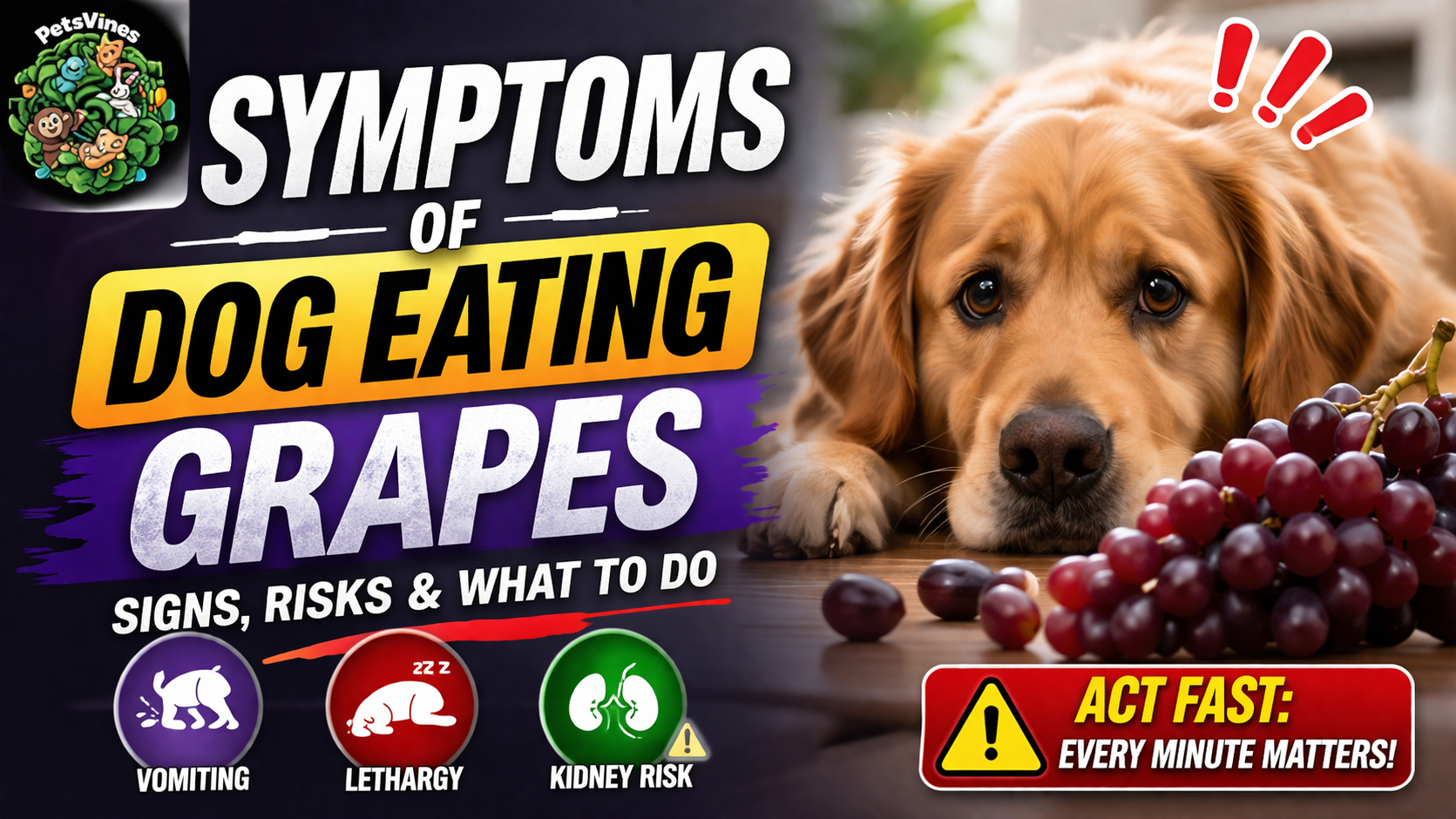
Symptoms of Dog Eating Grapes: You’re relaxing at home, your dog wanders over, and you realize they just helped themselves to a handful of grapes from the fruit bowl. It seems harmless — after all, grapes are a healthy snack for people. But for dogs, even a few grapes can be a medical emergency.
Grape toxicity in dogs is one of the most serious and least understood food-related dangers in veterinary medicine. Unlike chocolate, where the toxic dose is somewhat predictable by weight, grapes don’t follow clear rules. A large dog might eat several grapes and show no symptoms. A small dog might eat two and end up in kidney failure.
That unpredictability is exactly what makes this so dangerous. Since it’s impossible to predict which dog will be affected or how much fruit will cause signs of illness, any ingestion of grapes or related fruits should be considered a serious event.
This guide will walk you through every symptom to watch for, explain what’s happening inside your dog’s body, and tell you step by step what to do — because speed matters more than almost anything else here.
Why Are Grapes Toxic to Dogs?
The Science Behind the Danger
For years, veterinarians knew grapes were dangerous but couldn’t pinpoint why. As published in the Journal of Veterinary Emergency and Critical Care, research identified tartaric acid as the likely toxic component — a compound found in high concentrations in grapes, raisins, and tamarinds. Dogs appear uniquely sensitive to tartaric acid’s nephrotoxic (kidney-damaging) effects.
A 2023 study observed tartaric acid toxicity in kidney cells of dogs but not in human kidney cells, suggesting the damage is species-specific — related to a lower expression of the OAT4 transport protein in dogs. In plain terms: your dog’s kidneys absorb this compound in a way that yours simply don’t.
Every Form of Grape Is Dangerous
Many pet owners don’t realize that it’s not just whole grapes that pose a risk. Poisoning has occurred in dogs following ingestion of seedless or seeded, commercial or homegrown, red or green, organic or non-organic varieties, as well as grape pressings from wineries.
Dangerous grape-based products include:
- Fresh grapes (any color or variety)
- Raisins and sultanas
- Zante currants (from the Vitis species)
- Trail mix, granola bars, and cereals containing raisins
- Fruitcake and baked goods with grapes or raisins
- Chocolate assortments that include raisin fillings
Grape juice, wine, jellies made from grape juice concentrate, and grape seed extract do not appear to cause the same toxicity — likely because the tartrate compounds are removed during processing. Still, it’s best to keep all grape products away from your dog entirely.
Symptoms of a Dog Eating Grapes: A Timeline
Understanding when symptoms appear is as critical as knowing what to look for. Grape toxicity tends to unfold in two phases.
Phase 1: Early Symptoms (Within 6–12 Hours)
The most common and often first signs of grape toxicity are related to the digestive system, typically appearing within 6 to 12 hours of ingestion.
Vomiting This is usually the very first sign. Vomiting can begin within 1 to 2 hours as the body attempts to expel the toxin. Multiple episodes are common, and pieces of grapes or raisins may be visible in the vomit.
Diarrhea Loose stools or more frequent defecation often follow the vomiting. This is the digestive system’s continued attempt to clear the toxic substance.
Loss of Appetite (Anorexia) At this stage, some dogs stop eating entirely, becoming quiet, lethargic, and showing signs of abdominal discomfort.
Lethargy and Weakness A dog that was playful and energetic suddenly becomes sluggish and disengaged. This is not normal tiredness — it’s a red flag. According to a peer-reviewed study in the Journal of Veterinary Internal Medicine, vomiting occurred in 81% of affected dogs within 24 hours of ingestion, and in 100% within 48 hours.
Phase 2: Kidney Damage Signs (24–72 Hours)
If the dog doesn’t receive treatment during Phase 1, the situation escalates sharply.
More severe signs are not seen until 24 to 48 hours after ingestion — often after acute kidney damage has already begun.
Increased Thirst and Urination As the kidneys come under stress, they initially work overtime to flush toxins. You may notice your dog drinking far more water than usual and urinating more frequently.
Decreased or Absent Urination This is a critical warning sign. As kidney damage progresses, increased urination can quickly switch to decreased or absent urination — indicating severe kidney failure. If your dog has stopped urinating altogether, this is a life-threatening emergency.
Abdominal Pain Your dog may show signs of discomfort when you touch their belly — flinching, whimpering, or adopting a hunched posture.
Ammonia-Smelling Breath (Uremic Halitosis) As kidney failure develops, urine production ceases, leading to a failure to filter waste from the body. This results in a generalized toxin build-up in the bloodstream — and a distinctive ammonia or chemical odor on the breath.
Dehydration Check for dehydration by gently pulling up the skin on the back of your dog’s neck. If it doesn’t spring back quickly, your dog is dehydrated.
Neurological Signs In severe cases, 73% of dogs in one study showed marked forebrain, cerebellar, or vestibular signs — including ataxia (stumbling/loss of coordination) — alongside advanced kidney failure.
How Much Grape Is Toxic to a Dog?
This is the question every panicking pet owner asks — and the honest answer is unsettling: there is no established safe amount.
The dose-response relationship has not been determined across all dogs. Some dogs may become severely ill after eating only a few, while others might tolerate more without obvious symptoms.
The type of grape does not appear to matter — toxicity has been reported with seedless and seeded varieties, commercial and homegrown fruits, red and green grapes, organic and non-organic grapes.
Raisins are more concentrated and therefore more dangerous by weight than fresh grapes — it takes a smaller amount of raisins to cause the same level of harm.
In a review of 43 dogs that developed kidney failure after grape or raisin ingestion, all dogs vomited. Decreased urine output, ataxia, and weakness were associated with the worst outcomes.
The bottom line: treat every grape ingestion as a potential emergency, regardless of how many were eaten or how big your dog is.
What to Do If Your Dog Ate Grapes
Step 1: Don’t Wait and Watch
The single biggest mistake pet owners make is adopting a “wait and see” approach. Early action can significantly improve the chance of preventing or minimizing kidney damage. A dog that looks completely fine at hour two can be in acute kidney failure by hour 48.
Step 2: Call a Vet or Poison Hotline Immediately
Contact one of these resources right now:
- Your regular vet — call even outside office hours; most have emergency lines
- ASPCA Animal Poison Control Center: 1-888-426-4435 (fee may apply)
- Pet Poison Helpline: 1-800-213-6680
Have this information ready: your dog’s weight, the approximate number of grapes or raisins eaten, and the time of ingestion.
Step 3: Do Not Induce Vomiting Without Guidance
For recent ingestion with no clinical signs of illness, a veterinarian will typically induce vomiting. Even if several hours have passed, this may still be effective because the fruit can linger in the stomach. However, inducing vomiting incorrectly at home can cause additional harm — always follow professional guidance first.
Step 4: Expect IV Fluids and Monitoring
There is no specific antidote for grape or raisin toxicity. Treatment focuses on decontamination and supportive care, typically involving intravenous fluid therapy to protect and support the kidneys. Blood and urine tests will be run repeatedly over 48 to 72 hours to monitor kidney function.
Prognosis: What Are the Chances of Recovery?
Recovery depends heavily on how quickly treatment begins and whether kidney damage has already occurred.
Approximately 50% of dogs that ingest grapes or raisins develop kidney failure. Dogs treated before kidney values elevate generally do well. Dogs that progress to decreased or absent urine production often have a poorer prognosis, as the kidneys have limited capacity to regenerate once significantly damaged.
In cases where a dog has become azotemic (waste products building up in the blood), the survival rate is approximately 50%. That number drops further once a dog stops producing urine altogether.
The message is clear: the earlier you act, the better the outcome.
Grape Toxicity vs. Other Food Toxicities in Dogs
It’s worth knowing that grapes aren’t the only kitchen danger for dogs. Other common toxic foods include chocolate, xylitol (an artificial sweetener), onions, garlic, macadamia nuts, and alcohol. However, grape toxicity stands apart because of how rapidly it can escalate to organ failure — and because there is no “safe dose” threshold that can be relied upon.
For more comprehensive guidance on keeping your dog safe from food hazards, explore the dog health and safety resources at PetsVines.
FAQ’s
How quickly do symptoms appear after a dog eats grapes?
The initial signs can appear within a few hours of ingestion, typically within 6 to 12 hours. However, the more severe kidney-related symptoms may not be visible until 24 to 48 hours later — by which point significant damage may already be occurring.
My dog ate one grape — should I still be worried?
Yes. Since it’s impossible to predict which dog will be affected or how much fruit will cause signs of illness, even a single grape should be treated as a concern. Call your vet to be safe.
Can a dog show no symptoms and still have kidney damage?
Absolutely. This is one of the most frightening aspects of grape toxicity. A dog can appear completely normal in the first 12 to 24 hours while kidney damage is quietly progressing. Blood work may also appear normal in the first few hours — which is why repeat testing over two to three days is often recommended.
Are raisins more dangerous than grapes?
Yes, gram for gram. Because raisins are dried, they are far more concentrated. The same toxic dose that would require a larger quantity of fresh grapes is present in a much smaller amount of raisins — making accidental ingestion from trail mix, baked goods, or cereal particularly risky.
What about grape-flavored products — are those toxic too?
Grape juice, wine, jellies made from grape juice concentrate, and grape seed extract do not appear to cause the same toxicity, likely because the tartrate compounds are removed during processing. That said, no grape-derived product should ever be actively offered to your dog.
What are the symptoms of a dog eating grapes?
The most common early symptoms include vomiting, diarrhea, loss of appetite, and lethargy — typically within 6 to 12 hours of ingestion. As toxicity progresses, signs of kidney damage appear: excessive thirst, reduced urination, abdominal pain, and ammonia-smelling breath. In severe cases, kidney failure can develop within 24 to 48 hours. If your dog ate grapes, contact your vet immediately — do not wait for symptoms to worsen.
Keeping Your Dog Safe
The best treatment is prevention. Here are practical steps every pet owner should take:
- Store grapes and raisins in cupboards or the refrigerator — never in open fruit bowls within reach
- Check ingredient labels on cereals, trail mix, granola bars, and baked goods before sharing with your dog
- Keep holiday foods like fruitcake and chocolate assortments secured — raisin-containing treats are common at Christmas and other celebrations
- Inform children and guests that grapes are dangerous for dogs, even as a “tiny treat”
- If you have a grape vine in your garden, fence it off from areas your dog can access
- Secure compost bins — grape waste and kitchen scraps are surprisingly common causes of accidental poisoning
Grapes are one of those foods that seem completely innocent — healthy, natural, and everywhere. But for dogs, even a small amount can set off a chain reaction that ends in kidney failure. The symptoms of a dog eating grapes can start subtly with vomiting and tiredness, then escalate fast into a life-threatening crisis.
You now know what to watch for, why it happens, and exactly how to respond. The most important thing you can do is act without delay. Call your vet. Don’t wait for the situation to get worse. Your dog is counting on you to take it seriously from the very first grape. For more expert guidance on dog health, nutrition, and safety
Also visit: Dog Eating Poop and Throwing Up: Causes & Vet Tips