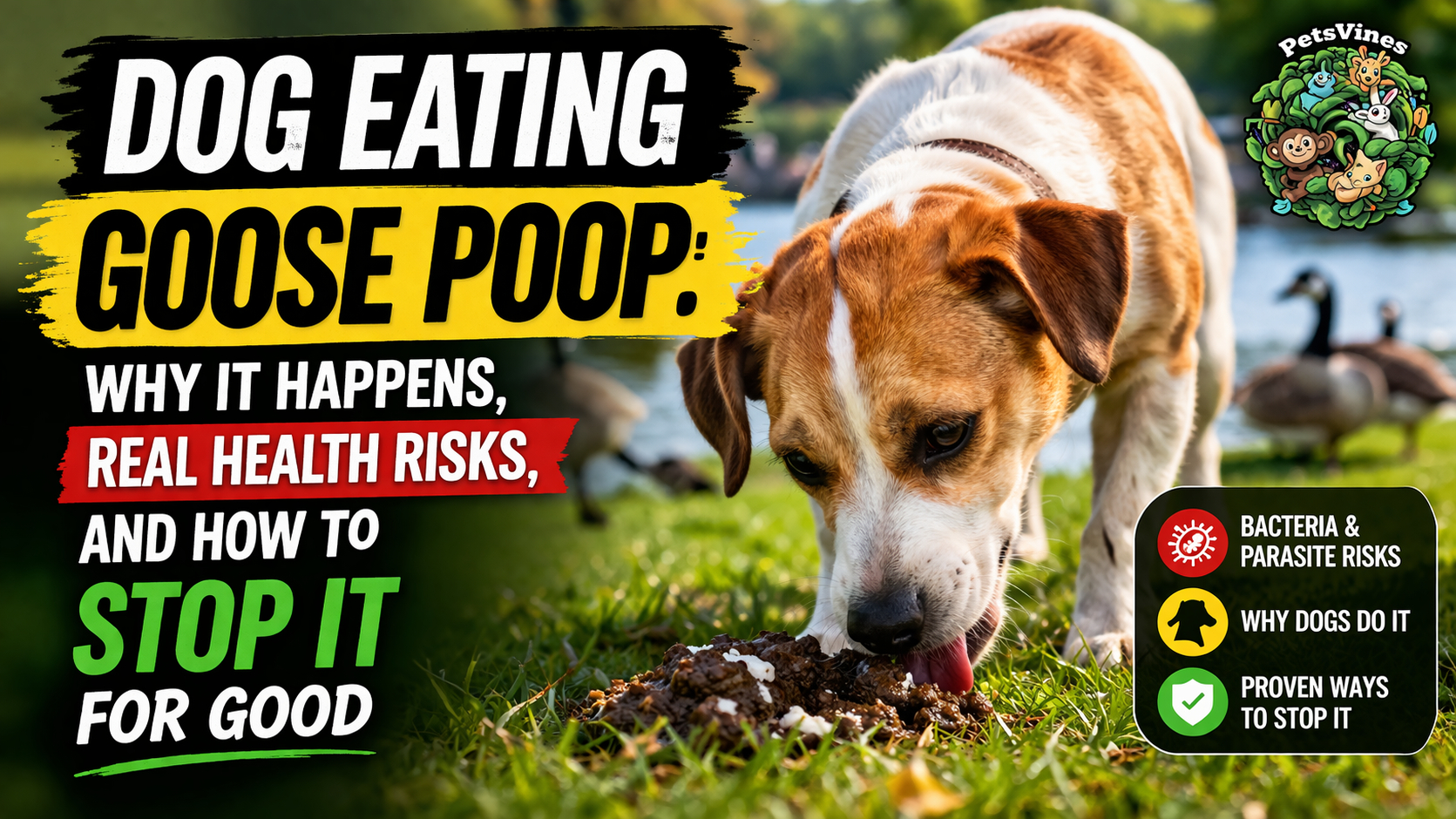
Dogs eat goose poop due to a natural instinct called coprophagia, driven by scent attraction and ancestral wolf behavior. Goose droppings can carry dangerous bacteria like Salmonella and E. coli, parasites like Giardia and Cryptosporidium, and other pathogens. Symptoms include vomiting, diarrhea, and lethargy. If your dog ate goose poop, monitor them closely for 24–72 hours and consult a vet if symptoms persist or worsen.
You’re at the park, leash in hand, and before you can even react — your dog has already sniffed out a pile of goose droppings and is happily chowing down. Sound familiar? You’re not alone.
Dog eating goose poop is one of the most common (and stomach-turning) complaints among pet owners worldwide. Parks, golf courses, lakesides, and school fields are all prime hunting grounds for this behavior — and unfortunately, those areas tend to be exactly where geese congregate in large numbers.
While the impulse might seem harmless or even comical, goose feces can pose real health risks to your dog. This guide breaks down everything you need to know: why dogs are drawn to goose droppings, what pathogens are hiding inside them, what symptoms to watch for, and most importantly — how to stop it from happening again.
Whether your dog just had their first taste or this has become a frustrating pattern, you’ll find clear, vet-backed answers here.
Why Do Dogs Eat Goose Poop? Understanding Coprophagia
Dogs eat feces — including goose poop — because of a combination of instinct, scent attraction, and sometimes underlying health issues. The behavior has a clinical name: coprophagia.
It’s More Common Than You Think
You might feel like you’re the only dog owner dealing with this, but the data says otherwise. A study presented at the American Veterinary Society of Animal Behavior found that 16% of dogs are classified as “serious” poop eaters — caught in the act five or more times — while 24% were observed eating feces at least once.
An estimated 23–49% of domestic dogs have been reported to exhibit the behavior at some point. So if your dog is doing this, they’re in surprisingly large company.
The Evolutionary Reason
According to Dr. Benjamin Hart of the University of California, Davis, eating fresh feces is “a reflection of an innate predisposition of ancestral canids living in nature that protects pack members from intestinal parasites present in feces that could occasionally be dropped in the den/rest area.” In other words, it’s literally in your dog’s DNA.
Wild canids like wolves would eat feces near the den specifically to eliminate fresh droppings before parasite eggs could develop into infectious larvae. Domesticated dogs still carry that instinct, even if the context has completely changed.
Why Goose Poop Specifically?
Goose droppings have a particularly pungent, distinctive odor — exactly the kind of smell dogs find irresistible. Dogs explore the world primarily through their noses, and the strong scent of fresh goose feces triggers a curiosity response that often ends with a quick bite (or several).
Geese can produce 1–2 pounds of poop per day, which means in any park or pond area frequented by a flock, the droppings are everywhere — and nearly impossible to avoid on a walk.
Medical and Behavioral Triggers
Sometimes coprophagia is a symptom of something deeper. Certain medical conditions like diabetes, Cushing’s disease, or thyroid disease can cause an increase in appetite or a drive to eat unusual things. Dogs that are underfed or on a poor-quality diet are more likely to eat stool, as are dogs with intestinal parasites.
Exocrine pancreatic insufficiency (EPI) is a disorder in which the pancreas doesn’t produce digestive enzymes, meaning the food a dog consumes isn’t properly broken down — essentially leaving them nutritionally starving despite eating regularly.
If your dog has started eating feces suddenly and never showed this behavior before, a vet visit is warranted.
Is Goose Poop Dangerous for Dogs?
Yes, goose poop can be harmful because it may contain bacteria, parasites, and toxins that can make your dog sick.
Health Risks You Should Know
1. Bacterial Infections
Goose droppings may carry harmful bacteria like:
- E. coli
- Salmonella
According to the CDC, these bacteria can cause gastrointestinal illness in both animals and humans.
2. Parasites
Common parasites found in bird droppings include:
- Giardia
- Roundworms
- Cryptosporidium
These can lead to serious digestive issues in dogs.
3. Toxins & Environmental Contaminants
If geese feed in polluted areas, their feces may contain:
- Pesticides
- Heavy metals
- Harmful algae toxins
Stat Insight
Studies cited by environmental health organizations suggest that waterfowl feces significantly contribute to bacterial contamination in public parks and water bodies, increasing infection risk.
Symptoms to Watch For After Your Dog Eats Goose Poop
Not every dog that eats goose droppings will become seriously ill. However, you need to know the difference between a mild reaction and a medical emergency.
Mild Symptoms (Usually Resolve Within 24–48 Hours)
- Soft stool or brief diarrhea
- Mild stomach gurgling
- Temporary loss of appetite
- Slight lethargy
Most healthy dogs can handle minor exposures without a major issue, especially if they’re up to date on vaccines and parasite prevention.
Moderate to Serious Symptoms — See a Vet
If the goose droppings carried parasites like Giardia or Cryptosporidium, your dog could develop persistent symptoms days or even weeks later, including chronic diarrhea, weight loss, or recurring stomach issues.
Watch for:
- Diarrhea lasting more than 48 hours
- Blood in the stool
- Repeated vomiting
- Fever or visible shivering
- Dehydration (dry gums, sunken eyes)
- Lethargy or sudden behavioral changes
- Loss of appetite for more than a day
Puppies, older dogs, and those with weak immune systems are at greater risk of complications. If your dog falls into any of these categories, don’t wait — call your vet sooner rather than later.
What to Do Immediately
- Stay calm. One exposure, especially in a healthy adult dog, is unlikely to be fatal.
- Don’t induce vomiting unless specifically directed by a vet.
- Provide fresh water and monitor hydration closely.
- Withhold treats and novel foods for the next 24 hours to avoid complicating their digestion.
- Watch for symptoms for 24–72 hours.
- If vomiting persists beyond 24 hours or lethargy develops, seek veterinary care. Treatment may involve anti-nausea medication, fluids, and dietary rest.
How to Stop Your Dog From Eating Goose Poop
This is the part most dog owners are desperate to know. Unfortunately, there’s no magic fix — but a combination of training, management, and veterinary support can make a significant difference.
1. Train a Reliable “Leave It” Command
This is hands-down the most effective preventive tool. A solid “leave it” cue, practiced consistently and rewarded heavily, can interrupt your dog the moment they lock onto a pile of droppings. Start training in low-distraction environments and gradually practice in real-world settings like parks.
2. Keep Your Dog On-Leash in Goose-Heavy Areas
Properties with heavy goose traffic can become hotspots for contamination. Removing droppings promptly and discouraging geese from settling on lawns or near water sources lowers exposure for pets.
If you walk near ponds, lakefronts, or parks where geese gather, keep your dog on a short leash and steer them away from obvious droppings. Prevention is always easier than treatment.
3. Address Underlying Nutritional or Medical Issues
A gut imbalance or microbiome deficiency will prompt a dog to find alternative sources of good bacteria and enzymes, and eating feces is a natural way of replenishing lost bacteria since feces are 50% bacteria.
If your dog is repeatedly drawn to feces — not just goose, but any kind — it’s worth asking your vet whether their diet is complete and balanced, and whether a microbiome supplement or high-quality food upgrade might help.
4. Commercial Deterrents — With Realistic Expectations
Products like Forbid or NaturVet Coprophagia Deterrent are designed to make feces taste unpleasant to dogs. However, the reported success rate for food additives or tablets marketed for coprophagy ranged from 0 to 2% in studies. They’re worth trying but shouldn’t be your only strategy.
5. Clean Up Immediately After Your Dog Eliminates
If your dog eats other dogs’ poop, removing it from your yard within seconds of elimination removes the temptation entirely. Keep waste bags on you at all times.
6. Increase Mental and Physical Enrichment
Boredom and anxiety are known drivers of coprophagia. A dog that is mentally stimulated, well-exercised, and emotionally balanced is far less likely to scavenge. Try puzzle feeders, nose work, or regular training sessions to redirect their energy.
7. Keep Up With Parasite Prevention
Keeping your dog on year-round parasite prevention is one of the best defenses against illness from goose poop. Regular vet visits ensure vaccinations, deworming, and checkups are up to date.
If your dog is a frequent goose-poop eater, ask your vet about more frequent fecal tests to screen for Giardia, Cryptosporidium, and worms.
When to Call the Vet: A Quick Decision Guide
| Situation | Action |
|---|---|
| Dog ate a small amount, acting normal | Monitor for 24–72 hours |
| Mild diarrhea, resolves in 24 hours | Monitor, ensure hydration |
| Vomiting more than 2–3 times | Call vet within same day |
| Diarrhea with blood | Call vet immediately |
| Lethargy + loss of appetite | Call vet same day |
| Puppy or senior dog ate goose poop | Call vet proactively |
| Chronic or repeated goose poop eating | Schedule a full wellness exam |
Can Humans Get Sick From a Dog That Ate Goose Poop?
Yes — indirectly. Protozoan parasites from goose poop can be spread to humans through dogs during activities like licking. Salmonella transmission is also possible via contact with an infected dog’s feces or saliva.
This is especially important if there are young children, elderly individuals, or immunocompromised people in your household. Wash hands thoroughly after handling your dog if you suspect exposure, and discourage face-licking until you’re confident your pet is in the clear.
FAQ’s
Q: Will my dog be okay after eating goose poop once? Most healthy adult dogs will be fine after a single, small exposure. Monitor them for 24–72 hours for symptoms like vomiting or diarrhea. If they seem normal, there’s likely no cause for alarm.
Q: Can dogs get Giardia from goose poop? Yes. Giardia is one of the most commonly transmitted parasites through goose feces and can cause persistent diarrhea and weight loss. A fecal test at your vet can confirm it and treatment is available.
Q: Why does my dog eat goose poop but not other poop? Goose poop has a particularly strong odor that dogs find attractive. The scent profile of waterfowl droppings is distinct and may be more appealing to some dogs than other fecal matter.
Q: Is goose poop toxic to dogs? “Toxic” in the strict sense — no. But it carries pathogens (bacteria, parasites, fungi) that can make your dog sick. The risk level depends on the amount consumed, your dog’s immune health, and whether the feces were heavily contaminated.
Has your dog eaten goose poop?
Dogs eating goose poop is messy, worrying — and incredibly common. The behavior is rooted in deep evolutionary instinct, but that doesn’t mean you should let it slide. The pathogens in goose droppings are real, and while a single exposure rarely causes catastrophic harm in a healthy dog, repeated incidents or unlucky encounters with heavily contaminated feces can lead to serious illness.
The winning strategy is simple: train hard, leash up in risky areas, keep vet care current, and treat any symptoms early. Your dog doesn’t have to give up their outdoor adventures — they just need a little help making better snack choices.
For more expert-backed guides on keeping your dog healthy and happy, explore our full dog health and care resource library or head back to the PetsVines homepage for breed guides, nutrition tips, and more.
Share your experience in the comments, or reach out if you have questions about your pet’s symptoms. When in doubt, always consult your veterinarian — they’re your best first call.
Also visit: Dog Eating a Bee Symptoms, Risks & What to Do