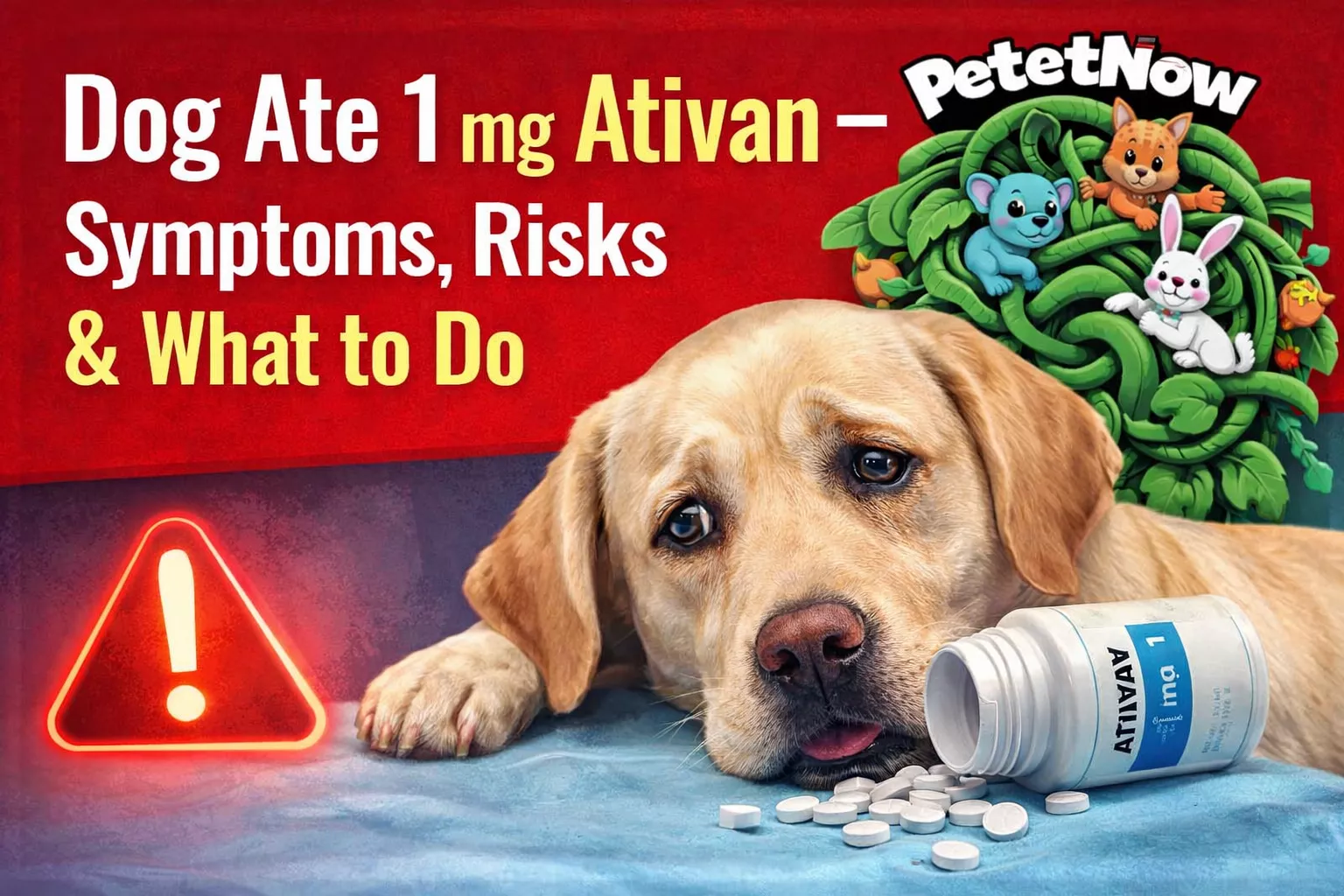
Dog Ate 1 mg Ativan (lorazepam), contact your vet or an emergency animal poison control hotline immediately. Even a small dose can cause sedation, loss of coordination, slowed breathing, and dangerously low blood pressure in dogs. Do not wait for symptoms to appear — act within minutes for the best outcome.
You turned away for just a second. Maybe you dropped a pill, or left your prescription on the nightstand — and now your dog has swallowed it. If your dog just ate 1 mg of Ativan, the panic you’re feeling is completely understandable. And it’s also a signal to act fast.
Ativan (the brand name for lorazepam) is a powerful prescription benzodiazepine used by millions of people to treat anxiety, insomnia, and seizures. It’s highly effective in humans — but it works very differently in dogs, and even a seemingly small dose can trigger serious neurological effects.
This guide is written to give you clear, expert-backed information: what Ativan does to a dog’s body, what symptoms to watch for, exactly what you should do right now, and how to prevent this from happening again. If you’re a pet owner who loves your dog, this is one of those articles you need to read — and bookmark.
For more essential dog health guidance, visit the PetsVines Dog Care Hub — a trusted resource for responsible pet owners worldwide.
What Is Ativan and Why Is It Dangerous for Dogs?
Ativan (lorazepam) is a benzodiazepine medication that depresses the central nervous system. Dogs process this drug very differently than humans — their bodies metabolize it faster and react more intensely. Even a 1 mg dose can cause significant sedation, respiratory depression, and neurological disturbance in a dog, particularly small or toy breeds.
Ativan belongs to a class of drugs called benzodiazepines, which work by enhancing the effect of a neurotransmitter called GABA (gamma-aminobutyric acid) in the brain. GABA slows down nerve activity — which is why Ativan makes anxious humans feel calm.
In dogs, this same mechanism can go into overdrive. The central nervous system suppression that’s therapeutic in people can become dangerously exaggerated in dogs. According to the ASPCA Animal Poison Control Center, benzodiazepines are among the top classes of human medications responsible for pet poisonings each year.
Key facts about Ativan and dogs:
- Lorazepam is not FDA-approved for use in dogs without direct veterinary supervision
- Dogs have a different metabolic pathway for processing benzodiazepines — their liver handles the drug differently, which can cause accumulation and prolonged effects
- Small dogs are at far greater risk — a 1 mg dose is relatively minor for a 150 lb human, but potentially serious for a 10 lb Chihuahua
- Even larger dogs are not immune — sedation, coordination loss, and respiratory slowing can occur regardless of size
Is 1 mg of Ativan Toxic to a Dog?
Whether 1 mg of Ativan is toxic to a dog depends largely on the dog’s body weight. For a small dog under 10 lbs, this dose is potentially dangerous and warrants emergency care. For larger breeds, it may cause noticeable sedation without being life-threatening, but veterinary evaluation is still essential in every case.
There is no universal “safe” threshold for Ativan in dogs. Toxicity is dose-dependent and weight-dependent.
Here’s a general risk framework (not a substitute for veterinary advice):
| Dog Weight | Risk Level for 1 mg Ativan |
|---|---|
| Under 10 lbs (toy/small breeds) | High risk — seek emergency care immediately |
| 10–25 lbs (small-medium breeds) | Moderate-high risk — call vet right away |
| 25–50 lbs (medium breeds) | Moderate risk — monitor closely, vet evaluation needed |
| 50+ lbs (large/giant breeds) | Lower but not negligible risk — veterinary guidance advised |
No matter your dog’s size, the moment you know they’ve ingested Ativan, you call a vet. Period.
Symptoms of Ativan Poisoning in Dogs
Symptoms of Ativan ingestion in dogs typically appear within 30 minutes to 2 hours. They include sedation, stumbling, vomiting, slow breathing, and in severe cases, unconsciousness. Some dogs may paradoxically become hyperactive or agitated before becoming sedated.
According to WagWalking’s clinical review of benzodiazepine poisoning in dogs, symptoms can include:
Mild to Moderate Symptoms:
- Excessive sedation or drowsiness — your dog may seem “drunk”
- Loss of coordination (ataxia) — stumbling, falling over, inability to walk straight
- Muscle weakness or limpness
- Vomiting — especially in the first hour after ingestion
- Disorientation or confusion
- Slow or shallow breathing
Severe Symptoms (Require Immediate Emergency Care):
- Respiratory depression — dangerously slow breathing
- Significant drop in blood pressure
- Hypothermia (abnormally low body temperature)
- Cardiac arrhythmia (irregular heartbeat)
- Loss of consciousness
- Coma (in extreme overdose cases)
Paradoxical Reactions: Some dogs — particularly those with anxiety — may show the opposite of sedation. They can become agitated, hyperactive, or vocalize more than usual. This is known as a paradoxical reaction and is well-documented in veterinary literature. Don’t be fooled into thinking your dog is “fine” if they seem hyper — call your vet immediately.
What to Do Immediately If Your Dog Ate Ativan
If your dog ate Ativan, do not induce vomiting on your own — this must be done by a vet. Call the ASPCA Animal Poison Control (888-426-4435) or your nearest emergency vet within minutes. Have the medication bottle ready, note the time of ingestion, and estimate how much your dog weighs.
Here is a step-by-step action plan:
Step 1: Stay Calm and Note the Time
Write down or mentally log exactly when you believe your dog ate the Ativan. This information is critical for your vet to assess the timeline and decide on treatment.
Step 2: Do NOT Induce Vomiting on Your Own
This is important. Many pet owners instinctively reach for hydrogen peroxide, but inducing vomiting in a dog that has ingested a CNS depressant can be dangerous without veterinary supervision. The dog could lose consciousness mid-vomit and aspirate.
Step 3: Call One of These Resources Right Now
- ASPCA Animal Poison Control Center: +1 (888) 426-4435 (24/7, nominal fee may apply)
- Pet Poison Helpline: +1 (855) 764-7661 (24/7)
- Your local emergency veterinary clinic
Step 4: Gather Key Information Before You Call
Have ready:
- The medication name and strength (Ativan 1 mg lorazepam)
- Your dog’s approximate weight
- The estimated time of ingestion
- Any symptoms you’ve already noticed
Step 5: Follow Vet Instructions Exactly
Your vet may advise you to bring your dog in immediately, or they may assess the situation over the phone first. Either way, follow their guidance — do not try to “wait and see” if more than 30 minutes have passed with no symptoms.
How Vets Treat Ativan Ingestion in Dogs
Veterinary treatment for Ativan ingestion may include induced vomiting (if recent), activated charcoal to reduce absorption, IV fluids for blood pressure support, and close monitoring of breathing and heart rate. In severe cases, a reversal agent called flumazenil may be administered.
Treatment options your vet may use:
- Emesis (induced vomiting): Only performed if ingestion was very recent (within 1–2 hours) and the dog is still conscious and alert
- Activated charcoal: Administered orally to bind remaining drug in the gastrointestinal tract and reduce absorption
- IV fluids: Helps stabilize blood pressure and support organ function
- Oxygen therapy: If breathing is compromised
- Flumazenil: A benzodiazepine antagonist (reversal agent) that can rapidly reverse sedation — though its use in dogs is case-specific
- Temperature regulation: To address hypothermia if present
- Cardiac monitoring: An electrocardiogram (ECG) may be used to watch for arrhythmias
Treatment costs for benzodiazepine poisoning in dogs can range from $150 to $5,000 depending on severity, according to veterinary cost data compiled by WagWalking — another reason pet insurance is a worthwhile investment.
Can Dogs Recover from Ativan Poisoning?
Most dogs recover fully from Ativan ingestion when treated promptly. The prognosis is generally good when veterinary care begins within the first 1–2 hours. Delayed treatment increases the risk of complications, especially respiratory issues and cardiovascular stress.
The good news: with prompt, appropriate veterinary care, the majority of dogs make a complete recovery from benzodiazepine ingestion. The drug itself has a relatively short half-life, and with supportive care, most dogs stabilize within 12–24 hours.
Factors that influence recovery:
- Time elapsed between ingestion and treatment
- Dog’s weight and size relative to the dose consumed
- Age and health status — puppies and elderly dogs are more vulnerable
- Whether other substances were also ingested
Puppies, senior dogs, and dogs with pre-existing liver or respiratory conditions are at significantly higher risk and require immediate, aggressive care.
Common Mistakes Pet Owners Make After a Dog Eats Ativan
Knowing what not to do is just as critical as knowing what to do:
- Waiting to see if symptoms develop — By the time symptoms appear, the drug is already being absorbed
- Inducing vomiting without vet instruction — Risk of aspiration, especially as sedation sets in
- Giving food or water — This can accelerate drug absorption
- Assuming a large dog is safe — Larger dogs can still experience serious sedation and cardiac effects
- Not calling poison control because it’s “just 1 mg” — 1 mg is a significant dose for many dog sizes
How to Prevent Your Dog from Eating Medications
One accidental ingestion is a wake-up call — here’s how to make sure it never happens again:
- Store all medications in childproof, pet-proof containers in high cabinets your dog cannot reach
- Never take medications over a sink or carpet where a dropped pill can disappear
- Inspect the floor after taking medication, especially if you’re in a hurry
- Keep nightstand medications in a locked box, not a pill organizer your dog can knock off
- Inform everyone in your household — guests, caregivers, and family members — about medication safety around pets
- Consider a pet-safe medication storage routine, especially if you have small or curious dogs
According to the ASPCA’s 2023 Animal Poison Control Annual Report, human prescription medications ranked as the #1 cause of pet poisonings — accounting for over 17% of all cases reported. This is entirely preventable with proper storage habits.
For more expert tips on keeping your dog safe and healthy, explore the full library at PetsVines — your go-to resource for trusted pet care advice.Frequently Asked Questions
FAQ’s
Q: Can 1 mg of Ativan kill a dog?
In most medium to large dogs, 1 mg of Ativan is unlikely to be fatal on its own — but it can cause serious health complications, especially in small breeds. Without treatment, respiratory depression or aspiration during vomiting could become life-threatening. Always treat this as an emergency.
Q: How long does Ativan stay in a dog’s system?
Lorazepam has a half-life of roughly 10–20 hours in humans, but dogs metabolize it differently. Effects can last anywhere from a few hours to over 24 hours depending on dose and individual metabolism.
Q: Will my dog be okay if he seems normal after eating Ativan?
Some dogs show delayed symptoms — especially paradoxical reactions. Even if your dog seems fine right now, call your vet immediately. Do not wait.
Q: Can I give my dog Ativan for anxiety or fireworks?
Never give your dog any benzodiazepine without explicit veterinary prescription and dosing instructions. Vets do occasionally prescribe lorazepam for dogs in specific circumstances, but the dose, frequency, and monitoring are entirely different from human prescriptions.
Q: What other human medications are dangerous for dogs?
Many common human medications are toxic to dogs, including ibuprofen, acetaminophen, Xanax, Valium, antidepressants, and sleep aids. Always assume any human medication is potentially harmful and keep them stored securely away from pets.
Act Fast, Love Smart
If your dog ate 1 mg of Ativan, every minute counts. The drug is fast-acting, and the window for the most effective intervention — like induced emesis — is narrow. Don’t Google for 20 minutes hoping the situation resolves itself. Call poison control or your vet the moment you realize what happened.
The relationship between a dog and their owner is built on trust. Part of honoring that trust is being prepared for emergencies like this — and acting without hesitation when they happen.
📞 Save these numbers in your phone right now:
- ASPCA Poison Control: (888) 426-4435
- Pet Poison Helpline: (855) 764-7661
And for ongoing guidance on dog health, safety, nutrition, and behavior, bookmark the PetsVines Dog Care Hub — because the best time to learn about pet emergencies is before they happen.