
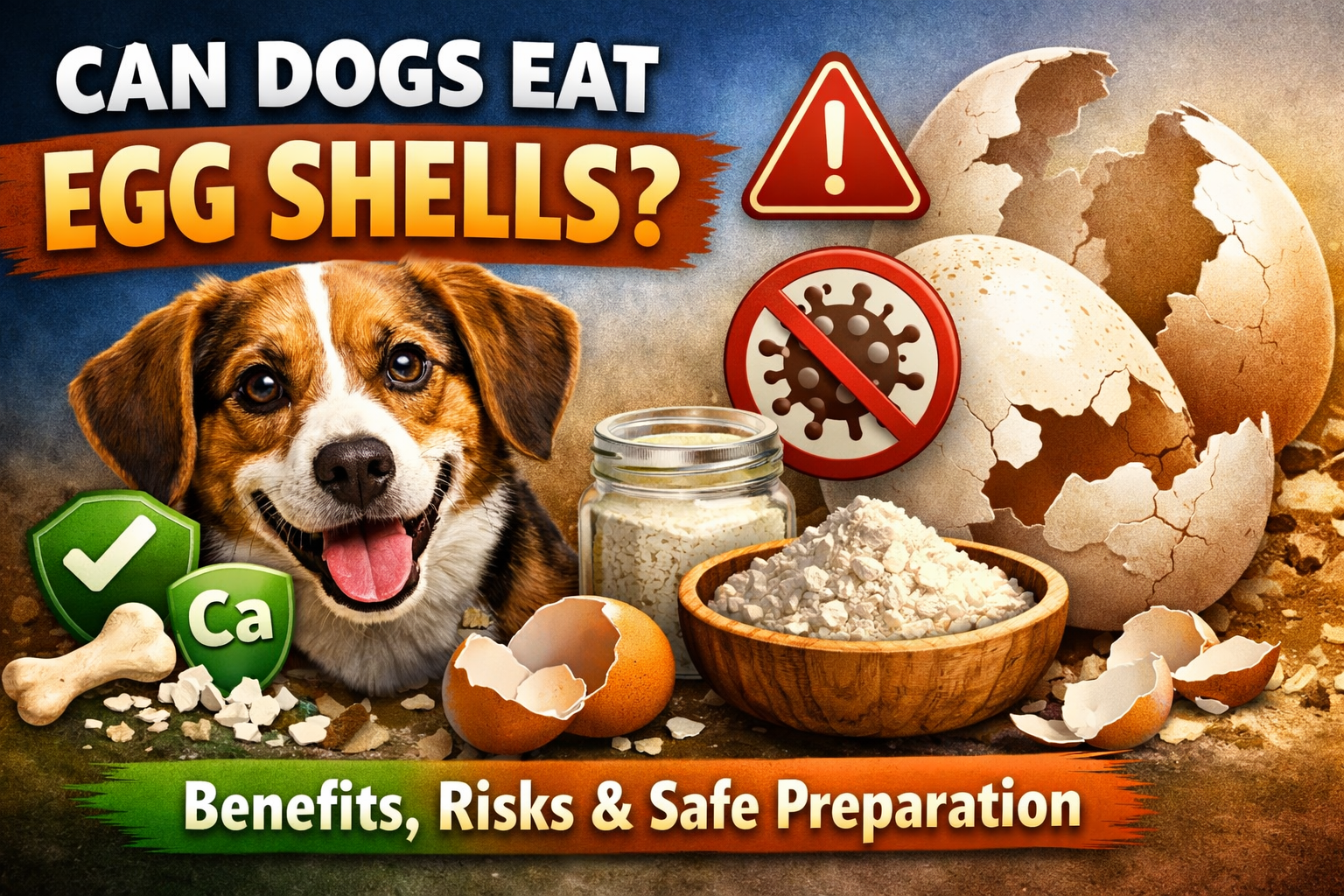
Can Dogs Eat Egg Shells? Yes, dogs can eat egg shells when properly prepared. Eggshells are rich in calcium carbonate and provide approximately 1,750mg of calcium per shell, which supports bone and teeth health. However, they must be baked or boiled to eliminate bacteria like salmonella, then ground into a fine powder to prevent choking hazards. Always consult your veterinarian before adding eggshells to your dog’s diet, as excessive calcium can cause health issues.
If you’ve ever cracked an egg while making breakfast, you’ve probably wondered: can dog eat egg shells, or are they dangerous?
Many pet owners are turning to natural supplements and whole-food nutrition to support their dog’s health. Eggshells are often mentioned as a natural calcium source — but are they truly safe?
In this expert guide, you’ll learn:
-
Whether eggshells are safe for dogs
-
The nutritional benefits and risks
-
How to properly prepare eggshells
-
When to avoid them
-
What veterinarians recommend
Let’s break it down clearly and scientifically.
Are Egg Shells Safe for Dogs?
Quick Answer: Yes — but only if properly prepared and given in moderation.
Eggshells are primarily made of calcium carbonate, which contains around 95% calcium. According to the National Institutes of Health, calcium is essential for bone strength, muscle contraction, and nerve signaling in mammals — including dogs.
However, safety depends on three factors:
-
Preparation
-
Quantity
-
Your dog’s health condition
Raw, sharp shell fragments can pose choking or digestive risks. Finely ground eggshell powder is much safer.
Nutritional Benefits of Egg Shells for Dogs
Quick AEO Answer: Eggshells provide calcium and trace minerals that support strong bones, healthy teeth, muscle function, and overall skeletal development in dogs.
Excellent Source of Calcium
One teaspoon of eggshell powder contains roughly 1,800–2,000 mg of calcium.
Dogs require calcium for:
-
Bone growth (especially puppies)
-
Joint support
-
Muscle contraction
-
Heart function
According to the Association of American Feed Control Officials (AAFCO), adult dogs need approximately 1.25 grams of calcium per 1,000 kcal of food.
Supports Homemade Diets
If you feed a homemade diet, calcium supplementation is critical. Studies published in the National Research Council guidelines show that homemade dog diets are often calcium-deficient unless properly supplemented.
Eggshell powder can help balance phosphorus levels in meat-heavy diets.
Contains Trace Minerals
Eggshells also contain:
-
Magnesium
-
Phosphorus
-
Potassium
-
Collagen-like proteins in the membrane
While present in small amounts, these contribute to overall nutrition.
Risks of Feeding Egg Shells to Dogs
The main risks include choking, digestive irritation, bacterial contamination, and excessive calcium intake — especially in dogs with kidney disease or large-breed puppies.
Let’s look closer.
1. Choking Hazard
Large, sharp shell pieces can:
-
Irritate the throat
-
Scratch the digestive tract
-
Cause discomfort
Grinding eliminates this risk.
2. Salmonella Risk (Raw Shells)
Raw eggs and shells can carry bacteria such as Salmonella. According to the Centers for Disease Control and Prevention, raw poultry products may contain harmful pathogens.
While dogs have stronger stomach acid than humans, infection is still possible — especially in puppies, seniors, or immunocompromised dogs.
3. Too Much Calcium
Excess calcium can cause:
-
Kidney strain
-
Urinary stones
-
Skeletal abnormalities in large-breed puppies
According to the American Kennel Club, over-supplementing calcium in growing large-breed puppies can lead to developmental orthopedic disease.
More is not better.
How to Safely Prepare Egg Shells for Dogs
To safely prepare eggshells for your dog:
-
Rinse shells thoroughly to remove egg residue.
-
Bake at 250°F (120°C) for 10 minutes to kill bacteria.
-
Let cool completely.
-
Grind into a fine powder using a blender or coffee grinder.
-
Store in an airtight container.
Only use finely powdered shells — never whole pieces.
Recommended Serving Size
A general guideline:
-
Small dogs: ¼ teaspoon powder
-
Medium dogs: ½ teaspoon
-
Large dogs: ¾–1 teaspoon
Not daily unless advised by a vet.
Can Puppies Eat Egg Shells?
Quick Answer: Puppies can consume small amounts, but calcium balance is critical — especially for large breeds.
Large-breed puppies are particularly sensitive to excess calcium. Research cited by the World Small Animal Veterinary Association emphasizes maintaining proper calcium-to-phosphorus ratios to prevent skeletal disorders.
If your puppy eats commercial balanced food, do not add eggshell powder unless instructed by a veterinarian.
Eggshells vs. Commercial Calcium Supplements
| Eggshell Powder | Commercial Supplement |
|---|---|
| Natural & inexpensive | Precisely measured |
| DIY preparation required | Formulated for safety |
| Risk of misdosing | Controlled dosage |
| Best for homemade diets | Best for medical cases |
If your dog is on prescription or therapeutic diets, always follow veterinary guidance.
For more expert dog nutrition guides, explore our full Dog Health & Nutrition Category.
What Veterinarians Say About Egg Shells
Most veterinarians agree:
-
Eggshells are not toxic
-
They are safe when powdered
-
They are unnecessary for dogs on complete commercial diets
According to PetMD, eggs themselves are safe for most dogs in moderation — and the shells can be beneficial if used properly.
Who Should NOT Eat Egg Shells?
Avoid eggshells if your dog has:
-
Kidney disease
-
Bladder stones
-
Hypercalcemia
-
Pancreatitis (if combined with fatty eggs)
If unsure, consult your veterinarian first.
Should You Feed Egg Shells to Your Dog?
Here’s the balanced expert perspective:
✔ Good for homemade diets
✔ Natural calcium source
✔ Affordable
But:
Not necessary for balanced commercial food
Risky if overfed
Unsafe if not ground properly
For most pet owners feeding quality commercial food, supplementation isn’t required.
If you’re exploring better nutrition options, check out more expert-backed pet guides at PetsVines.
Final Verdict: Can Dog Eat Egg Shells?
Yes — dogs can eat eggshells safely when properly prepared and given in moderation.
They offer nutritional benefits, especially as a calcium supplement in homemade diets. However, improper preparation or excessive feeding can cause health issues.
The safest approach?
Talk to your veterinarian before making dietary changes.
Want More Evidence-Based Dog Nutrition Advice?
Your dog’s health deserves accurate, expert-backed guidance.
Visit our Dog Care & Nutrition Guides to learn what’s truly safe, what’s harmful, and how to optimize your dog’s diet naturally.
External References
-
National Institutes of Health (Calcium Overview)
-
Centers for Disease Control and Prevention (Food Safety)
-
Association of American Feed Control Officials (Dog Nutrient Profiles)
-
World Small Animal Veterinary Association (Nutrition Guidelines)
-
PetMD (Egg Safety for Dogs)
FAQs
1.Can dogs eat boiled egg shells?
Yes — if dried and crushed into powder. Boiling reduces bacterial risk but grinding is still required.
2.Can dogs digest egg shells?
Yes. Dogs can digest calcium carbonate effectively when finely ground.
3.Are raw egg shells safe?
Not recommended due to bacterial contamination risk.
4.Can egg shells help with arthritis?
Some believe eggshell membrane supports joints, but scientific evidence is limited. For joint issues, veterinarian-approved supplements are safer.