
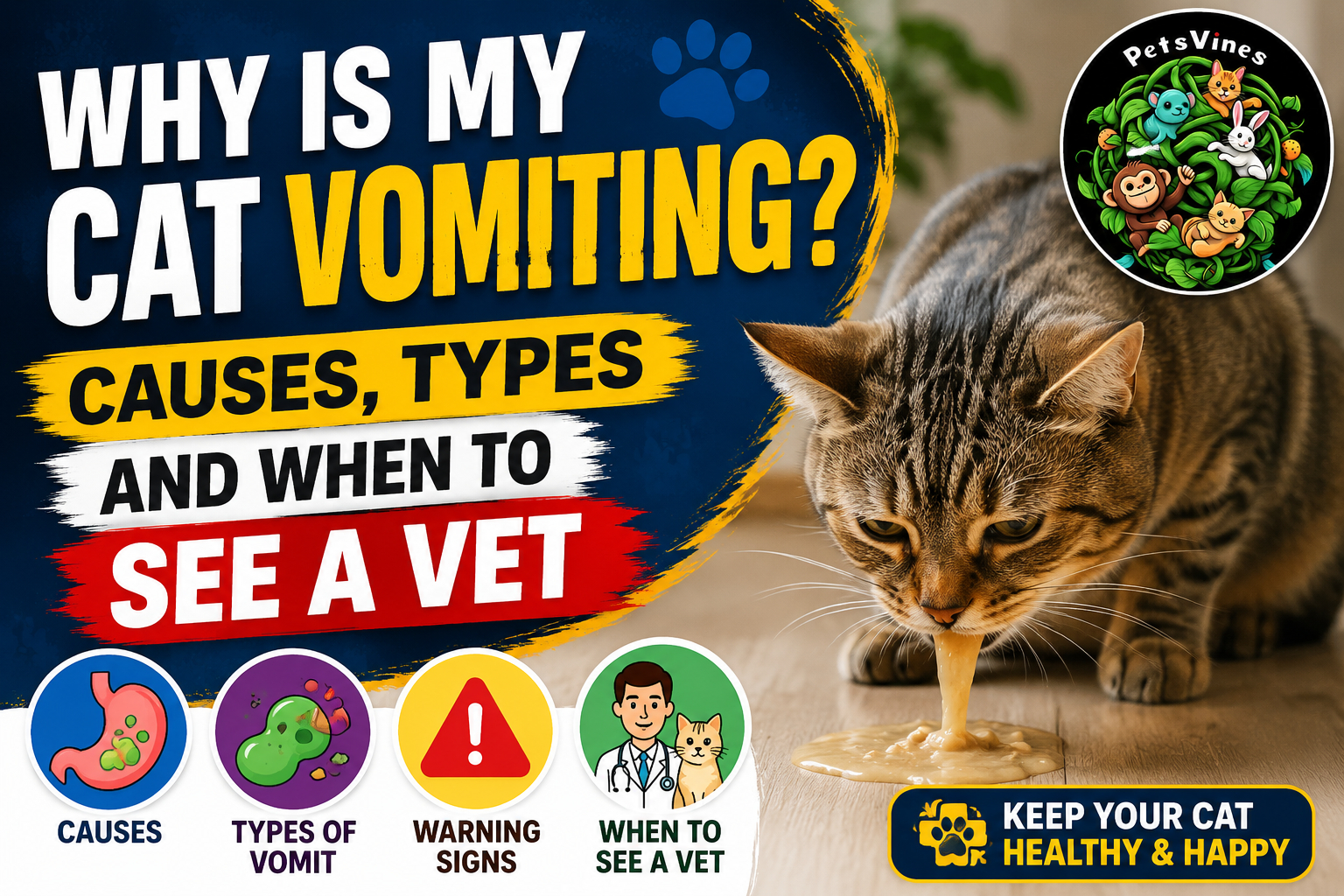
You hear the telltale retching sound from across the room, and you already know what is coming. Your cat is vomiting again, and the worry hits immediately. Is this just another hairball? Did they eat too fast? Or is something seriously wrong this time?
As someone who has spent years researching feline health and speaking with cat owners daily, I can tell you that this is one of the most common concerns people bring to vets every single day. Cats are notoriously good at hiding illness, and vomiting is one of the few visible signals they give us that something may be off.
Here is the reassuring part: most cat vomiting is benign. According to veterinary data, roughly 54% of cats vomit at least once a month, often from entirely manageable causes. The key is knowing which episodes to monitor at home and which to take seriously. This complete guide walks you through every major cause, what the color and content of vomit actually tells you, safe home care steps, and a clear checklist of when to go straight to the vet.
Is It Normal for Cats to Vomit?
Occasional vomiting, roughly once or twice a month, can be a normal part of a cat’s life, particularly when related to hairballs or minor dietary issues. However, no vomiting is truly healthy. As Dr. Christen Fout, DVM, a veterinarian at Veterinary Emergency Group, explains: “While no vomiting is considered normal, some cats are more prone to occasional episodes than others.”
The key distinction veterinarians make is between two types:
Acute vomiting starts suddenly, happens several times in a short window, then stops. It is often triggered by something the cat ate, a mild infection, or a one-off irritant.
Chronic vomiting occurs regularly over weeks or months. This almost always signals an underlying medical condition that needs proper investigation and treatment.
Vomiting vs. Regurgitation: An Important Distinction
Vomiting is an active process involving heaving and abdominal muscle contractions before partially digested stomach contents are expelled.
Regurgitation is passive. Food comes back up almost immediately after eating, usually without any heaving or visible effort, still looking much like it did in the bowl. If your cat regurgitates within minutes of eating, they are most likely eating too fast. A slow-feed bowl usually solves this quickly.
12 Common Causes of Cat Vomiting
1. Hairballs
Hairballs are the most recognized cause of cat vomiting. As cats groom themselves, they swallow loose fur that accumulates in the stomach and is eventually expelled as a cylindrical mass. Long-haired breeds like Persians and Maine Coons experience this most frequently. One or two hairballs per month is considered within the normal range. Anything more frequent suggests a prevention strategy is needed.
2. Eating Too Fast
When a cat eats too quickly, the stomach fills faster than it can signal fullness, triggering an immediate vomiting reflex. The vomit typically contains undigested food that looks almost identical to what was just served. Using a slow-feed bowl or puzzle feeder, or dividing daily food into smaller more frequent meals, usually resolves this.
3. Abrupt Diet Change
Switching your cat’s food suddenly is one of the fastest routes to digestive upset. A cat’s gut microbiome needs 7 to 10 days to adjust to new proteins and ingredients. Always transition new food gradually by mixing increasing amounts of the new food with decreasing amounts of the old over at least one week.
4. Food Allergies or Sensitivities
Some cats develop allergies or intolerances to specific food ingredients over time, most commonly animal proteins like chicken, beef, or fish. Vomiting, chronic diarrhea, itchy skin, and gradual weight loss are the typical signs. An elimination diet using a novel protein the cat has never eaten is the standard diagnostic approach recommended by the American Association of Feline Practitioners (AAFP).
5. Intestinal Parasites
Roundworms, hookworms, and tapeworms irritate the gastrointestinal tract and commonly cause vomiting alongside diarrhea and a poor coat. A routine fecal examination at your vet can detect most common parasites, and deworming medications are highly effective. Annual fecal testing is recommended even for indoor-only cats.
6. Bacterial or Viral Infections
Infections including feline panleukopenia and various bacterial gastrointestinal infections cause acute vomiting accompanied by fever, lethargy, and loss of appetite. These can be serious, particularly in unvaccinated or young cats. Keeping your cat’s vaccination schedule current is one of the most effective protections.
7. Toxin Ingestion
Cats occasionally ingest toxic substances including houseplants (especially lilies, which cause severe kidney failure), human medications, cleaning products, and certain human foods such as onions, garlic, grapes, or xylitol. Toxin ingestion causes sudden forceful vomiting often accompanied by drooling, tremors, and extreme lethargy.
8. Foreign Body Obstruction
Cats that swallow string, ribbon, rubber bands, or small toys risk intestinal obstruction. This causes repeated vomiting that does not resolve, abdominal pain, complete loss of appetite, and progressive lethargy. This is a surgical emergency requiring immediate veterinary attention.
9. Kidney Disease
Chronic kidney disease (CKD) is among the leading causes of vomiting in middle-aged and senior cats. According to the Cornell Feline Health Center, CKD affects approximately 30% of cats over 15 years of age. Other signs include increased thirst and urination, weight loss, and a dull coat.
10. Hyperthyroidism
An overactive thyroid gland is very common in cats over 10 years old. It causes vomiting, weight loss despite a ravenous appetite, increased thirst, and hyperactivity. Diagnosis requires a simple blood test, and several effective treatments are available including daily medication, radioactive iodine therapy, and surgery.
11. Inflammatory Bowel Disease (IBD)
IBD causes persistent inflammation of the gastrointestinal tract, leading to regular vomiting, chronic diarrhea, and weight loss. According to VCA Animal Hospitals, IBD is one of the most common causes of chronic vomiting in adult cats. Diagnosis typically requires biopsies.
12. Stress and Anxiety
Cats are highly sensitive to change. A new pet, a house move, construction noise, or a change in your schedule can trigger stress-related vomiting in sensitive cats. This type is usually accompanied by behavioral changes like hiding or reduced appetite. Addressing the source of stress and discussing anxiety management with your vet is the most effective approach.
What the Color of Cat Vomit Tells You
| Color / Type | What It Likely Means | Action |
|---|---|---|
| White foam | Empty stomach, stomach acid, IBD | Monitor; vet if recurring |
| Yellow or green | Bile from empty stomach | Try bedtime snack; vet if recurring |
| Clear or watery | Stomach fluid, overhydration | Monitor 24 hours; vet if repeated |
| Undigested food (tube) | Eating too fast / regurgitation | Try slow-feed bowl |
| Hairball (fur mass) | Normal grooming process | Increase brushing; hairball prevention |
| Brown coffee-ground | Digested blood from GI bleeding | Urgent vet visit |
| Red or bright pink | Fresh blood | Emergency vet immediately |
| Black liquid | Digested blood, serious GI bleed | Emergency vet immediately |
As PetMD notes, any vomit containing blood, whether fresh red or black digested blood, is always a reason to seek emergency veterinary care without delay.
When to See a Vet Immediately
⚠️ See a Vet Immediately If Your Cat:
- Vomits more than 2 to 3 times within 24 hours
- Has any blood in the vomit (red, pink, or black)
- Is lethargic, weak, or unresponsive
- Shows signs of abdominal pain or distension
- Has not eaten or drunk water for more than 24 hours
- Is vomiting alongside diarrhea
- You suspect toxin ingestion or a swallowed foreign object
- Is a kitten under 6 months old
Safe Home Care for Mild Cat Vomiting
If your cat has vomited once or twice but is otherwise alert and not showing warning signs, try these vet-aligned home care steps:
Step 1: Rest the stomach. Withhold food for 2 to 4 hours. Never withhold water, and do not fast kittens without consulting your vet first.
Step 2: Encourage hydration. Offer fresh water in small amounts. A pet water fountain can help encourage drinking.
Step 3: Introduce a bland diet. After the rest period, offer a small amount of boiled boneless chicken breast and plain white rice with no seasoning. Feed small amounts every 3 to 4 hours.
Step 4: Transition back gradually. Once your cat holds food down for 24 hours, start mixing their regular food back in over 2 to 3 days.
Never give a vomiting cat: Pepto-Bismol, Imodium, aspirin, ibuprofen, or dairy products. All are harmful or toxic to cats.
How to Prevent Cat Vomiting
According to the American Veterinary Medical Association (AVMA), routine preventive care is the single most effective tool for maintaining your cat’s digestive health. Key prevention steps include:
- Brush your cat regularly to reduce swallowed fur and hairball frequency
- Feed on a schedule with measured portions rather than free feeding
- Use slow-feed bowls or puzzle feeders for fast eaters
- Transition new foods gradually over 7 to 10 days
- Keep toxins out of reach including houseplants, medications, and cleaning products
- Schedule annual vet checkups to catch underlying conditions early
FAQs
Why is my cat vomiting but acting normal?
A cat that vomits once or twice but remains alert and interested in food is usually experiencing a minor, self-resolving issue such as a hairball or eating too fast. Monitor closely for 24 hours. If vomiting continues or behavior changes, contact your veterinarian.
Why is my cat vomiting yellow liquid?
Yellow vomit contains bile, released when the stomach is empty. Cats vomit bile most often in the early morning or between long meal gaps. Try offering a small meal before bedtime. Recurring bile vomiting warrants a vet visit to rule out IBD or pancreatitis.
Why is my cat vomiting white foam?
White foamy vomit occurs when the stomach is empty and stomach acid mixes with mucus. It can also signal stomach inflammation or early IBD. Occasional white foam is not usually alarming, but frequent occurrences with other symptoms need veterinary evaluation.
Why does my cat vomit after eating?
If vomiting occurs within minutes of eating and the food looks undigested, your cat is most likely regurgitating from eating too fast. A slow-feed bowl typically resolves this. If vomiting happens 30 or more minutes after eating, it is true vomiting with a likely dietary or medical cause.
How many times per week is too much for a cat to vomit?
Most veterinarians consider vomiting more than once per week to be chronic and worthy of investigation. Even once a week consistently over several weeks warrants a veterinary checkup.
Can stress make a cat vomit?
Yes. Stress is a well-documented cause of vomiting in cats. Significant changes at home including a new pet, a house move, renovation work, or changes in your daily schedule can all trigger stress-related vomiting in sensitive cats.
Is it safe to give my cat hairball treats or gel?
Hairball remedies sold in pet stores are generally safe when used as directed. They lubricate the digestive tract to help fur pass through rather than be vomited up. They are not a substitute for regular grooming or veterinary care if hairballs are frequent or severe.
Can kittens vomit for different reasons than adult cats?
Yes. Kittens are especially vulnerable to parasites and viral infections, and they dehydrate significantly faster than adult cats. Any vomiting in a kitten under 16 weeks old that does not resolve within a few hours warrants an immediate vet call.
The Bottom Line on Cat Vomiting
Vomiting is one of the most common ways your cat signals that something is off. Most of the time it is minor, manageable, and preventable. Because cats are experts at masking illness until conditions become advanced, knowing your cat’s baseline and recognizing when something has changed is genuinely lifesaving. When in doubt, call your vet. A quick phone call describing the vomiting frequency, color, and your cat’s behavior is often all it takes to determine next steps.
For more expert cat health guides, explore the full PetsVines Cat Care hub.
Also Visit: 6 Week Dog Training Program: Week-by-Week Guide for Pet Owners