
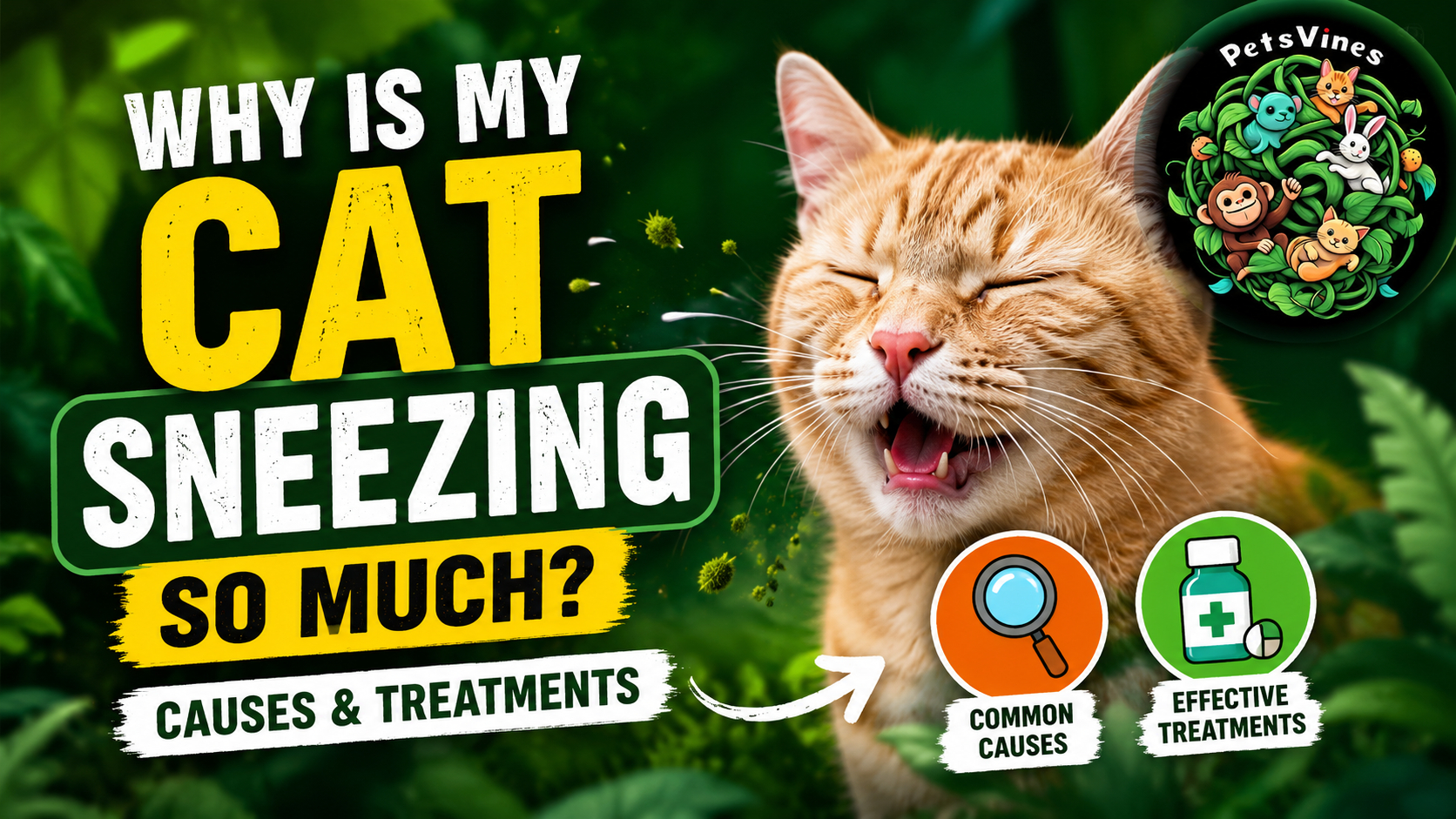
The occasional cat sneeze is harmless and can even be endearing. But when your cat starts sneezing repeatedly, several times an hour, or when that sneezing is accompanied by a runny nose, watery eyes, or reduced appetite, it is natural to wonder whether something more serious is going on.
As a pet care researcher who has reviewed hundreds of feline health cases, I can tell you that sneezing in cats is one of the most common reasons owners contact their vets. The good news is that most causes are entirely manageable. This guide covers every major reason cats sneeze, what the type and color of discharge tells you, and a clear framework for deciding when to monitor at home versus when to pick up the phone.
Is Cat Sneezing Normal?
Yes, occasional sneezing is completely normal in cats. Just like humans, cats sneeze to clear irritants from their nasal passages. A single sneeze after sniffing something dusty, investigating a plant, or encountering a strong smell is nothing to worry about.
What is not normal is persistent sneezing that continues for more than 24 to 48 hours, sneezing in repeated rapid-fire fits, or sneezing accompanied by nasal discharge, eye discharge, reduced appetite, or lethargy. These patterns suggest something beyond a passing tickle in the nose and deserve veterinary attention.
Veterinarians distinguish between two patterns: acute sneezing, which starts suddenly, often in response to a specific trigger, and resolves quickly; and chronic sneezing, which continues over days, weeks, or longer and usually indicates an underlying condition requiring diagnosis and treatment.
10 Common Causes of Cat Sneezing
1. Upper Respiratory Infection (Cat Cold)
Upper respiratory infections (URIs) are by far the most common cause of persistent sneezing in cats. They are caused most frequently by feline herpesvirus (FHV-1) and feline calicivirus (FCV), though bacteria such as Chlamydophila felis and Bordetella bronchiseptica can also be involved. According to the Cornell Feline Health Center, these viruses are extremely common and highly contagious between cats.
Symptoms of a cat URI include repeated sneezing, clear or colored nasal discharge, watery or crusty eyes, mild fever, reduced appetite, and lethargy. Most healthy adult cats recover from URIs in 7 to 10 days with supportive care. However, kittens, senior cats, and cats with compromised immune systems can develop serious complications and always need prompt veterinary attention.
An important note about feline herpesvirus: once a cat is infected, the virus remains dormant in the nervous system for life. Stress, illness, or immunosuppression can reactivate it, causing recurring bouts of sneezing and respiratory symptoms throughout the cat’s life.
2. Environmental Irritants
Cats have extremely sensitive nasal passages, and many common household products can trigger sneezing fits. Frequent culprits include scented candles and room sprays, plug-in air fresheners, perfume or cologne applied nearby, cigarette or pipe smoke, cleaning sprays and bleach fumes, freshly applied paint or varnish, scented cat litter (particularly heavily perfumed varieties), and dusty or mold-contaminated environments.
Irritant-triggered sneezing typically starts within minutes of exposure to the trigger, involves multiple rapid sneezes, and resolves quickly once the cat moves away from the source. If you have recently introduced any new scented product into your home and your cat has started sneezing, removing that product is the logical first step.
3. Allergies
Unlike in humans where sneezing is a hallmark of seasonal allergies, cats with allergies more commonly show skin symptoms like itching, hair loss, and skin lesions. However, some cats do develop allergic rhinitis, with sneezing, watery eyes, and nasal discharge in response to pollen, dust mites, mold spores, or specific foods.
As BluePearl Veterinary Partners notes, cats with asthma may also exhibit sneezing and wheezing, particularly when exposed to airborne allergens. Allergic rhinitis in cats cannot be cured but can be managed with a treatment plan developed by your veterinarian or a veterinary dermatology specialist.
4. Dental Disease
This cause surprises many cat owners: dental disease, particularly tooth root infections in the upper teeth, can trigger sneezing. The roots of the upper premolar and molar teeth sit very close to the nasal passages in cats. When these roots become infected or abscessed, the inflammation can extend into the nasal cavity and cause chronic sneezing, often with nasal discharge from one nostril only. A dental examination under anesthesia is required to diagnose this cause properly.
5. Nasal Polyps or Foreign Objects
Nasal polyps are benign inflammatory growths that develop in the nasal passages and cause chronic sneezing, nasal discharge, and snoring or noisy breathing. They are more common in young cats and can require surgical removal. Foreign objects, such as a blade of grass, a small seed, or a piece of plant material that has been inhaled, can also lodge in the nasal passages and trigger sudden intense and repeated sneezing that does not resolve on its own.
6. Fungal Infection
Cryptococcus neoformans is the most common fungal infection affecting the nasal passages of cats. It is acquired from the environment, particularly from soil contaminated with bird droppings. Cryptococcosis causes chronic nasal discharge, facial swelling especially over the bridge of the nose, chronic sneezing, and neurological signs if the infection spreads. Antifungal medication is required for treatment.
7. Feline Leukemia Virus (FeLV) or FIV
Cats infected with feline leukemia virus or feline immunodeficiency virus have compromised immune systems that make them more susceptible to secondary infections, including frequent and severe URIs that cause persistent sneezing. If your cat has not been tested for FeLV or FIV, this is something to discuss with your vet, particularly if they have had outdoor access or contact with other cats of unknown status.
8. Feline Herpesvirus Flare-Up
As mentioned above, cats previously infected with herpesvirus may experience recurrent sneezing episodes throughout their lives, typically triggered by stress, illness, boarding, or rehoming. These flare-ups look identical to the original infection and are managed with supportive care, lysine supplements (though evidence is mixed), and in some cases antiviral medications prescribed by your vet.
9. Nasal Tumors
While less common than the causes above, nasal tumors do occur in cats, particularly in older individuals. Chronic one-sided nasal discharge (from one nostril only), facial swelling, and sneezing that does not respond to antibiotics or anti-inflammatories are warning signs that warrant imaging studies including CT scans to rule out a mass. Early diagnosis improves outcomes significantly.
10. Vaccination Reaction
The intranasal feline viral rhinotracheitis, calicivirus, and panleukopenia (FVRCP) vaccine, administered as drops directly into the nose, can cause mild sneezing for 4 to 7 days after administration. This is a known and generally harmless side effect of this vaccination method and resolves on its own without treatment.
What Nasal Discharge Color Tells You
| Discharge Color | What It Usually Means | Action |
|---|---|---|
| Clear and watery | Early viral infection, mild irritation, or allergies | Monitor; vet if persists beyond 48 hours |
| White or gray | Later-stage viral infection, mild bacterial involvement | Vet visit recommended if persisting |
| Yellow or green | Bacterial secondary infection | Vet visit required; antibiotics likely needed |
| Blood-tinged or bloody | Trauma, foreign object, polyp, or nasal tumor | Urgent vet visit |
| Brown or rust-colored | Fungal infection or dried blood | Vet visit required |
| From one nostril only | Foreign object, dental root infection, or nasal mass | Vet visit required for investigation |
⚠️ See a Vet Immediately If Your Cat:
- Has been sneezing repeatedly for more than 48 hours
- Has yellow, green, or blood-tinged nasal discharge
- Has discharge from one nostril only (not both)
- Has stopped eating or is noticeably lethargic
- Is having difficulty breathing or breathing with an open mouth
- Is a kitten, as URIs can become life-threatening quickly in young cats
- Has swelling over the nose or facial bones
What You Can Do at Home for Mild Sneezing
If your cat is sneezing but is otherwise eating normally, alert, and showing clear rather than colored discharge, you can try these supportive measures at home while monitoring closely:
Run a humidifier or create steam. Sit with your cat in a steamy bathroom (run hot shower, do not bring cat into water) for 10 to 15 minutes to help loosen nasal congestion. This is particularly helpful for cats with URIs whose nasal passages have become blocked.
Keep the face clean. Gently wipe away any discharge from the nose and eyes with a warm, damp cloth to keep the passages clear and comfortable. Use a separate cloth for each eye to avoid spreading any infection.
Warm up their food. Congested cats often lose their sense of smell and may refuse food as a result. Gently warming wet food to release its aroma can help maintain appetite. Maintaining nutrition is critical, as a cat that stops eating due to congestion can develop hepatic lipidosis.
Remove potential irritants. Stop using scented candles, air fresheners, and strong cleaning products near your cat until the sneezing resolves. Switch to an unscented litter temporarily.
Never give human medications. Human cold and flu medications including pseudoephedrine, antihistamines formulated for humans, and nasal decongestant sprays are toxic to cats. Do not attempt to medicate your cat at home without explicit veterinary guidance.
How Vets Diagnose and Treat Cat Sneezing
Your vet will take a detailed history and perform a full physical examination including the nasal passages, throat, eyes, lymph nodes, and teeth. Depending on findings, diagnostic options may include blood work to check for FeLV, FIV, and signs of infection; rhinoscopy (a small camera inserted into the nasal passage under anesthesia) to look for polyps, foreign objects, or masses; nasal biopsy for suspected tumors or fungal infections; and advanced imaging such as X-rays or CT scans for complex cases.
As PetMD notes, most cats with persistent sneezing are treated initially with antibiotics and antiviral medications, as infections are the most common underlying cause. Additional treatments depend on the diagnosis and may include antifungal medications, anti-inflammatory drugs, dental procedures, surgical removal of polyps, or referral to a veterinary oncologist for suspected nasal tumors.
FAQs
Why is my cat sneezing but acting normal?
A cat that sneezes occasionally but is otherwise eating, drinking, and behaving normally is most likely reacting to a mild irritant or is in the very early stages of a viral infection. Monitor for 24 to 48 hours. If sneezing increases, discharge appears, or behavior changes, contact your vet.
Can cats catch colds from humans?
No. Feline upper respiratory viruses including herpesvirus and calicivirus are species-specific and cannot be transmitted to humans. Similarly, human cold viruses cannot infect cats. However, cats can pass these infections to other cats through direct contact, shared food bowls, or grooming.
Why is my cat sneezing blood?
Sneezing blood, whether in the discharge or as droplets, always requires prompt veterinary evaluation. Causes include trauma to the nasal passages, a foreign object, a nasal polyp, a tooth root abscess, or in older cats, a nasal tumor. Do not wait to see if it resolves on its own.
Is my cat sneezing because of the litter?
Yes, this is very common. Dusty or heavily scented cat litters are a frequent cause of sneezing, particularly immediately after using the litter box. Switching to a low-dust, unscented litter often resolves the sneezing within a few days. Look for litters labeled as hypoallergenic or low-dust.
Can I give my cat Benadryl for sneezing?
Only under explicit veterinary guidance. While diphenhydramine (Benadryl) is occasionally used in cats at specific doses determined by body weight, human antihistamine formulations often contain additional ingredients such as decongestants that are toxic to cats. Never self-medicate your cat with human medications without speaking to your vet first.
Why does my cat only sneeze at certain times of day?
Time-of-day sneezing often points to an environmental trigger. Morning sneezing may occur when HVAC systems kick in and circulate dust. Evening sneezing may coincide with meal preparation, cleaning products, or candle use. Keeping a log of when sneezing occurs can help you and your vet identify the pattern and the culprit.
My cat sneezes after eating. Should I be worried?
Occasional sneezing after eating can be normal if food or liquid briefly enters the nasal passage. However, if your cat consistently sneezes after every meal, this can indicate a dental issue (particularly an upper tooth root infection communicating with the nasal cavity) or a cleft palate in very young kittens, and warrants a veterinary examination.
Is sneezing contagious between cats in the same house?
Yes, if the cause is viral or bacterial, it can spread readily between cats sharing a home through direct contact, shared water bowls, and shared litter boxes. If one cat in your household is diagnosed with a URI, keep them separated from other cats, wash hands thoroughly between handling them, and disinfect shared surfaces and bowls daily.
Helping Your Sneezing Cat Feel Better
Most cat sneezing, even when caused by a viral URI, resolves within 7 to 14 days with appropriate care. The key is knowing when to ride it out at home with supportive measures, and when the pattern of sneezing or accompanying symptoms signals that a veterinary examination is needed. When in doubt, a quick phone call to your vet to describe the symptoms is always the right first step.
Also Visit: How Long Do Cats Live? Average Lifespan by Breed (2026 Guide)