
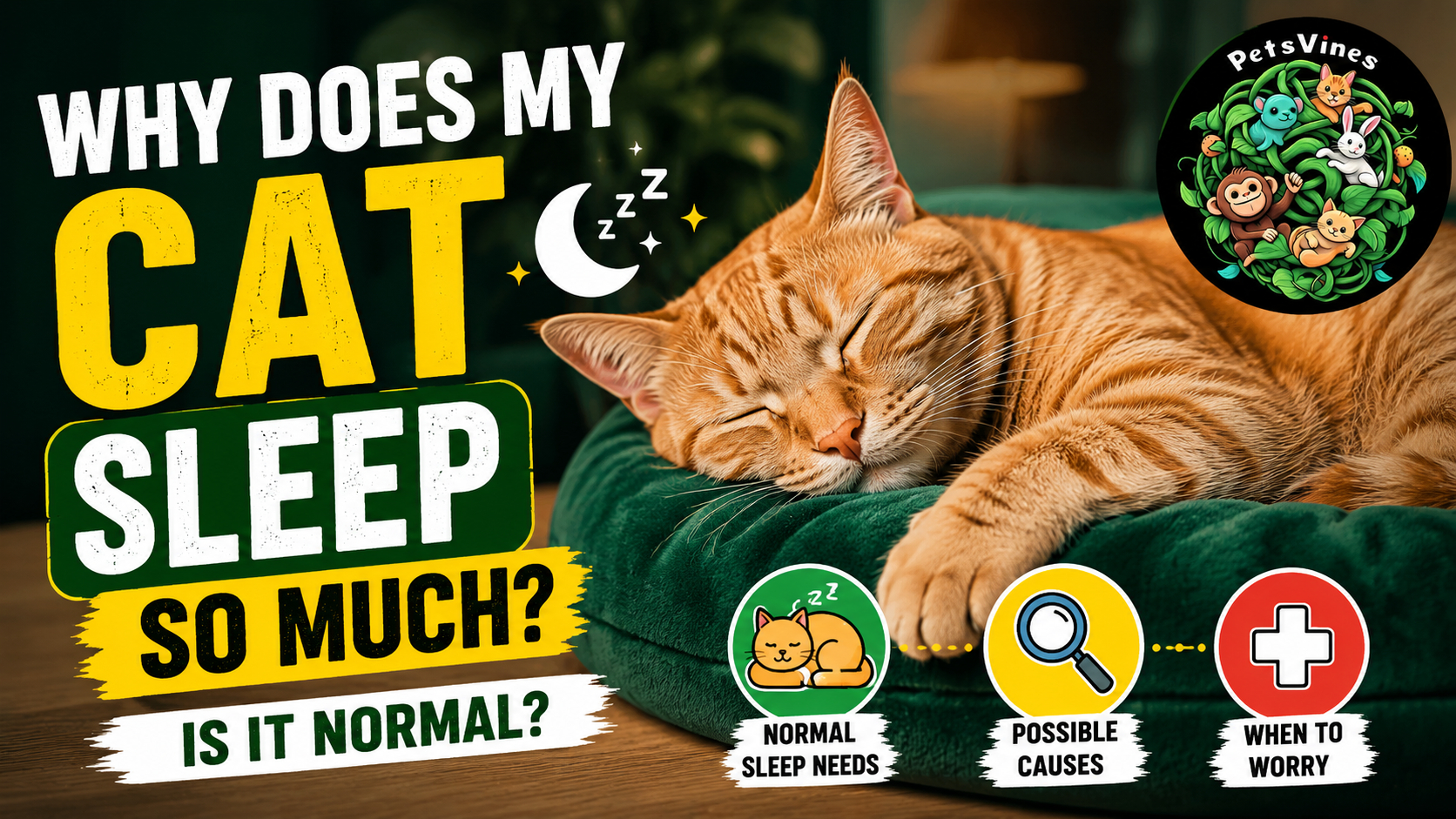
You look around the house and there is your cat, curled up on the sofa again. Or draped across your keyboard. Or tucked into a sunbeam they discovered hours ago and have not moved from since. It can feel like your cat does nothing but sleep. And if you are a new cat owner especially, this might seem alarming.
I want to reassure you immediately: in almost all cases, a cat sleeping a lot is doing exactly what nature designed it to do. But there is an important caveat. Knowing what is genuinely normal for your individual cat, and recognizing when a change in sleep patterns signals something worth investigating, is a skill every cat owner benefits from developing. This guide covers everything you need to know.
How Much Do Cats Sleep? The Science Behind the Naps
According to PetMD, cats sleep between 12 and 16 hours per day on average, with some individuals sleeping up to 20 hours. To put that in perspective, your cat spends roughly 50 to 70% of their life asleep. That is approximately two to three times the amount humans sleep.
This extraordinary amount of sleep is not laziness. It is a biological adaptation shaped by millions of years of evolution as an obligate carnivore and ambush predator.
Cats are also polyphasic sleepers, meaning they sleep in multiple short bursts throughout a 24-hour period rather than one long consolidated block. Each nap typically lasts between 15 minutes and 2 hours. This pattern is distinct from human sleep architecture and is one reason cats seem perpetually rested and ready for sudden bursts of activity at any moment.
Contrary to popular belief, cats are not nocturnal. They are crepuscular, meaning they are naturally most active at dawn and dusk. Their ancestors evolved to hunt at these times when their prey was also active. This is why many cats are at their most energetic and playful in the early morning and early evening, and why they sleep through much of the day and night.
Why Do Cats Sleep So Much? The Real Reasons
Energy Conservation for Hunting
The most fundamental reason for all that sleep is energy management. Hunting is extraordinarily energy-intensive, requiring explosive sprints, precise coordination, and sharp reflexes. Wild cats spend enormous energy in relatively brief hunting bursts, then require extended rest periods to recover and recharge. Your domestic cat retains this ancient programming even though their food arrives in a bowl twice a day. Every nap is, at some level, the cat’s body preparing itself for the next “hunt.”
Thermoregulation
Cats are also known to sleep more in cold, rainy, or overcast weather. Research and cat owner observations both confirm that cats sleep more when daylight hours are shorter or temperatures drop. This seasonal response mirrors hibernation-adjacent behaviors in many species and is a natural biological adjustment rather than a health concern.
Post-Meal Rest
Cats frequently fall into deep sleep after eating. This is because digestion requires a significant metabolic investment, and the body redirects energy and blood flow to the digestive system during this time. A cat settling in for a nap after their meal is behaving entirely normally.
Boredom and Understimulation
Indoor cats that lack sufficient environmental enrichment, play opportunities, or mental stimulation often sleep more than they otherwise would, not because they are genuinely tired, but because sleeping is a default behavior when there is nothing more interesting to do. This is one reason providing adequate enrichment through interactive toys, window perches, puzzle feeders, and regular play sessions is an important part of indoor cat welfare, not just a luxury.
How Much Sleep Is Normal by Life Stage?
| Life Stage | Age Range | Normal Daily Sleep | Why |
|---|---|---|---|
| Kitten | 0 to 6 months | 16 to 20 hours | Rapid growth, brain development, immune system building |
| Junior | 6 months to 2 years | 14 to 18 hours | Still developing, high energy when awake |
| Prime Adult | 3 to 6 years | 12 to 15 hours | Peak health, most consistent sleep pattern |
| Mature Adult | 7 to 10 years | 13 to 16 hours | Metabolism beginning to slow |
| Senior | 11 to 14 years | 16 to 20 hours | Lower energy, possible early health conditions |
| Geriatric | 15 years plus | Up to 20 hours | Significant energy decline, often managing health conditions |
As Purina notes, “it’s not too surprising that cats spend so much time resting” when you consider their evolutionary background. A change from your cat’s established baseline, rather than the absolute number of hours slept, is the key signal to watch for.
Types of Cat Sleep: Deep Sleep vs. Light Napping
Not all of your cat’s sleeping time is created equal. Cats cycle through two distinct sleep states that you can observe if you watch closely.
Light sleep (dozing): Your cat appears relaxed but is actually in a heightened state of sensory awareness. Ears may swivel in response to sounds, eyes may open slightly at a noise, and the cat can be awake and alert within a fraction of a second. Cats in light sleep often remain sitting or crouching rather than lying flat. This state makes up the majority of a cat’s daily rest time.
Deep sleep (REM sleep): Your cat lies flat on their side or back, muscles are fully relaxed, and you may see whisker twitching, paw movements, or rapid eye movements under closed eyelids. This is when cats dream, almost certainly replaying hunting and chasing behaviors based on observed movements. Deep sleep is when genuine physical restoration occurs, and cats spend roughly 25% of their sleep time in this state, similar to the proportion humans achieve.
When Is Sleeping Too Much a Problem?
The most important principle here is baseline. You know your cat. If your cat normally sleeps 14 hours a day and today they slept 16 hours but ate normally and were playful during their waking hours, this is probably not concerning. If your normally active, playful cat has suddenly become noticeably harder to rouse, is sleeping in different locations than usual, and has reduced interest in food, play, or interaction, that change is worth investigating.
See a Vet If Your Cat’s Increased Sleep Is Paired With:
- Reduced appetite or complete food refusal for more than 24 hours
- Weight loss that has been occurring over days or weeks
- Difficulty getting up, jumping, or moving (possible arthritis or injury)
- Changes in litter box habits, either using it more or less than usual
- Vomiting or diarrhea occurring alongside the increased sleep
- A dull, matted, or poorly maintained coat
- Hiding in unusual locations and avoiding contact
- Any sudden or dramatic change from the cat’s established normal behavior
Conditions That Can Cause Excessive Sleeping in Cats
If your cat is sleeping significantly more than their personal baseline and showing other symptoms, the following conditions are among the most common causes your vet will consider:
Anemia: Low red blood cell count severely reduces the oxygen-carrying capacity of the blood, causing profound fatigue and dramatically increased sleep. Causes include flea infestation (particularly in kittens), chronic kidney disease, immune-mediated disease, and blood loss. Pale gums alongside excessive sleepiness are a hallmark warning sign.
Infection: Any significant illness including upper respiratory infections, urinary tract infections, and systemic viral or bacterial disease causes the body to redirect energy toward fighting the infection. Dramatically increased sleep during illness is the cat’s body doing exactly what it should: conserving resources for immune function.
Chronic kidney disease: CKD causes a buildup of waste products that produce persistent fatigue and lethargy. Senior cats with CKD often sleep more than they did earlier in life. Other signs include increased thirst, weight loss, vomiting, and a deteriorating coat.
Hypothyroidism: While hyperthyroidism (overactive thyroid) is far more common in cats, hypothyroidism does occur, particularly after radioactive iodine treatment for hyperthyroidism. It causes profound lethargy, weight gain, cold intolerance, and excessive sleep.
Diabetes: Diabetic cats may appear lethargic and sleep more as their cells become starved of glucose despite adequate blood sugar levels. Other signs include greatly increased thirst and urination and weight loss despite a normal or increased appetite.
Pain: Cats experiencing chronic pain from arthritis, dental disease, or internal conditions frequently become less active and sleep more as a coping mechanism. Because cats hide pain so effectively, increased sleep combined with reduced willingness to jump or play may be the only visible signs of significant discomfort.
How to Encourage Healthy Sleep Patterns and Waking Activity
If your cat is sleeping more than their baseline due to boredom or understimulation rather than illness, environmental enrichment is your best tool. Set aside two dedicated interactive play sessions of 10 to 15 minutes per day using a wand toy or laser pointer followed by a toy to catch. Provide window perches where your cat can watch birds and outdoor activity. Use puzzle feeders at meal times to require mental engagement for food access. Rotate toys regularly to maintain novelty. Consider a bird feeder positioned outside a window your cat can access.
For cats sleeping more due to weather or seasonal changes, this is normal and does not require intervention beyond ensuring they remain engaged and active during their waking hours.
FAQs
Is it normal for a cat to sleep all day?
If “all day” means 12 to 16 hours with active, engaged, and playful waking periods, yes, this is entirely normal for an adult cat. If your cat is sleeping for 20 or more hours and showing little interest in food, play, or interaction during their brief waking periods, a veterinary checkup is warranted.
Why does my cat sleep on me?
Cats choose their sleeping spots based on warmth, safety, and comfort. Sleeping on a trusted person provides all three simultaneously. Your body heat is comfortable and consistent, and your presence signals safety. It is genuinely a compliment, reflecting your cat’s trust and attachment to you.
Why is my cat sleeping more than usual in winter?
This is normal and biologically driven. Reduced daylight hours and cooler temperatures both trigger increased sleep in cats, mirroring the seasonal sleep adjustment seen in many species. As long as your cat remains interested in food and interactive during waking hours, this seasonal increase in sleep is not a health concern.
Why does my old cat sleep so much?
Senior cats sleep more than younger adults for several reasons: lower overall energy levels, reduced mobility, and the physical demands of managing age-related health conditions. If your senior cat is sleeping 16 to 20 hours but eating well and comfortable during waking hours, this is expected. If the increased sleep arrived suddenly or is paired with other symptoms, a vet visit within a few days is appropriate.
Should I wake my sleeping cat?
Generally no. Sleep is important for your cat’s physical and psychological health. If you need to interact with them, wait for a natural waking moment. Being woken frequently from deep sleep can cause stress and irritability in cats. An exception is if your cat needs medication or you are monitoring for a health condition, in which case gentle waking is necessary.
Do cats dream?
Almost certainly yes. Cats exhibit clear REM (rapid eye movement) sleep, and the twitching whiskers, paddling paws, and vocalizations many owners observe during deep sleep are consistent with dreaming behavior. Brain activity studies in cats during sleep show patterns similar to those observed during waking activity, suggesting they are replaying experiences, likely hunting-related scenarios.
Why does my cat sleep in strange positions?
Cat sleeping positions reflect comfort, temperature regulation, and their current level of alertness. The classic curled position conserves body heat and protects vital organs. Sleeping stretched out flat signals complete relaxation and security. The “Superman” position (on belly with legs extended) allows for rapid waking if needed. All of these are normal. Very unusual positions that appear uncomfortable, such as sitting hunched with the head hanging, can signal pain or respiratory difficulty and warrant attention.
Your Cat’s Sleep Is Working Exactly As It Should
A sleeping cat is almost always a healthy, content cat doing exactly what millions of years of evolution designed them to do. The key is knowing your individual cat’s normal baseline and watching for changes from that baseline rather than comparing their sleep hours to an arbitrary standard. When something feels different about your cat’s sleep pattern, trust that instinct and check in with your vet. For more expert cat behavior and health guides, explore the PetsVines Cat Care
Also Visit: Cat Diarrhea: Causes, Home Remedies and When to Worry