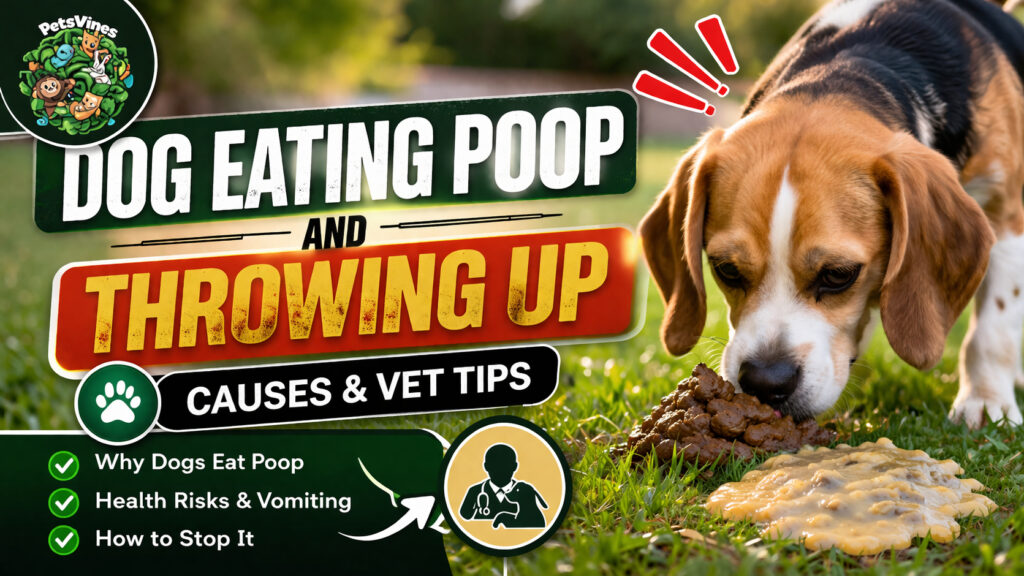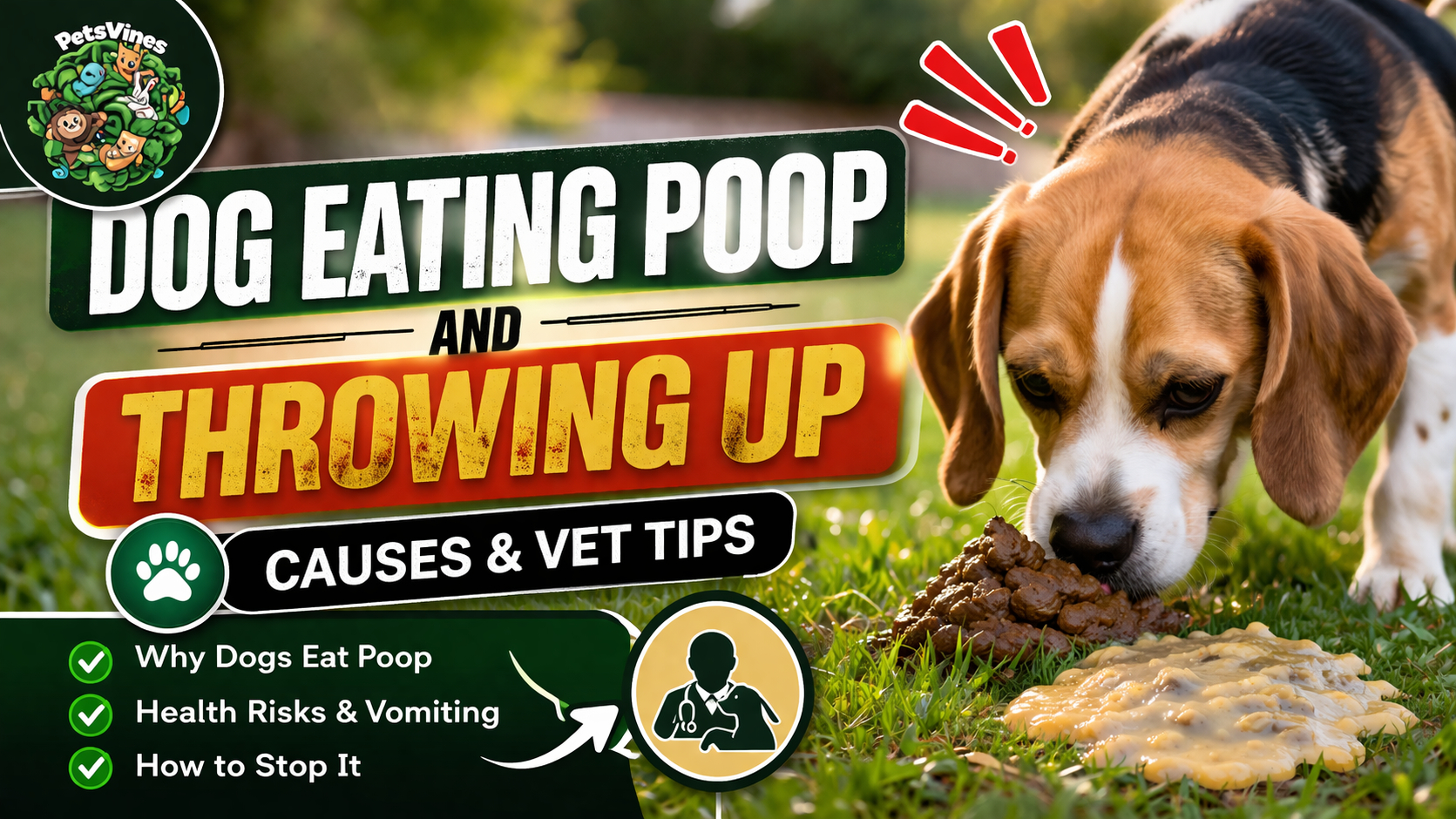
Dog Eating Poop and Throwing Up: You turn around for two seconds, and there it is — your dog eating poop. Before you’ve even processed the horror, they’re running back to you, tail wagging, ready to give you a kiss. And then it gets worse they start vomiting.
If your dog ate poop and is now vomiting, it’s usually caused by stomach irritation from bacteria or parasites in the feces. In most cases it passes within a few hours, but vomiting that’s repeated, bloody, or paired with lethargy, diarrhea, or loss of appetite is a sign you need to call your vet right away. The medical term for poop-eating is coprophagia, and while it’s common, it’s not always harmless.
If this sounds familiar, you are absolutely not alone. Coprophagia — the scientific term for poop-eating in dogs — is one of the most common yet distressing behaviors that pet owners report to their vets. And when vomiting follows, the worry naturally spikes.
The good news is that vomiting after eating feces is often the body’s natural defense, clearing out what doesn’t belong. The not-so-good news? In some cases, it signals something more serious — parasites, toxic contamination, or underlying illness — that genuinely needs medical attention.
This guide will walk you through exactly why dogs eat poop and throw up, what the warning signs are, when you need to act fast, and — importantly — how to stop this cycle for good. For more essential dog health guidance, visit PetsVines Dog Health Hub.
What Is Coprophagia and How Common Is It Really?
The science (and statistics) behind poop-eating
Coprophagia simply means the ingestion of feces. It sounds extreme, but it’s far more common than most owners realize. In a major study presented at the American Veterinary Society of Animal Behavior annual conference, researchers led by Dr. Benjamin Hart of the University of California, Davis found that 24% of dogs — that’s one in four — were observed eating poop at least once. And 16% of dogs, roughly one in six, were classified as “serious” poop eaters, caught in the act five or more times.
Hart concluded that eating fresh stools appears to be a reflection of an innate predisposition inherited from ancestral canids — wolves would eat fresh feces to protect pack members from intestinal parasites that could spread in the den. In other words, it’s in many dogs’ DNA.
That doesn’t make it acceptable or safe — especially when vomiting enters the picture. But it does mean you’re not dealing with a broken or abnormal dog. You’re dealing with a dog that needs guidance, and possibly medical attention.
Why Do Dogs Eat Poop? The Real Reasons
Multiple causes, both behavioral and medical
Dogs eat poop for a surprisingly wide range of reasons. Some are instinctive. Some are nutritional. Some point directly to a health problem that needs to be addressed.
Medical Causes
Enzyme and nutrient deficiencies are among the most common medical drivers. Dogs fed highly processed dry kibble diets may have low digestive enzyme levels due to the high-heat processing used to make kibble, which destroys natural enzymes. When food enters the small intestine largely undigested, gastrointestinal symptoms like diarrhea, vomiting, weight loss, and poop-eating can follow.
Exocrine Pancreatic Insufficiency (EPI) is a condition where the pancreas fails to produce enough digestive enzymes. Symptoms include weight loss, a ravenous appetite, stool eating, and diarrhea. EPI is particularly common in German Shepherds and is diagnosable via a simple blood test called TLI (trypsin-like immunoreactivity).
Intestinal parasites are another culprit. Symptoms of parasitism can include weight loss, diarrhea, vomiting, and stool eating. A fecal test by your veterinarian is an easy way to rule this out.
Other underlying illnesses that increase appetite — such as diabetes, Cushing’s disease, hypothyroidism, and gastrointestinal malabsorption disorders — can trigger a dog to suddenly begin eating feces as a compulsive response to chronic hunger or nutritional deprivation.
Behavioral Causes
Not every poop-eater has a medical problem. Behavioral causes are equally common:
- Attention-seeking: Some dogs quickly learn that eating poop gets a dramatic reaction from their owner. Even negative attention feels rewarding to them.
- Anxiety and confinement: Studies show that dogs kept alone in kennels or basements are more likely to eat poop than those who live closely with their families. Stress drives compulsive behaviors.
- Scent association: Dogs in environments where they eat and eliminate in close proximity may begin to associate the smell of feces with food.
- Instinct: Nursing female dogs often eat the feces of their young to keep the den clean — a behavior inherited directly from wolves.
- Curiosity in puppies: Young dogs explore the world with their mouths. Most outgrow this phase naturally.
Coprophagia was also found to be more common in multi-dog households, suggesting that social dynamics play a role too.
Why Does a Dog Throw Up After Eating Poop?
The body is trying to expel something harmful
When a dog eats feces and then vomits, it’s usually the immune and digestive system working exactly as intended — trying to purge bacteria, toxins, or foreign material before they can cause further harm.
Here are the main reasons vomiting happens:
Bacterial contamination. Feces — especially from unknown animals — can carry harmful bacteria like Salmonella, E. coli, and Campylobacter. The stomach’s response to these intruders is often immediate and forceful: vomiting.
Parasites. Coprophagia can sometimes spread infectious diseases or parasites and can cause gastroenteritis that results in vomiting and diarrhea. Giardia, roundworms, and hookworms are common offenders, and a dog doesn’t need to eat a large amount of contaminated feces to become infected.
Medication or chemical contamination in the feces. In one documented case, a dog became sick after eating sheep feces that contained ivermectin, a deworming medication the dog was sensitive to. If other pets in the household are on medications, their waste can carry traces of those drugs — which can cause vomiting in a dog that ingests it.
Eating too fast or overstimulation. Sometimes the simple act of eating something that tastes, smells, or feels foreign causes reflexive vomiting within minutes. This is generally the least serious cause.
Blockage risk. If a dog frequently eats objects along with feces — like socks or other household items — that combination can create a blockage that causes vomiting, straining, or even collapse. A tight or distended belly paired with an inability to defecate is a veterinary emergency.
When Is It a Veterinary Emergency? Warning Signs to Watch For
One episode of vomiting after eating poop, with no other symptoms and a dog that seems back to normal within a couple of hours, is usually not cause for panic. But certain symptoms should send you straight to your vet.
Call your vet immediately if you notice:
- Vomiting that continues beyond 2–3 hours or becomes projectile
- Blood in the vomit or in the stool
- Severe lethargy, weakness, or collapse
- Loss of appetite that persists beyond 24 hours
- A bloated, hard, or painful abdomen
- Signs of neurological distress (disorientation, tremors, seizures)
- Pale or white gums
- Suspected ingestion of feces from a medicated or sick animal
Fecal ingestion can introduce harmful bacteria or toxins that escalate quickly without treatment. Not all vomiting is created equal — some dogs throw up once and bounce right back. Others seem fine initially and then deteriorate hours later. When in doubt, a vet call costs nothing.
What to Do Right Away When Your Dog Ate Poop and Is Vomiting
Here’s a practical step-by-step response:
- Stay calm. Panic doesn’t help you or your dog.
- Note the details. Whose poop did they eat? Another dog’s? A wild animal’s? A medicated pet’s? This information matters enormously at the vet.
- Watch closely for 1–2 hours. If vomiting stops and your dog is alert, drinking water, and acting normally, continue monitoring.
- Withhold food temporarily. Give the digestive system a short break — about 2–4 hours — then offer a small amount of bland food (plain boiled chicken and white rice works well).
- Ensure fresh water is available. Vomiting causes fluid loss. Dehydration is a real risk, especially in small dogs.
- Contact your vet if symptoms worsen, persist, or if any of the red flags listed above appear.
- Don’t induce vomiting unless specifically instructed by a vet. In some cases, this can cause more harm.
Health Risks: Can Dogs Get Seriously Sick From Eating Poop?
For most healthy adult dogs, a single poop-eating incident won’t lead to lasting illness. But the risks are real and worth taking seriously:
- Parasite transmission: Roundworms, hookworms, whipworms, and Giardia can all be passed through infected feces.
- Bacterial infections: Salmonella and Campylobacter can cause severe gastroenteritis in dogs and can also be transmitted to humans. If a dog eats poop, anyone in the household who is then licked by that dog is also at risk of illness or disease transmission.
- Toxic ingestion: As noted, feces from animals on certain medications or exposed to toxins can poison a dog.
- Chronic GI disruption: Coprophagia can be associated with diseases of the intestinal tract and sometimes organs like the liver or brain, particularly when the behavior appears suddenly in an adult dog that has never done it before.
How to Stop Your Dog From Eating Poop
A combination of management, diet, and training works best
There’s no single magic fix, but these strategies have strong veterinary and behavioral backing:
1. Rule out medical causes first. Before anything else, take your dog to the vet. Ask for a full fecal examination and discuss whether bloodwork for EPI, parasites, or nutritional deficiencies is warranted. Treating an underlying condition often stops the behavior.
2. Improve the diet. A long-standing theory holds that dogs eat poop because they are missing something in their diets — Vitamin B deficiency in particular has been a prime suspect, and studies have supported this. Talk to your vet about switching to a higher-quality food or adding a veterinary-approved probiotic or digestive enzyme supplement.
3. Remove access. The most effective single action you can take, regardless of the reason behind the behavior, is to remove access to the feces entirely. If they can’t reach it, they can’t eat it. Pick up after your dog immediately and block access to litter boxes or areas with other animals’ waste.
4. Train a solid “leave it” command. Teach your dog to redirect away from feces on command. Pair this with positive reinforcement — treats and praise — rather than punishment. Punishing a dog for eating poop can lead to fear and distrust, making the problem harder to resolve, not easier.
5. Increase mental stimulation and exercise. Boredom, anxiety, and under-stimulation all contribute to compulsive behaviors. More structured walks, puzzle feeders, and social interaction can significantly reduce poop-eating driven by these causes.
6. Use deterrent supplements. Products like For-Bid or certain pineapple-based additives are designed to make feces taste unpleasant to dogs. Results are mixed, but they can be part of a broader strategy — always ask your vet before adding anything to your dog’s diet.
7. Consider a veterinary behaviorist. For persistent cases with a strong behavioral root, a veterinary behaviorist can provide structured guidance that goes beyond what general training covers.
FAQ’s
Q: Is it normal for a dog to vomit after eating poop?
It’s not uncommon, but it’s not something to ignore either. A single, brief episode with quick recovery is usually low-risk. Repeated or severe vomiting needs veterinary attention.
Q: Can a dog get worms from eating poop?
Yes. Eating infected feces is one of the primary ways intestinal parasites are transmitted. Regular deworming and annual fecal exams are essential preventive measures.
Q: Why does my dog eat poop only sometimes?
Situational triggers — stress, boredom, hunger, or the presence of another animal’s waste — often drive occasional coprophagia. Tracking when it happens can help identify and remove the trigger.
Q: Should I brush my dog’s teeth after they eat poop?
Yes — using a dog-safe toothpaste. This reduces bacterial transmission and is a good habit regardless.
Q: Can puppies grow out of eating poop?
Many do. Poop-eating is particularly common in puppies as they explore their world, and this behavior typically stops on its own as they mature and receive consistent training.
Don’t Wait to Act
A dog eating poop and throwing up is gross, worrying, and completely understandable to panic about. But with the right information, you can respond calmly, assess the severity accurately, and take the steps that actually work.
The most important things to remember: watch for red-flag symptoms, contact your vet if anything feels wrong, rule out medical causes before assuming it’s just a habit, and take a proactive approach to prevention through diet, training, and environmental management.
For more in-depth dog health articles, breed-specific guides, and expert pet care advice, explore the full resource library at PetsVines — your go-to destination for trusted, practical pet information.
Also Visit: Dog Eating Goose Poop: Why It Happens, Real Health Risks, and How to Stop It for Good