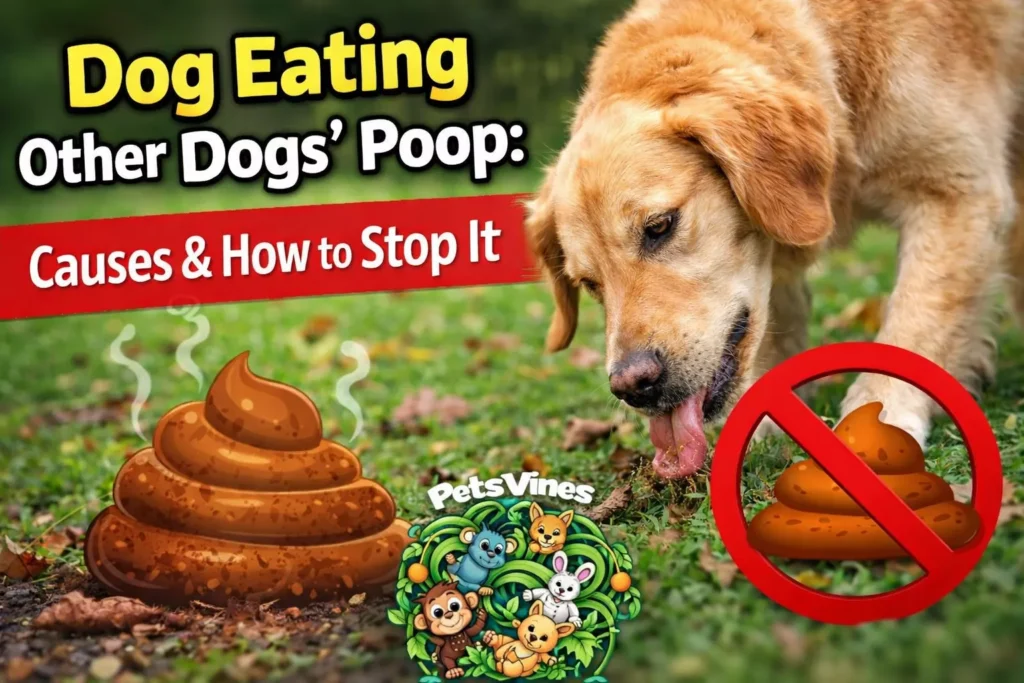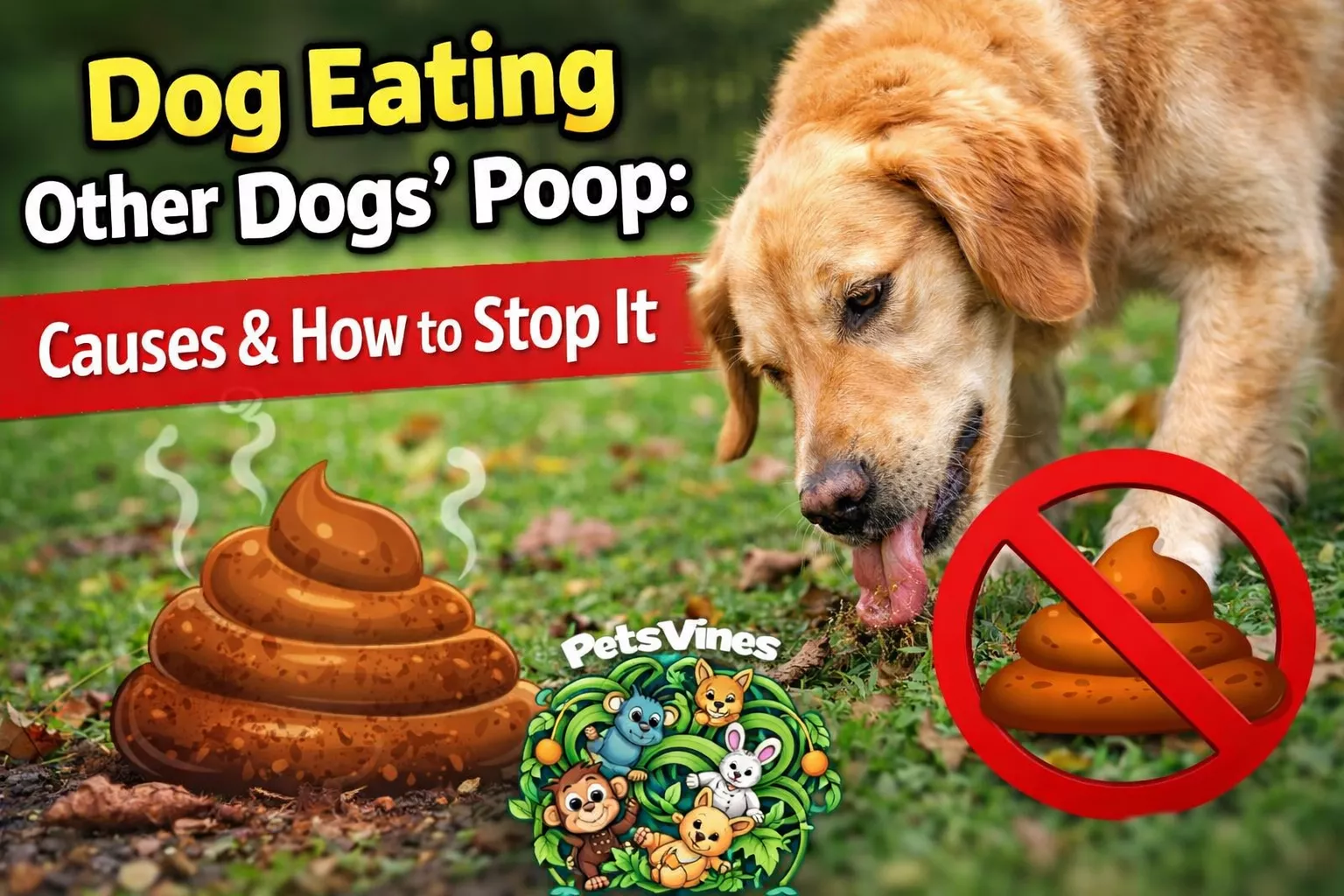
Dog eating other dogs’ poop (a behavior called coprophagia) due to instinct, nutritional deficiencies, boredom, or learned habits. According to research by Dr. Benjamin Hart at UC Davis, 16% of dogs are classified as frequent poop eaters, and 85% prefer another dog’s feces over their own. While often harmless, it can transmit parasites and bacteria. Solutions include prompt cleanup, dietary adjustments, the “leave it” command, and a vet check.
You’re at the dog park, enjoying a peaceful afternoon, when you look over and catch your dog eating another dog’s poop — fresh, straight from the source. Your stomach turns. You call their name in horror. They look up, tail wagging, completely unbothered.
Sound familiar?
You’re not alone, and you’re not a bad pet owner. This behavior — scientifically known as coprophagia — is one of the most common and most-Googled complaints among dog owners worldwide. It’s gross, yes. But it’s also surprisingly well-studied, and more importantly, it’s something you can address.
In this guide, we’ll break down exactly why your dog is eating other dogs’ poop, what the real health risks are, and — most importantly — what you can actually do to stop it. No fluff, no scare tactics. Just straightforward, vet-backed information that helps you understand your dog a little better.
What Is Coprophagia? The Science Behind the Grossness
Coprophagia is the term for when a dog eats feces — either their own or another animal’s. It’s considered a normal behavior in nursing mothers and puppies, but when adult dogs do it regularly, it often signals a behavioral, nutritional, or medical issue. It’s more common than most owners realize, affecting roughly 1 in 4 dogs at some point in their lives.
The word “coprophagia” comes from the Greek kopros (feces) and phagein (to eat). As repulsive as it sounds to us, dogs don’t see poop the way we do. Their sense of smell is up to 100,000 times more powerful than ours, and to them, another dog’s stool is loaded with chemical information — what that dog ate, their health status, their stress levels, and more.
A large-scale study presented at the American Veterinary Society of Animal Behavior conference, led by Dr. Benjamin Hart of the University of California, Davis, found that 16% of dogs were classified as “serious” poop eaters, and 24% had been observed eating poop at least once.
Perhaps the most striking finding: 85% of dogs who eat poop prefer another dog’s feces over their own, and 92% target fresh stools that are no more than one to two days old.
This isn’t random. There’s a reason for all of it.
Why Does My Dog Eat Other Dogs’ Poop? The Real Causes
1. It’s an Evolutionary Instinct
According to researchers, the behavior likely reflects an inherited predisposition from ancestral wolves, who would eat fresh feces near the den to prevent intestinal parasites — which typically require more than two days to become infectious — from spreading through the pack.
In other words, your domesticated dog may be doing something that was genuinely protective for wild canines thousands of years ago. The modern dog doesn’t need this behavior, but evolution doesn’t flip a switch overnight.
2. Nutritional Deficiencies or Malabsorption
Medical problems that reduce nutrient absorption — such as digestive enzyme deficiencies, intestinal parasites, or a poorly digestible diet — can leave dogs feeling chronically underfed, which may drive them to seek out additional nutrients, including from feces.
If another dog in your household has a condition affecting their digestion, their stool may contain partially undigested food particles — which is particularly appealing to a dog with nutritional gaps. It’s hypothesized that dogs are especially attracted to the feces of other dogs with decreased gastrointestinal transit time, likely due to undigested food remaining in their stools.
3. They Learned It From Another Dog
Dogs are observational learners. If one dog in a multi-dog household eats poop, others may simply pick up the habit. Coprophagia is significantly more common in multi-dog households — rising from 20% in single-dog homes to 33% in homes with three or more dogs.
This is why the behavior can suddenly appear in a dog that never showed it before — after a new dog joins the household.
4. Boredom, Anxiety, or Stress
Coprophagia has been linked to attention-seeking behavior, lack of mental stimulation or enrichment, learned behavior from other dogs, environmental stress, and anxiety. Dogs that spend long hours alone, are kept in small spaces, or lack adequate exercise are at higher risk.
Dogs rescued from crowded shelters or those that spent time confined in small spaces often develop poop-eating habits as a result of the environment they came from.
5. Attention-Seeking Behavior
Here’s a counterintuitive one: your reaction matters. If your dog eats poop and you shriek, run over, and make a huge fuss — congratulations, you just reinforced the behavior. From your dog’s perspective, eating poop = dramatic owner attention = worth doing again.
Dogs may eat poop specifically to get a reaction from their humans. If you see your dog eating poop, it’s important to avoid overreacting.
6. Underlying Medical Conditions
When adult dogs suddenly begin eating poop, medical causes should be ruled out — including diabetes, Cushing’s disease, thyroid disease, and treatment with certain drugs like steroids — all of which can cause increased appetite or unusual cravings.
Endocrine pancreatic insufficiency (EPI), a condition where the pancreas fails to produce sufficient digestive enzymes, can cause a dog to be in a state of constant nutritional starvation even when eating normally — making feces a target for compensation.
Is It Dangerous? Health Risks of Dogs Eating Poop
This is the question every pet owner needs answered honestly: how worried should you actually be?
The consequences of coprophagia can include gastrointestinal upset, intestinal parasitic infection, transmission of infectious disease, and medication toxicity — as well as the obvious concern of passing bacteria to humans through licking.
Specifically, eating another dog’s feces can expose your dog to:
- Intestinal parasites — hookworms, roundworms, whipworms, Giardia, and Coccidia can all be transmitted through fecal matter
- Bacterial infections — including Salmonella and E. coli
- Viral diseases — if the other dog is infected, parvovirus and distemper can potentially survive in fresh stool
- Medication residues — if the other dog is on medication, trace amounts can pass through their stool
While coprophagia rarely causes serious medical issues, the risks of fecal consumption include gastrointestinal upset, transmission of intestinal parasites, potential ingestion of medications excreted in the stool, and the risk of transmitting fecal bacteria like Salmonella and E. coli to humans through licking.
The risk level depends heavily on whether the other dog is healthy, up to date on parasite prevention, and properly vaccinated. A dog eating the poop of a healthy, dewormed, vaccinated companion is much lower risk than one eating unknown dogs’ feces at the dog park.
How to Stop Your Dog From Eating Other Dogs’ Poop
The most effective strategies to stop a dog from eating poop are consistent cleanup, training the “leave it” command, dietary evaluation, and ruling out medical causes with a vet. Commercial deterrents and taste-aversion products exist but have low success rates in studies.
Here’s a practical, step-by-step approach:
Step 1: Clean Up Immediately and Consistently
This is the single most effective prevention method. Coprophagia can best be addressed by preventing access to stools, thorough cleaning of the pet’s property, and constant supervision when the pet is outdoors. No access = no opportunity = habit can’t form or continue.
In multi-dog households, clean up right after each dog defecates. Don’t leave it for later.
Step 2: Train the “Leave It” Command
Teaching a solid “leave it” is one of the most useful things you can do for a poop-eating dog. When your dog approaches another dog’s feces, calmly say “leave it,” redirect their attention, and reward with a high-value treat. With consistent practice, most dogs respond well to this.
Avoid yelling, chasing, or dramatic reactions — as we mentioned, that can reinforce the behavior.
Step 3: Evaluate the Diet
Work with your vet to assess whether your dog’s current food is nutritionally complete and properly digestible. Feeding a poorly digestible diet, underfeeding, or conditions that decrease nutrient absorption can lead to malnutrition or deficiencies — and therefore increased appetite and possible stool eating.
Switching to a higher-quality protein-rich diet, or adding digestive enzyme supplements or probiotics, may help reduce the drive to seek nutrition from unusual sources.
Step 4: Increase Enrichment and Exercise
If boredom or anxiety is driving the behavior, the solution isn’t in a food additive — it’s in more stimulating daily life. Try:
- Longer or more frequent walks
- Puzzle feeders and interactive toys
- Nose work, training sessions, or agility
- More one-on-one time with you
A mentally and physically satisfied dog is far less likely to engage in compulsive or attention-seeking behaviors.
Step 5: Rule Out Medical Causes With a Vet
If your dog is eating feces, it’s a good idea to have them seen by a veterinarian, who can help determine if there are any medical conditions causing excessive hunger or unusual cravings. A basic workup should include a physical exam, fecal analysis for parasites, and potentially blood work if a condition like EPI, diabetes, or thyroid disease is suspected.
Step 6: Consider Taste-Aversion Products (With Realistic Expectations)
Products designed to make feces taste unpleasant to dogs — either fed as supplements or applied directly to stool — are widely available. However, the reported success rate of commercial products marketed for coprophagia ranged from 0 to 2% in studies, and behavioral modification approaches fared only marginally better at 1 to 4%.
These products can be worth trying as part of a broader strategy, but don’t rely on them as a standalone fix.
When to See a Vet
While poop-eating can be a stubborn but harmless habit, there are situations where a vet visit is non-negotiable:
- The behavior started suddenly in an adult dog that never did it before
- Your dog appears to be losing weight despite eating normally
- There are signs of gastrointestinal issues — vomiting, diarrhea, bloating
- Your dog seems excessively hungry at all times
- You suspect worms or parasites (visible in stool, or your dog is scooting)
These can all point to underlying conditions that need proper diagnosis, not just behavioral training.
FAQ’s
Is it normal for puppies to eat other dogs’ poop?
Yes, to a point. Puppies naturally engage in coprophagia, eating their own poop, poop from other dogs, and even poop from cats and other animals. In most cases, this behavior fades before the puppy is around nine months old. Supervision and prompt cleanup are the best tools during this phase.
Can my dog get sick from eating another dog’s poop?
Eating another dog’s poop can lead to the spread of viruses and parasites, including hookworms, roundworms, Giardia, whipworms, and Coccidia. The risk is higher if the other dog’s vaccination and parasite prevention status is unknown.
Why does my dog prefer other dogs’ poop over their own?
Research shows that 85% of dogs who eat poop will not eat their own feces — only poop from other dogs. This aligns with the evolutionary hypothesis: eating another dog’s fresh feces near a shared living space would have helped remove parasite eggs before they became infectious larvae.
Do certain breeds eat poop more than others?
Research has found that one in five Labrador Retrievers carries a mutation in the POMC gene — the gene responsible for appetite regulation — which may cause them to pursue food even after eating a full meal. Terriers and hound breeds are also overrepresented in coprophagia studies, though any dog can develop the behavior.
Will my dog grow out of it?
Some puppies do, but many dogs need training to stop.
Can it make my dog sick?
Yes, due to parasites and bacteria.
Should I punish my dog?
No—use positive reinforcement instead.
Final Thoughts
Watching your dog eat another dog’s poop is one of those moments that makes you question your life choices. But take a breath — this is one of the most common dog behavior problems in the world, and it’s manageable.
Start with the basics: clean up promptly, teach “leave it,” improve enrichment, and have your vet rule out any medical cause. Most dogs can be redirected with consistency and patience, even if commercially marketed deterrents aren’t particularly effective on their own.
Your dog isn’t doing this to embarrass you. They’re doing it because something in their biology, diet, or environment is driving the behavior. Once you understand the “why,” the “how to stop it” becomes much clearer.
For more expert-backed guidance on your dog’s health and behavior, explore the dog care resources at PetsVines — or head to the PetsVines homepage for trusted pet care insights across every stage of your dog’s life.
Sources:
- Hart, B.L. et al. — University of California, Davis. Study presented at the American Veterinary Society of Animal Behavior Annual Conference. (PubMed / PMC)
- American Kennel Club — Why Dogs Eat Poop and How to Stop It
- VCA Animal Hospitals — Dog Behavior Problems: Coprophagia