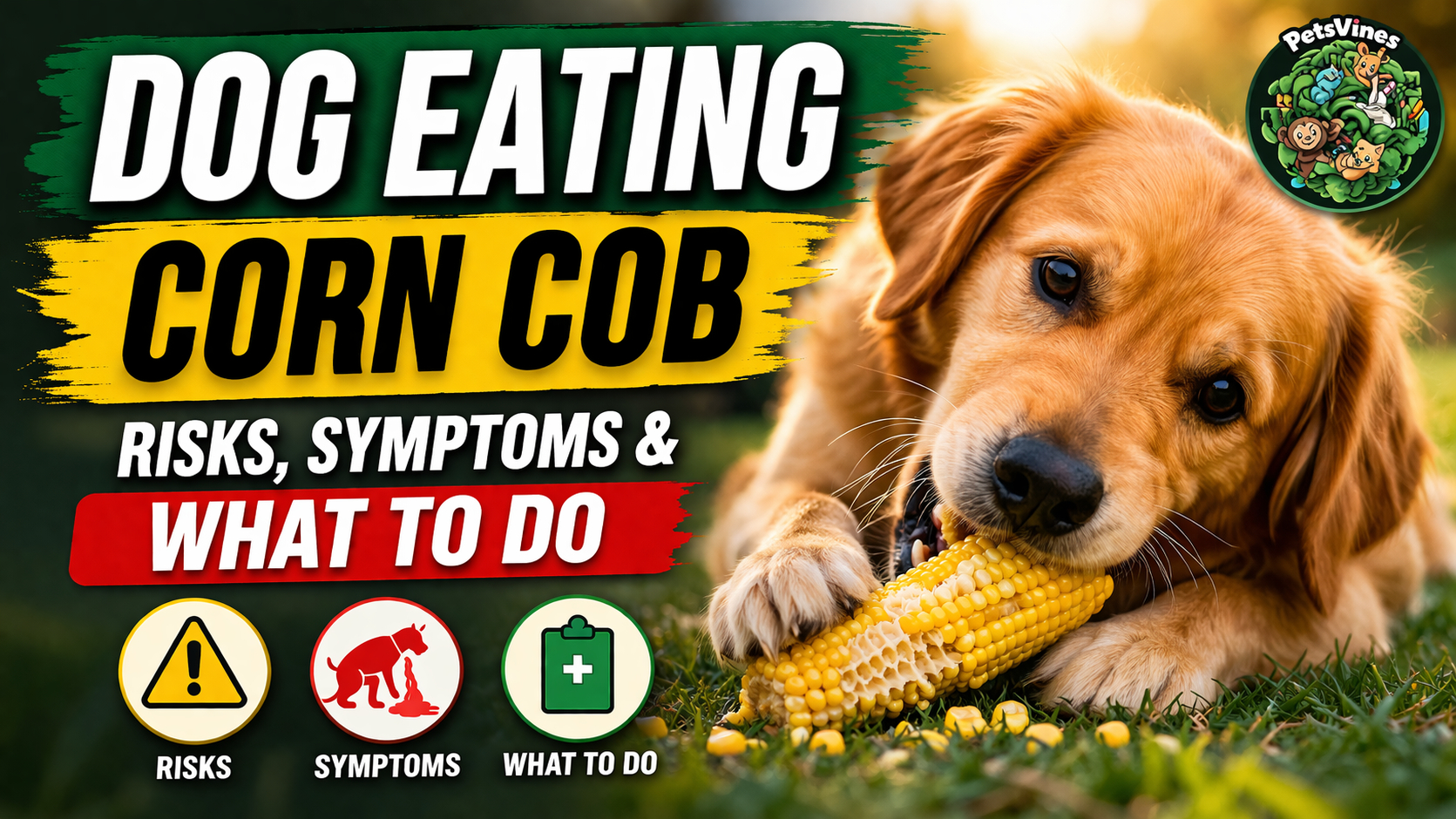
Dog eating corn cob is one of those scenarios that looks harmless on the surface but can turn into a life-threatening emergency within hours. Unlike most table scraps that a healthy dog can process without issue, corn cobs are uniquely dangerous. They don’t break down in a dog’s digestive system — not even a little — and their size, shape, and fibrous texture make them a perfect recipe for a gastrointestinal blockage.
It’s a gorgeous summer afternoon. The grill is going, guests are over, and your dog is doing what dogs do best — being charming, persistent, and sneaky enough to snag a corn cob off someone’s plate. You laugh it off. How bad could it really be?
Very bad, as it turns out.
If your dog ate a corn cob, treat it as a veterinary emergency — even if they seem fine. Corn cobs are completely indigestible and one of the most common causes of life-threatening intestinal blockages in dogs. Call your vet or an emergency animal clinic immediately. Do not wait for symptoms to appear.
Every year, veterinary emergency rooms treat countless dogs for corn cob ingestion, many of them requiring surgery. The good news? If you act quickly and know what to look for, you can protect your dog. This guide covers everything you need to know — why corn cobs are dangerous, the symptoms of a blockage, what to do immediately, and how to keep this from happening again.
For more expert dog health and care content, explore our full resource library at PetsVines.
Why Corn Cobs Are So Dangerous for Dogs
Corn cobs are dangerous for dogs because they cannot be digested. Unlike corn kernels, which can pass through a dog’s system, the cob is tough, fibrous, and indigestible. It can become lodged in the intestines or stomach, causing a life-threatening blockage that almost always requires surgery to resolve.
Most foods your dog accidentally eats will pass through their system — uncomfortably, perhaps, but safely. Corn cobs are a completely different story. They do not break down easily in a dog’s digestive system. Unlike other food items that dogs can eat and pass without difficulty, corn cobs are tough and fibrous.
Here’s what actually happens inside your dog’s body:
In the esophagus: A corn cob can sometimes be swallowed without immediate trouble, though smaller dogs risk choking at this stage. A corn cob most often can pass through a dog’s esophagus, though choking can occur at this stage, especially in smaller breeds.
In the stomach: The cob arrives in the stomach but simply sits there — it cannot be broken down by stomach acid or digestive enzymes. A corncob can stay in a dog’s stomach for days or weeks.
In the intestines: This is where things become critical. The corn cob’s rigid, fibrous structure can easily become stuck in the narrow passages of the intestinal tract. Once lodged, a corn cob can block the flow of food and fluid, causing a dangerous buildup of pressure.
According to the Veterinary Information Network (VIN), ingestion of a corn cob can result in obstruction of the small intestine or colon, leading to significant vomiting, anorexia, and/or depression.
And the stakes are real. Kansas State University veterinarian Dr. Susan Nelson warns that if dogs do not have the cob or pieces of cob causing an obstruction removed, it is usually fatal. Dogs brought to a veterinarian after already showing symptoms will sometimes not survive, even with surgery.
Can Dogs Eat Corn — But Not the Cob?
Yes — corn kernels are generally safe for dogs in small amounts when served plain, cooked, and off the cob. The danger is the cob itself, not the corn. Never let your dog chew or gnaw on a corn cob, even a stripped one.
There’s an important distinction that confuses many pet owners. Corn is safe for dogs to eat in moderation — just make sure it’s plain and always served off the cob to avoid choking or an intestinal blockage.
Plain corn kernels actually offer some nutritional value. The kernels contain protein, natural antioxidants, and essential fatty acids, and are a great source of energy.
However, a few caveats apply:
- No butter or salt. Buttered corn can trigger pancreatitis in some dogs. Salted corn can cause problems for dogs with heart conditions.
- No husks either. Corn husks aren’t toxic to dogs, but they can be very difficult to digest and may cause intestinal blockages, especially in smaller dogs.
- No corn handles. Dogs have been known to swallow corn handles along with the cob, causing further complications.
- Moderation matters. All treats combined, including corn, should make up no more than 10% of your dog’s diet.
The bottom line: a few plain corn kernels = probably fine. A corn cob in any form = a vet visit.
Browse our complete dog nutrition and care guides for more expert advice on what dogs can and can’t eat safely.
Symptoms: How to Tell If Your Dog Has a Corn Cob Blockage
Symptoms of a corn cob blockage in dogs include vomiting, loss of appetite, lethargy, abdominal pain or bloating, diarrhea, or straining to defecate. Importantly, symptoms may not appear for hours or even days after ingestion — so don’t wait for signs before calling your vet.
One of the scariest aspects of corn cob ingestion is that your dog can seem perfectly fine at first. Symptoms of blockage may not appear immediately and can develop hours or even days after ingestion. The corn cob may move through the digestive tract before becoming lodged.
Watch for these warning signs:
- Vomiting or dry heaving — often the first sign something is wrong
- Loss of appetite — refusing food they’d normally devour
- Lethargy — unusual tiredness, reluctance to move or play
- Abdominal pain or bloating — your dog may seem uncomfortable when you touch their belly, or they may hunch their back
- Diarrhea or constipation — soft stool or straining during bowel movements
- Seeking seclusion — hiding or withdrawing from family
Important: Don’t be reassured by the fact that your dog is still pooping. A dog may continue to have bowel movements for a short time even if part of the cob is lodged in the digestive tract. Blockages can take hours or even days to fully obstruct the intestines.
Even if your dog chews up the cob and is vomiting, pieces can remain trapped in their digestive system. Diarrhea or soft stool can pass if there’s a partial obstruction, which can be just as serious as a complete obstruction.
My Dog Ate a Corn Cob — What Do I Do Right Now?
Call your vet or an emergency animal clinic immediately. Don’t wait for symptoms. Do not try to induce vomiting at home. Gather information — how much was eaten, when, and whether it was cooked or raw — and get to the vet as fast as possible.
Step 1: Stay Calm and Gather Information
Panicking won’t help your dog. Take a breath, then quickly note:
- Did they eat the whole cob or just part of it?
- Roughly when did they eat it?
- Was it cooked or raw?
- How big is your dog?
This information will help your vet assess the urgency and choose the right treatment.
Step 2: Call Your Vet Immediately
Don’t Google symptoms for 20 minutes. Call your veterinarian or the nearest emergency animal hospital right away — even if your dog seems totally normal. Early intervention is crucial to prevent serious complications. Call your veterinarian right away for guidance rather than waiting for symptoms to appear.
If it’s outside regular vet hours, search for a 24/7 emergency veterinary clinic near you.
Step 3: Do NOT Induce Vomiting at Home
This is critical. Inducing vomiting incorrectly can cause additional complications — this is something only a vet should attempt. A corn cob coming back up can be just as dangerous as one going down.
Step 4: Keep Your Dog Calm During Transport
Limit movement and exercise that might increase pain or push the corn cob further along the digestive tract. A calm environment helps your dog rest while waiting for veterinary care.
Step 5: Let the Vet Do Their Work
At the clinic, your vet will conduct a physical exam and ask questions about the ingestion. In some cases, X-rays or other imaging tests may be needed to confirm the presence of the corn cob and determine where it is located in the digestive tract. Ultrasound and barium studies are also commonly used.
What Happens at the Vet: Diagnosis and Treatment
AEO Quick Answer: Treatment for corn cob ingestion depends on timing and location of the cob. Options range from induced vomiting (if very recent) to endoscopy or full abdominal surgery. The sooner you get to the vet, the better the chances of avoiding the most invasive procedures.
If Caught Early (Within 1–2 Hours)
If your dog ate the cob very recently and it’s still in the stomach, your vet may safely induce vomiting to bring it back up. This is far preferable to surgery and is only possible in a narrow time window.
Endoscopy
If smaller pieces of the cob are still in the stomach, they can sometimes be endoscopically removed — a scope is passed down the throat to retrieve the fragments without any incisions.
Surgery (Enterotomy)
If the corn cob has traveled to the dog’s intestines, you’re looking at a surgery called an enterotomy to remove it. This is more involved but very commonly performed by veterinary surgeons. The quicker the surgery is done, the better the chances of a full recovery.
In severe or delayed cases, the intestinal tissue can lose its blood supply and begin to die, potentially leading to intestinal rupture, allowing digestive contents to leak into the abdominal cavity and causing severe infection.
This is why speed matters so much.
Does Dog Size Matter?
All dogs are at risk from corn cob ingestion — not just small breeds. While smaller dogs may face a higher immediate risk of choking, larger dogs can swallow a cob whole, making a full obstruction even more likely. No dog is “too big” to be in danger.
Corncobs present several health risks, and the danger doesn’t depend on a dog’s size. While large dogs might be able to swallow a cob whole, small and medium breeds face just as much risk, if not more.
It’s a common misconception that a large dog will simply “pass” the cob on its own. This almost never happens. Corn cobs are indigestible and can pose a serious risk of intestinal blockage, especially in medium and large breeds that may swallow large pieces whole.
How to Prevent Your Dog from Eating Corn Cobs
Prevention is much easier than emergency surgery. Here’s how to keep your dog safe:
Secure your trash. Dogs are opportunistic eaters and will raid a bin without a second thought. Use a dog-proof trash can with a locking lid, especially after barbecues and cookouts.
Clear plates quickly. Don’t leave corn cobs sitting on outdoor tables or picnic blankets during summer gatherings. Clean up as soon as guests are done eating.
Train “leave it” and “drop it.” These two commands can be lifesavers. If your dog approaches a dangerous item, a reliable “leave it” response gives you time to intervene.
Educate guests. At BBQs and parties, let guests know that corn cobs are a hazard. Well-meaning visitors who share table scraps can unintentionally put your dog in danger.
Dispose of cobs immediately. After eating, wrap corn cobs and put them directly into a secured bin — not left on the counter or in an open recycling bag.
Never give cobs as chews. Even stripped cobs are dangerous. Some owners assume that once the kernels are gone, the cob is fine to chew. It isn’t.
FAQ’s
Can a dog pass a corn cob on its own?
Almost never. Corn cobs are one of the leading causes of intestinal blockages seen in dogs and, if ingested, need to be removed because they will not break down in a dog’s stomach. If the cob is not removed, it can turn into a fatal bowel obstruction.
My dog ate a corn cob and seems fine — do I still need to call the vet?
Yes, absolutely. It can still be an emergency even if your dog appears normal after eating a corn cob. Symptoms may not appear immediately and can develop hours or even days after ingestion.
What if my dog only ate a small piece of the cob?
Even small pieces carry risk. Even small pieces of cob can become lodged in the intestines or stomach, leading to a medical emergency. Call your vet and describe exactly what was eaten — they’ll guide you on next steps.
Can I give my dog corn off the cob?
Yes, in moderation. Plain, cooked corn kernels without butter, salt, or seasonings are safe as an occasional treat. Just always remove the kernels from the cob first and keep portions small.
Is a stripped (empty) corn cob still dangerous?
Yes. A cob with no kernels remaining is just as indigestible and just as dangerous as a full one. Never give your dog a corn cob to chew, regardless of whether corn is still on it.
Act Fast, Not Later
Dog eating corn cob is not a “wait and see” situation. It’s one of the few pet emergencies where doing nothing — even for a few hours — can mean the difference between a straightforward vet visit and emergency surgery, or worse.
The kernels? Generally fine in small amounts. The cob? Never safe, for any dog, at any size, in any amount.
If your dog has eaten a corn cob, call your vet right now. If it’s after hours, find your nearest 24/7 emergency animal clinic. Don’t wait for vomiting, don’t try home remedies, and don’t assume your dog is “tough enough” to pass it.
Your dog is counting on you to act quickly. Trust that instinct.
Also Visit: Dog Ate 1 mg Ativan – Symptoms, Risks & What to Do