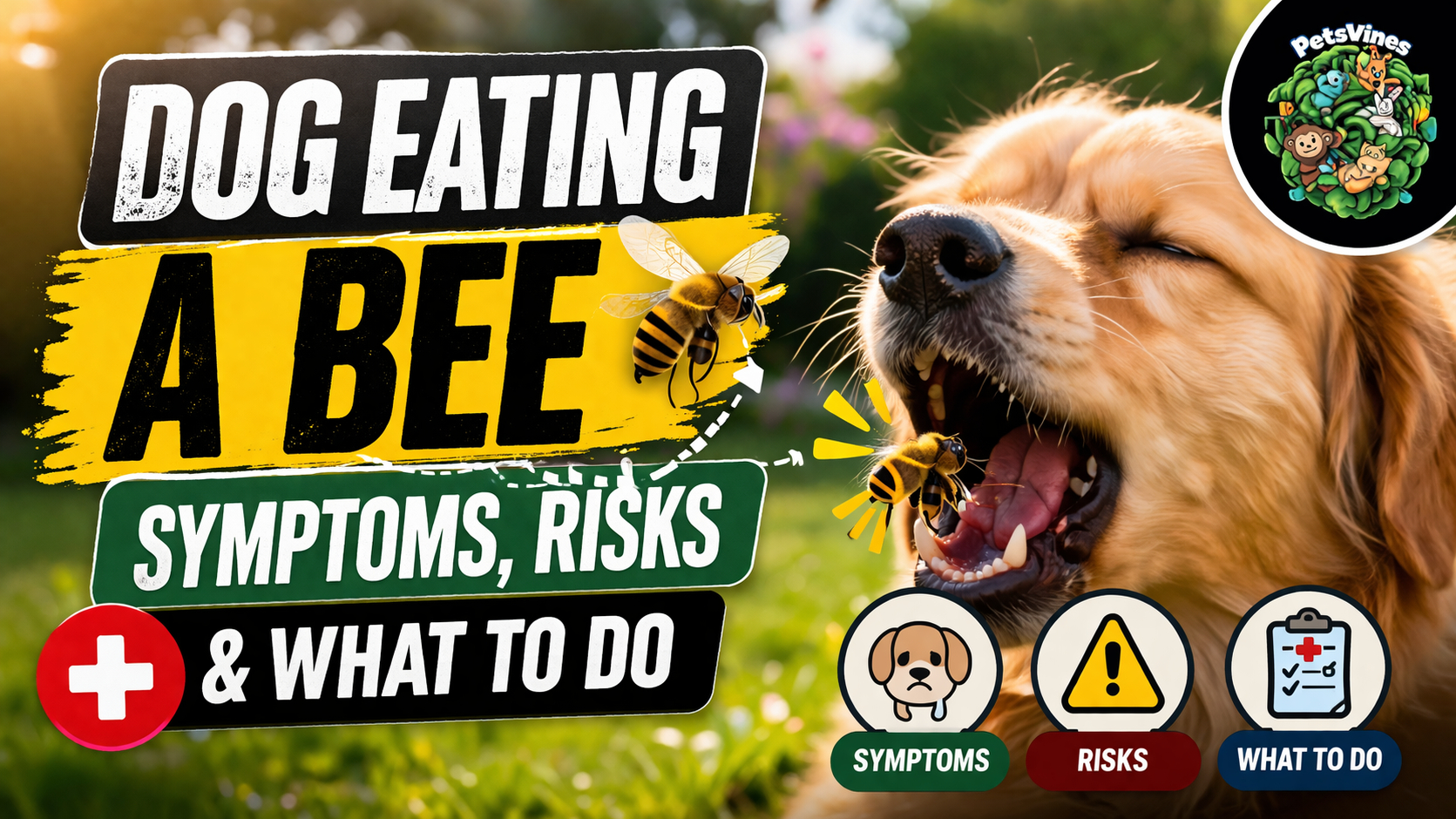
One second your dog is bounding through the garden, tail wagging, nose twitching at everything in sight. The next — snap — they’ve chomped down on a bee. It happens fast, and it almost always sends pet owners into a mild panic.
If your dog ate a bee, stay calm. In most cases it’s not life-threatening, but you need to act quickly. Check your dog’s mouth for a stinger, watch for swelling around the face or throat, and monitor for signs of an allergic reaction — like vomiting, difficulty breathing, or sudden weakness. Call your vet immediately if any of these appear.
So, is a dog eating a bee actually dangerous? The honest answer: it depends. For most dogs, swallowing a bee causes nothing more than brief discomfort. But for some, it can trigger a serious, even life-threatening, allergic reaction — especially if the bee stings the inside of the mouth or throat on the way down.
This guide covers everything you need to know: why dogs chase bees in the first place, what actually happens inside their body after they swallow one, the warning signs you absolutely cannot ignore, and the step-by-step response that every pet owner should have memorized.
Whether your dog just ate a bee five minutes ago or you’re simply preparing for the possibility, you’re in the right place. Let’s get into it.
Why Do Dogs Try to Eat Bees?
Dogs try to eat bees primarily because of their instinct to chase moving things. The buzzing sound and erratic flight of a bee triggers a dog’s natural prey drive, especially in high-energy or working breeds. Some dogs also snap at bees out of annoyance, curiosity, or simply because it’s fun — with no concept of the sting waiting for them.
Dogs live in a world of movement and sound. A hovering, buzzing bee is basically a flying invitation to play. Breeds like Labrador Retrievers, English Springer Spaniels, Border Collies, and Pointers are especially prone to this behavior because of their strong prey drive — they’re wired to chase and capture things that move.
But it’s not just high-drive breeds. Any dog that’s curious, bored, or playing outdoors with an open mouth can accidentally snap up a bee mid-flight. The bee doesn’t exactly volunteer for this either, which is where the real problem begins.
Interestingly, according to the American Kennel Club, some dogs that have been stung before actually become more aggressive toward bees — not less. The emotional response (fear, anger, pain memory) drives them to chase more vehemently. It’s counterintuitive but very real.
Is It Dangerous for a Dog to Eat a Bee?
Yes, it can be dangerous — but it varies by dog. The bee’s body is not toxic if swallowed, but the sting is the problem. If a bee stings the dog’s tongue, throat, or mouth before being swallowed, it can cause swelling that blocks the airway. Dogs with bee allergies face an even greater risk of anaphylaxis, which is a medical emergency.
Here’s the key distinction that most pet owners miss: bees are venomous, not poisonous. That means the bee’s body itself won’t poison your dog if digested. The stomach acid will break it down just fine. The danger lies entirely in the sting — whether that happens in the mouth, throat, or elsewhere.
What Happens When a Dog Swallows a Bee
When a dog snaps at a bee and swallows it:
- The bee may sting before it’s fully swallowed — especially on the tongue, gums, or back of the throat.
- Venom is injected at the sting site, causing localized swelling and pain.
- If the throat swells, it can partially or fully obstruct the airway — a genuine emergency.
- If the dog is allergic, the immune system may overreact, causing anaphylaxis within minutes.
- If no sting occurs, the bee passes harmlessly through the digestive tract.
Only honeybees leave a stinger behind. Bumblebees and wasps can sting multiple times and leave no stinger. So identifying what type of bee your dog caught can matter.
Symptoms to Watch For After a Dog Eats a Bee
After a dog eats a bee, watch closely for swelling around the face, mouth, or throat; excessive drooling; pawing at the mouth; vomiting; difficulty breathing; sudden weakness; or collapse. These can signal an allergic reaction or airway obstruction. Mild whimpering or brief discomfort is normal. Severe or worsening symptoms require immediate veterinary attention.
Knowing what’s normal vs. what’s an emergency is the most important thing you can do right now.
Mild Symptoms (Monitor Closely)
These reactions are common and typically resolve on their own within 30–60 minutes:
- Whimpering or yelping right after the incident
- Pawing at the mouth or face
- Excessive drooling or licking
- Mild swelling at the sting site (outside the mouth)
- Redness or hives near the face
- Brief lethargy or restlessness
Severe Symptoms — Call the Vet Immediately
These signs point to anaphylaxis or airway obstruction and require urgent veterinary care:
- Facial or throat swelling (especially if it’s spreading)
- Difficulty breathing, wheezing, or labored panting
- Vomiting or diarrhea that appears suddenly
- Pale or white gums
- Weakness, wobbling, or collapse
- Rapid heart rate followed by sudden stillness
- Loss of consciousness
According to Purdue University College of Veterinary Medicine, bee stings most commonly cause mild local reactions, but severe allergic responses — while less common — can escalate within minutes. Do not wait to see if things improve on their own if your dog is showing any severe signs.
What to Do If Your Dog Ate a Bee: Step-by-Step
If your dog ate a bee, first stay calm. Check their mouth for a stinger and remove it by scraping (not pinching). Watch for allergic reaction symptoms for at least an hour. Call your vet or an emergency animal clinic right away if you see any severe signs. Never give your dog medication without speaking to a vet first.
Here’s your action plan — clear, sequential, and vet-backed:
Step 1: Stay Calm
Your dog picks up on your energy. Panicking will stress them out and make it harder to assess the situation clearly.
Step 2: Check for a Stinger
Open your dog’s mouth (carefully, especially if they’re in pain) and look at the tongue, gums, and back of the throat. If you see a stinger — which only honeybees leave behind — do not use tweezers or your fingers to pull it out. Squeezing the stinger pushes more venom in. Instead, use the flat edge of a credit card or your fingernail and scrape it sideways to dislodge it.
Step 3: Observe — Don’t Leave Them Alone
Stay with your dog for at least 30–60 minutes after the incident. Watch for any of the severe symptoms listed above. Keep them calm and in a cool, comfortable space.
Step 4: Soothe Mild Swelling (If Safe)
For external swelling only (e.g., on the snout), you can gently apply a cool, damp cloth or ice pack wrapped in a towel. Do not apply anything to the inside of the mouth.
Step 5: Call Your Vet
Even if your dog seems fine, it’s worth a quick call to your veterinarian. Describe what happened, what your dog is doing, and ask if they recommend bringing them in. Many vets will want to see the dog for observation, especially if this is the first time it’s happened.
Step 6: Do Not Self-Medicate Without Vet Guidance
You may have read online that Benadryl (diphenhydramine) can help. While some vets do recommend it in specific situations, the correct dosage depends on your dog’s weight and health history. Never give any medication — including antihistamines — without explicit vet instruction. Some formulations contain xylitol or other ingredients that are toxic to dogs.
Dogs and Bee Allergies: What You Need to Know
Just like humans, some dogs are allergic to bee venom. The first sting may cause only a mild reaction, but subsequent stings — or ingesting a bee — can trigger a far more severe immune response. There’s no reliable way to know if your dog is allergic until it happens, which is why vigilance after any bee encounter is essential.
If your dog has been stung or eaten a bee before and had a strong reaction, talk to your vet about creating an emergency action plan. Some vets recommend keeping an epinephrine auto-injector (EpiPen) for dogs with known severe allergies — though this is only used under specific veterinary guidance.
For more in-depth information on keeping your dog healthy and safe, explore the PetsVines dog health resource hub — a trusted source for pet owners who want expert-backed guidance.
Can a Bee Sting a Dog’s Throat? (And Why That’s Especially Serious)
Yes — and this is the scenario that concerns vets most. When a dog snaps at a bee and swallows it quickly, the bee can sting the soft tissue of the throat on the way down. The throat is a tight, enclosed space. Even moderate swelling in that area can partially block the airway, making breathing difficult or — in extreme cases — impossible.
This is why a dog that appears to be fine immediately after eating a bee can deteriorate quickly. Swelling develops over minutes, not hours. Watch especially for:
- A change in breathing sound (high-pitched wheezing or stridor)
- Extended neck posture (dog stretching neck trying to get air)
- Blue-tinged gums (a sign of oxygen deprivation — get to an emergency vet immediately)
If you observe any of these, do not wait. Drive to the nearest emergency animal clinic now.
How to Prevent Your Dog from Eating Bees
Prevention is always better than a panicked vet visit. Here are practical, realistic steps to reduce the risk:
- Supervise outdoor time in gardens or areas with flowering plants — bees are most active mid-morning to early afternoon.
- Train a strong “leave it” command. This is one of the most valuable cues a dog can learn, and it works on bees, wasps, and plenty of other hazards too.
- Avoid peak bee hours. Bees are most active when flowers are blooming and temperatures are warm. Early morning or evening walks reduce the chance of encounters.
- Check your yard for ground-level hives or wasp nests, especially in late summer when colonies are largest.
- Keep your dog on a leash in areas where bees are abundant — an off-leash dog is much harder to redirect mid-chase.
For more expert tips on keeping your dog safe outdoors and at home, visit PetsVines — a go-to resource for responsible pet owners worldwide.
FAQ’s
Will my dog be okay after eating a bee?
Most dogs are completely fine after eating a bee, especially if no sting occurred or if the sting was minor. The bee’s body is not toxic and will be digested normally. The risk comes from the venom and the possibility of an allergic reaction, so always monitor for at least an hour and contact your vet with any concerns.
Should I take my dog to the vet after eating a bee?
If your dog is showing any signs of distress — swelling, vomiting, breathing difficulty, or weakness — yes, go immediately. If they seem perfectly normal, call your vet for guidance. When in doubt, it’s always better to check.
Can I give my dog Benadryl after eating a bee?
Only under direct veterinary instruction. While diphenhydramine (the active ingredient in Benadryl) is sometimes recommended by vets, the dosage must be appropriate for your dog’s weight, and you must confirm the formula is safe for dogs (no xylitol or other harmful additives).
What if my dog ate multiple bees?
Multiple bee stings dramatically increase the risk of a serious reaction, even in dogs without known allergies. This is a situation that warrants an immediate call to your vet or emergency animal clinic — don’t wait for symptoms to appear.
Are wasps more dangerous than bees for dogs?
Wasps can sting multiple times, unlike honeybees, and they don’t leave a stinger behind. This means a wasp can sting more aggressively and repeatedly if threatened — potentially delivering more venom. The reaction symptoms and treatment approach are similar to bee stings, but the risk of multiple stings is higher.
Act Fast, Stay Calm
A dog eating a bee is one of those situations that happens without warning and demands a calm, informed response. Most of the time — thankfully — dogs come through it with nothing worse than a sore mouth and wounded pride. But “most of the time” isn’t always, and knowing the difference between a normal reaction and an emergency can genuinely save your dog’s life.
Bookmark this guide. Share it with fellow dog owners. And if you’re ever unsure, call your vet — that’s always the right call.
Want more trusted advice on keeping your dog healthy, happy, and safe?
Also Visit: Dog Eating Corn Cob – Risks, Symptoms & What to Do