
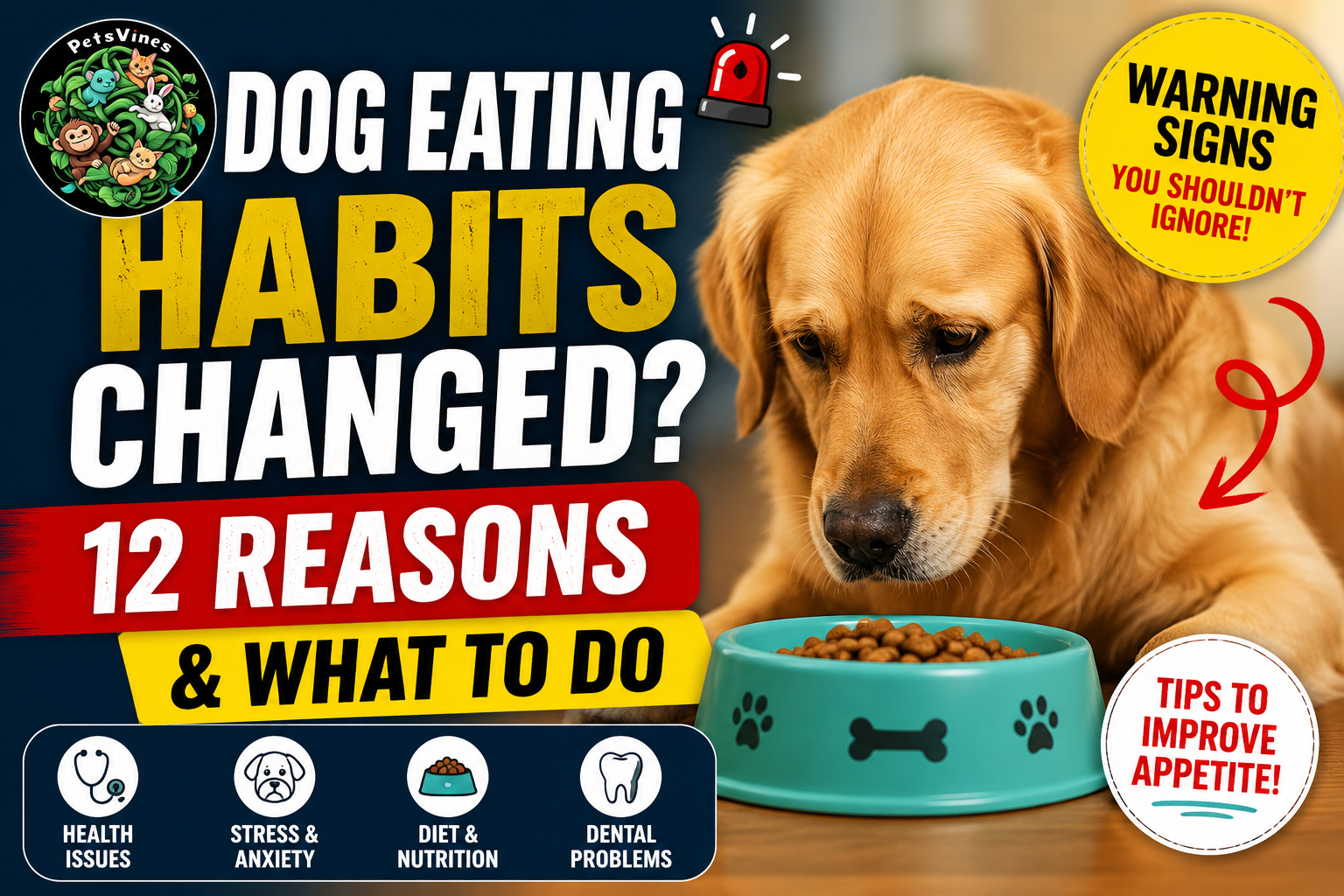
Dog Eating Habits Changed: A dog’s eating habits can change due to health issues like dental disease, digestive problems, or chronic illness, but also due to stress, aging, medication side effects, or even boredom. If your dog suddenly eats significantly less or more for more than 24–48 hours, or shows other symptoms like lethargy or vomiting, consult your veterinarian promptly.
You know your dog. You know the way they sprint to their bowl the moment you reach for the kibble bag. So when that enthusiasm fades — or suddenly turns obsessive — something feels off. And you’re right to notice.
A change in your dog’s eating habits is one of the earliest and most reliable signals that something has shifted, whether it’s a minor blip or the first sign of a deeper health issue. Like humans, certain internal and external stressors can affect your dog’s eating habits and lead to a loss of appetite — and since dogs can’t communicate their feelings, it falls on us to pay attention.
This guide breaks down 12 of the most common reasons your dog’s eating habits may have changed, what warning signs to watch for, and exactly when you need to pick up the phone and call your vet. Whether your dog is eating too little, too much, too slowly, or refusing food entirely — you’ll find your answers here.
What Does “Normal” Eating Look Like for a Dog?
Before diagnosing a problem, it helps to understand what healthy eating actually looks like.
Genetics, environment, and emotional state all play a role in how much, when, and how your dog eats. Medical conditions — including dental problems or digestive issues — can also influence eating behavior. Even boredom or lack of exercise can lead to overeating as dogs seek stimulation in food.
A healthy adult dog typically eats two measured meals per day, finishes within 10–15 minutes, maintains a stable weight, and shows consistent enthusiasm for food. Any meaningful deviation from your dog’s personal baseline is worth tracking.
12 Reasons Your Dog’s Eating Habits Have Changed
1. Dental Disease or Mouth Pain
Dental disease is one of the most common reasons a dog stops eating with enthusiasm. If chewing becomes painful, dogs will slow down, avoid hard kibble, or refuse food altogether — often while showing no other obvious symptoms.
Periodontal problems such as gingivitis, diseased or damaged teeth, and tooth-root abscesses can make crunching dry food and treats extremely difficult and painful. If your dog’s food interest has dropped and their breath smells noticeably worse than usual, dental disease should be near the top of your list of suspects.
Dental disorder has one of the highest annual prevalence estimates among dogs in veterinary primary care, affecting an estimated 9.6% of dogs in studies of UK canine populations. Switching to wet food temporarily and scheduling a dental check can make an immediate difference.
What to watch for:
- Dropping food while eating
- Pawing at the mouth
- Foul breath
- Preference for soft food over dry kibble
2. Pain or Physical Discomfort
Dogs in pain — whether from arthritis, an injury, or internal discomfort — often lose their appetite. Pain doesn’t always come with obvious signals like limping or whimpering, which makes appetite change a vital early clue.
While many pets try their best to hide pain, any discomfort can take a toll on their appetite and thirst. Osteoarthritis, intervertebral disc disease, and other joint and muscular conditions are some of the most common pain causes in pets. If your senior dog has slowed down at mealtimes, this could be why.
3. Nausea or Gastrointestinal Upset
A nauseous dog simply won’t eat — just as you wouldn’t. Nausea in dogs can stem from motion sickness, eating something off the ground, medication side effects, or underlying GI issues.
When a dog is nauseous, they may attempt to nibble at their food or take a few sips of water, but if their stomach contents come right back up, they likely won’t try again until the nausea subsides.
If your dog skips one meal but otherwise seems fine, this is usually not cause for alarm. If it continues beyond 24 hours or is accompanied by vomiting, it’s time to call your vet.
4. Stress, Anxiety, or Emotional Upset
Dogs are deeply sensitive to change. A new home, a new pet, a new baby, or even a shift in your daily schedule can trigger anxiety that reduces your dog’s appetite. This is one of the most overlooked causes of changed eating habits.
Any change in routine, big or small, can affect your dog’s appetite. Major changes such as traveling or moving homes can induce stress, which leads to changes in appetite because dogs feel uncomfortable in transition.
Even something as simple as rearranging the furniture or a houseguest staying for the weekend can unsettle a dog enough to affect their eating.
Common stress triggers:
- New family members (human or animal)
- Moving to a new home
- Owner travel or absence
- Loud environments or seasonal events (fireworks, thunderstorms)
- Separation anxiety
5. A New or Changed Food
Dogs can be surprisingly particular about their food. A sudden switch in brand, formula, or flavor — even within the same product line — can cause a dog to eat less, eat more slowly, or refuse the bowl entirely.
If you’ve recently changed your dog’s food, even gradually, this is likely the culprit. Dogs rely heavily on smell to assess food. A new formula, different protein source, or change in fat content can read as entirely foreign to them.
The recommended approach is to transition over 7–10 days, mixing increasing amounts of the new food with the old.
6. Illness or Infection
Ear infections, urinary tract infections, skin conditions, and systemic illnesses can all suppress a dog’s appetite, often well before other symptoms become obvious.
A dog can feel so ill with skin, ear, urinary, or systemic infections that they do not want to eat or drink — and fever, lethargy, and other illness signs are typically seen alongside decreased appetite.
If your dog seems “off” in multiple ways — quieter than usual, less active, possibly running a temperature — don’t wait it out. An early vet visit almost always leads to a faster, less costly recovery.
7. Chronic Disease
Conditions like diabetes, kidney disease, Cushing’s disease, and hypothyroidism all affect a dog’s appetite — some causing dramatic increases, others causing significant decreases. These are not conditions that resolve on their own.
Common chronic diseases that alter eating habits in dogs include: Diabetes — unregulated diabetes creates excessive hunger, thirst, and urination. Kidney disease — causes increased thirst and urination, while appetite may decrease due to nausea from metabolic waste buildup. Cushing’s disease — excess cortisol triggers increased appetite, thirst, and urination. Hypothyroidism — can lead to reduced appetite and significant weight changes.
If your dog’s eating habits have changed alongside increased water consumption, weight gain, or noticeable fatigue, a full bloodwork panel is the right next step.
8. Aging
Senior dogs naturally experience shifts in appetite. Their metabolism slows, their sense of smell diminishes, dental issues become more prevalent, and underlying health conditions accumulate. What looks like pickiness is often a real physical change.
As dogs age, caloric needs often decrease — but so does their digestive efficiency. Switching to a senior-specific formula, feeding smaller and more frequent meals, and adding warm water to dry kibble to enhance aroma can all help maintain interest in food.
For more in-depth guidance on caring for dogs at every life stage, explore the complete dog care resource library at PetsVines.
9. Medication Side Effects
Many common medications — including antibiotics, anti-inflammatory drugs, and chemotherapy — can cause nausea, reduced appetite, or changes in thirst. If your dog recently started a new medication, this connection is worth exploring with your vet.
Always read the side-effect information provided with any prescription, and never adjust or stop a medication without veterinary guidance — even if you believe it’s affecting appetite.
10. Behavioral or Learned Habits
Dogs are fast learners — and some of what looks like a change in eating habits is actually your dog training you. If a dog has been regularly offered table scraps or extra treats, they may start holding out for something better.
Excessive eating is a common problem amongst dogs and can lead to obesity and other health issues. We may also unintentionally reward begging behavior, thereby encouraging it.
If your dog turns up their nose at their regular meal but perks up the moment you open the fridge, behavioral conditioning may be at play. Returning to a strict feeding schedule and eliminating table scraps usually resolves this within a few days.
11. Obesity and Overfeeding
Sometimes the problem isn’t that your dog won’t eat — it’s that they’re eating far too much. Canine obesity is a widespread and underdiagnosed issue, and appetite changes (including increased hunger) are often early warning signs.
According to Cornell University’s College of Veterinary Medicine, the Association for Pet Obesity Prevention estimates that approximately 60% of dogs in the United States are overweight or obese — nearly mirroring human obesity rates.
An overweight dog may beg constantly, scavenge obsessively, or eat so fast they vomit. If your dog’s ribs are hard to feel beneath a thick layer of fat, a structured weight management plan with your vet is essential.
12. Environmental or Seasonal Changes
Temperature, activity levels, daylight hours, and seasonal routines all affect how much energy a dog burns — and how much they want to eat. Many dogs naturally eat less during hot summer months and more in winter.
This is normal and usually not a cause for concern, provided your dog’s weight remains stable and they’re drinking adequate water. Keep track of the seasons and cross-reference them with feeding changes before assuming something is wrong.
When Should You Call the Vet?
Not every change in appetite requires an emergency vet visit. But some do. Here’s a quick guide:
Call your vet within 24 hours if your dog:
- Hasn’t eaten for more than 24 hours (puppies) or 48 hours (adult dogs)
- Shows signs of pain, lethargy, or disorientation
- Is vomiting repeatedly or has bloody diarrhea
- Has lost noticeable weight quickly
- Is drinking significantly more or less water than usual
- Is a known diabetic or has a pre-existing condition
Monitor at home if your dog:
- Skipped one meal but is acting normally
- Ate a small amount and seems content
- Recently had a minor stress event (travel, visitors)
- Changed food recently and seems to be adjusting
How to Encourage Healthy Eating Habits in Your Dog
Once a medical cause has been ruled out, you can support healthy, consistent eating habits through practical management:
- Stick to a schedule. Feed at the same times every day. Dogs thrive on routine.
- Measure portions accurately. Don’t free-feed or eyeball quantities.
- Limit treats and scraps. Treats should make up no more than 10% of daily calories.
- Make mealtimes calm. Avoid feeding during high-stress moments (loud environments, unfamiliar visitors).
- Add flavor safely. A small amount of low-sodium broth over kibble can revive a reluctant eater without compromising nutrition.
- Transition food gradually. Always take 7–10 days when switching formulas.
For a wider range of expert dog care tips and breed-specific advice, visit PetsVines — a trusted resource for pet owners worldwide.
FAQs
Q: My dog is eating grass — does that mean something is wrong?
Occasional grass-eating is common in dogs and usually harmless. It may indicate mild stomach discomfort or simply boredom. If it becomes frequent or is followed by vomiting, consult your vet.
Q: My dog suddenly started eating much faster. Should I be worried?
A sudden increase in eating speed can be behavioral (competition with another pet) or medical (Cushing’s disease, diabetes, or steroid medication). A food puzzle bowl can help slow eating while you investigate the cause.
Q: Can dogs get bored with the same food?
While dogs don’t experience boredom with food the same way humans do, a diet lacking variety may become less appealing over time — especially if their sense of smell is declining. Rotating proteins or adding safe toppers can help.
Q: How long can a dog safely go without eating?
A healthy adult dog can go 48–72 hours without eating before it becomes medically concerning. Puppies, seniors, and dogs with health conditions should be seen by a vet after 24 hours without food.
Also Visit: How to Train a Dog to Use a Bell : Beginner’s Guide